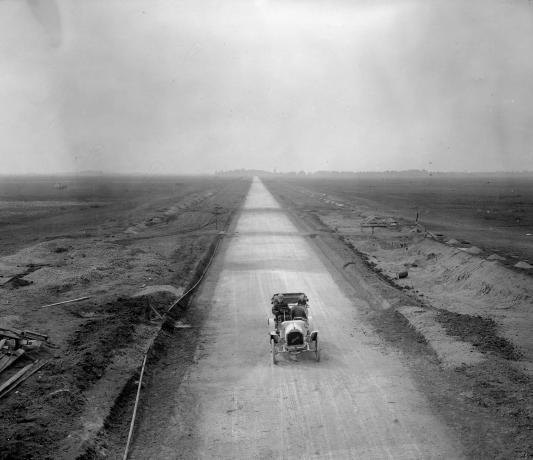
The Long Island Motor Parkway
The first parkway built exclusively for the automobile and part of the courses for the 1908 to 1910 Vanderbilt Cup Races
Unlike the first roads built for commerce and horses, the Long Island Motor Parkway was conceived from a sporting contest; the colorful, exciting and often dangerous Vanderbilt Cup Races
Related Posts
-
Jun 11
2026
Historical Exhibits Featured at the Garden City Toll Lodge on Friday and Saturday
A series of historical exhibits will be shown at…
-
May 23
2026
Kleiner’s Korner: March, 1926 - A Hundred Years Ago on the Motor Parkway
Some odds and ends, plus realty activities 100…
-
May 02
2026
Update: Then (2017 and 2020) & Now (2026): A sad return to the Long Island Motor Parkway in Garden City
In 2017, eight members of the Long Island Motor…
-
Apr 25
2026
Kleiner’s Korner: The Baldwin Property Near the Motor Parkway
A recent post mentioned property belonging to the…
-
Apr 11
2026
Kleiner’s Korner: February 1926 Motor Parkway News
The next installment of the Motor Parkway 100…
-
Apr 04
2026
Kleiner’s Korner: What Became of the Cooper Farmstead Near the Motor Parkway
A previous post included the sale of The Charles…
-
Mar 27
2026
Video of the Week: Looking Back-2012; Long Island Online News Reports on the Long Island Motor Parkway Preservation Society
Over 13 years ago, at the second Long Island Motor…
-
Mar 24
2026
Mystery Friday Foto #12 Solved: A 1938 Aerial…In Color!
Did you identify this color aerial?
-
Mar 17
2026
Mystery Friday Foto #11 Solved: The Meadow Brook Motor Parkway Lodge Under Construction
Al Velocci challenged you with an incorrectly…
-
Mar 14
2026
Kleiner’s Korner: January, 1926 Motor Parkway News Items
Non-realty related Motor Parkway mentions during…