InstaGRAM Report: Bridgehampton Street Circuit History
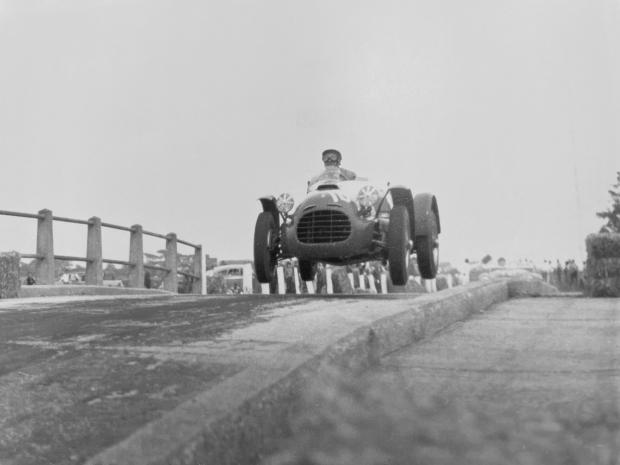
This new series explores the history of Long Island's race tracks. Since the Vanderbilt Cup Races were also promoted on closed public roads, the most logical race to start this series with is the Bridgehampton Street Circuit.
If you have any fond racing memories or know anything about the history of Long Island's various race tracks, we would love to hear from you. Click here for the introduction to this series.
The automotive racing history of Bridgehampton started with a stretch of racing from 1915 - 1921, when closed public roads were taken over by a select group of performance cars. This period was followed by a lull and the outbreak of World War II. Racing picked up again in 1949 and continued yearly until 1953.
Inside the inaugural 1949 Bridgehampton road race souvenir program, well-known automotive book author Ken Purdy described why road racing was such a thrill for spectators: “When you see a man take a corner at 60 MPH, which you know perfectly well you can't make at 25, you get a bit closer to the heart of the matter. When you see a driver undertaking to pass another car when both are doing around 100 MPH over an ordinary road, it is an infinitely more exciting matter than the same situation would be on a track.”
Legends, including Briggs Cunningham and countless others, turned the quiet streets of Bridgehampton into an exciting spectacle of horsepower, speed, and endurance. So without further ado, let's dive right into the history of the Bridgehampton street circuit.
By Gram Spina
1915 - 1921
The period of Bridgehampton road racing is obscure, mainly because very little internet documentation is available. My goal is to keep gathering as much history and information as I can from a wide range of sources – I hope to be able to share more information on this stretch when I cover the Montauk Grand Prix races. For now, here is what I have found. (If you know something that I missed, please comment below.)
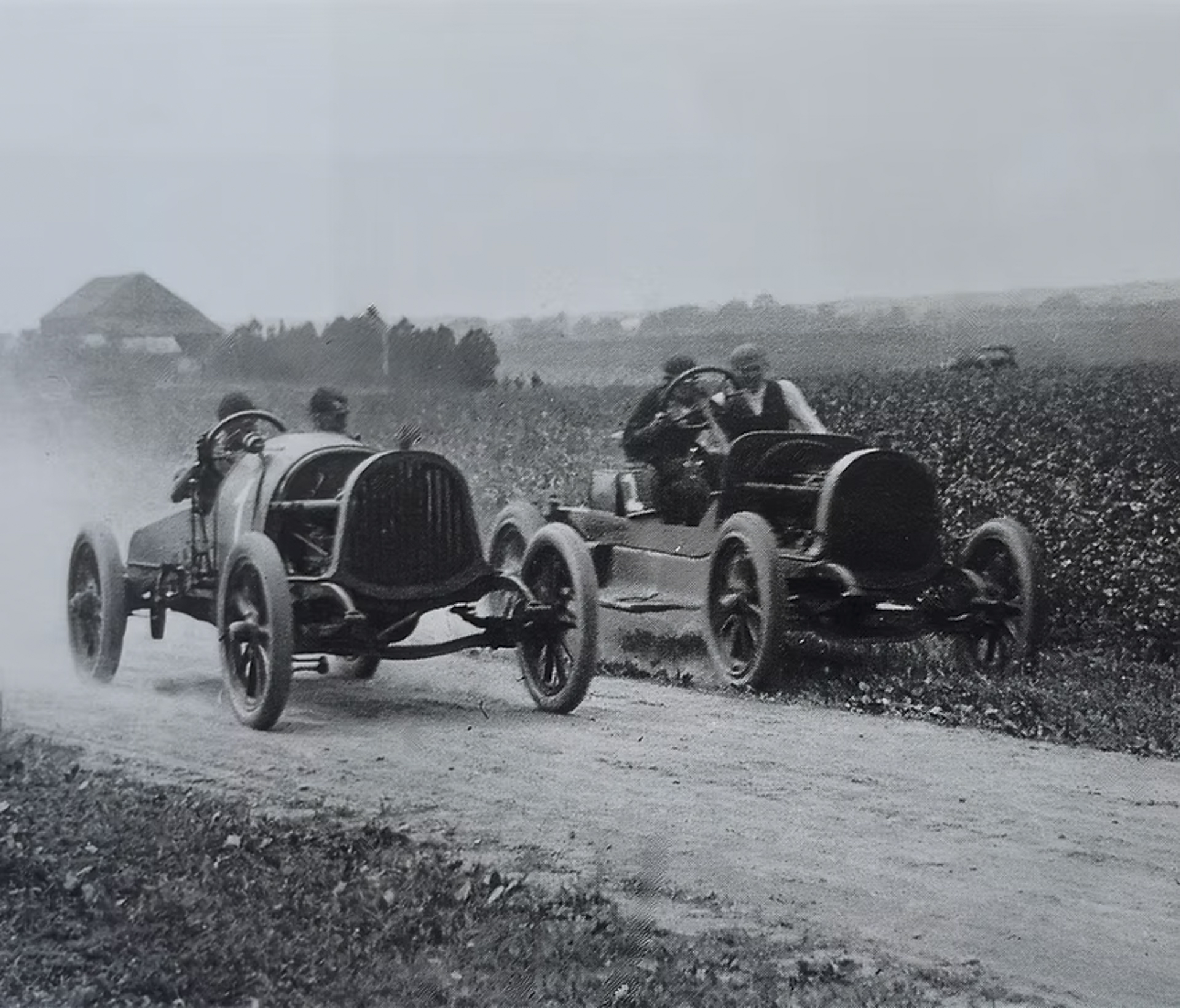
The winner of the first-ever street circuit race at Bridgehampton in 1915 was Maynard Parsons driving a Pope-Toledo.
He is seen in this photo overtaking another Pope-Toledo race car that appears to be breaking down — image sourced from the Bridgehampton Museum.
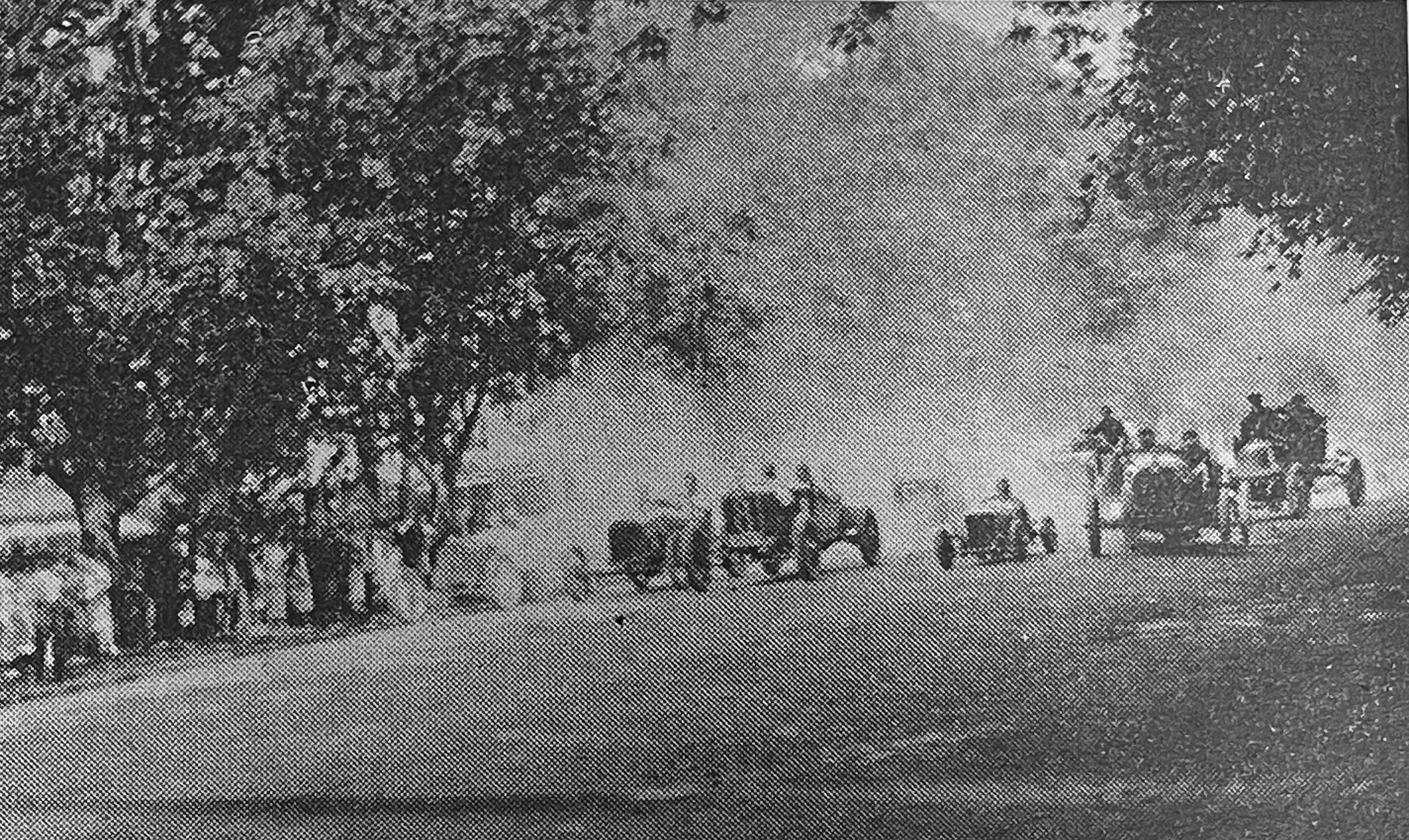
This rare image shows the start of the 1920 Bridgehampton Auto Races. The pint-sized car tucked between Lane’s No. 8 Essex and Fred Hiscock’s Chevrolet is the “Breese Special” owned and driven by Robert Breese.
- Image sourced from Henry Austin Clark Jr.’s collection.
1949
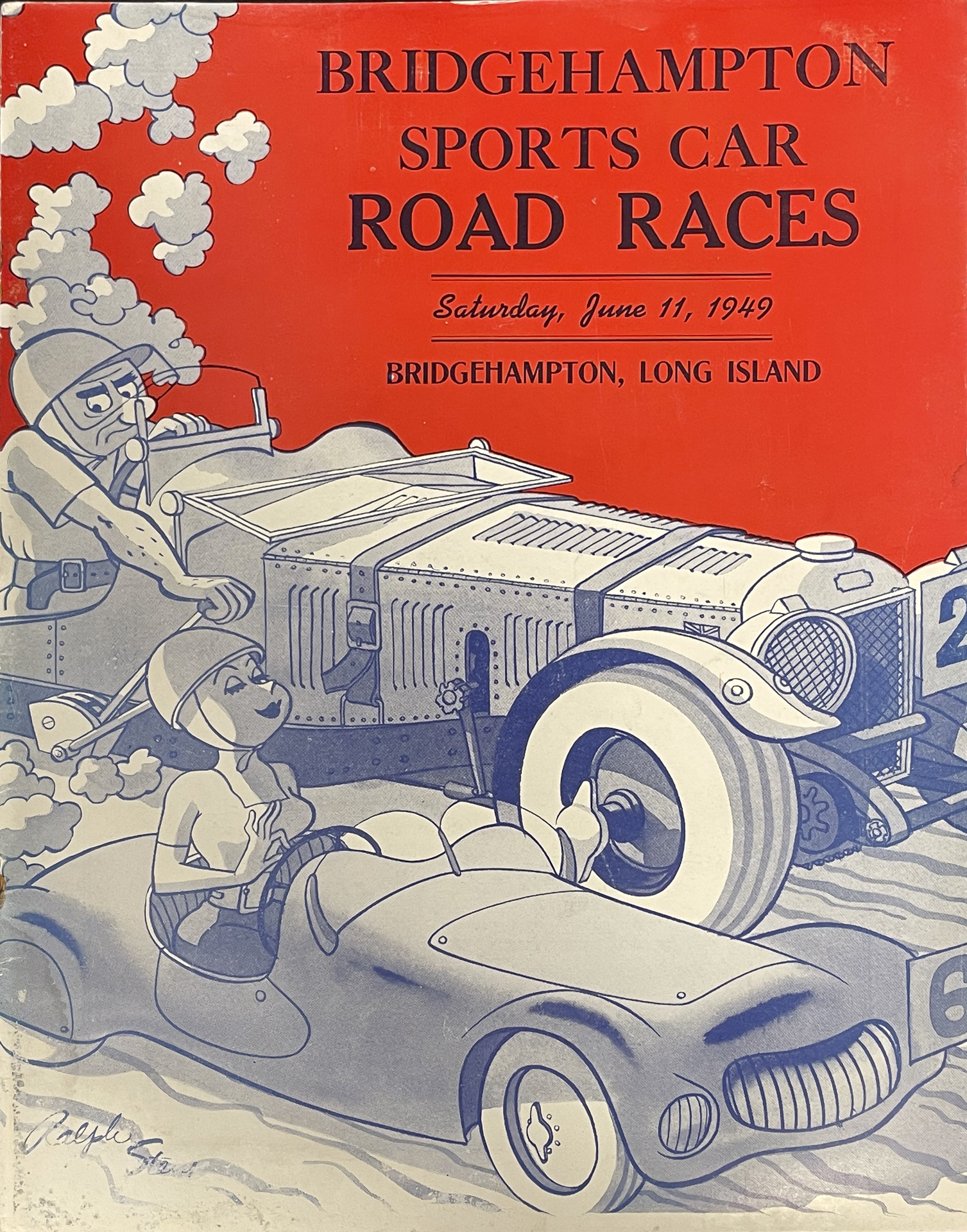
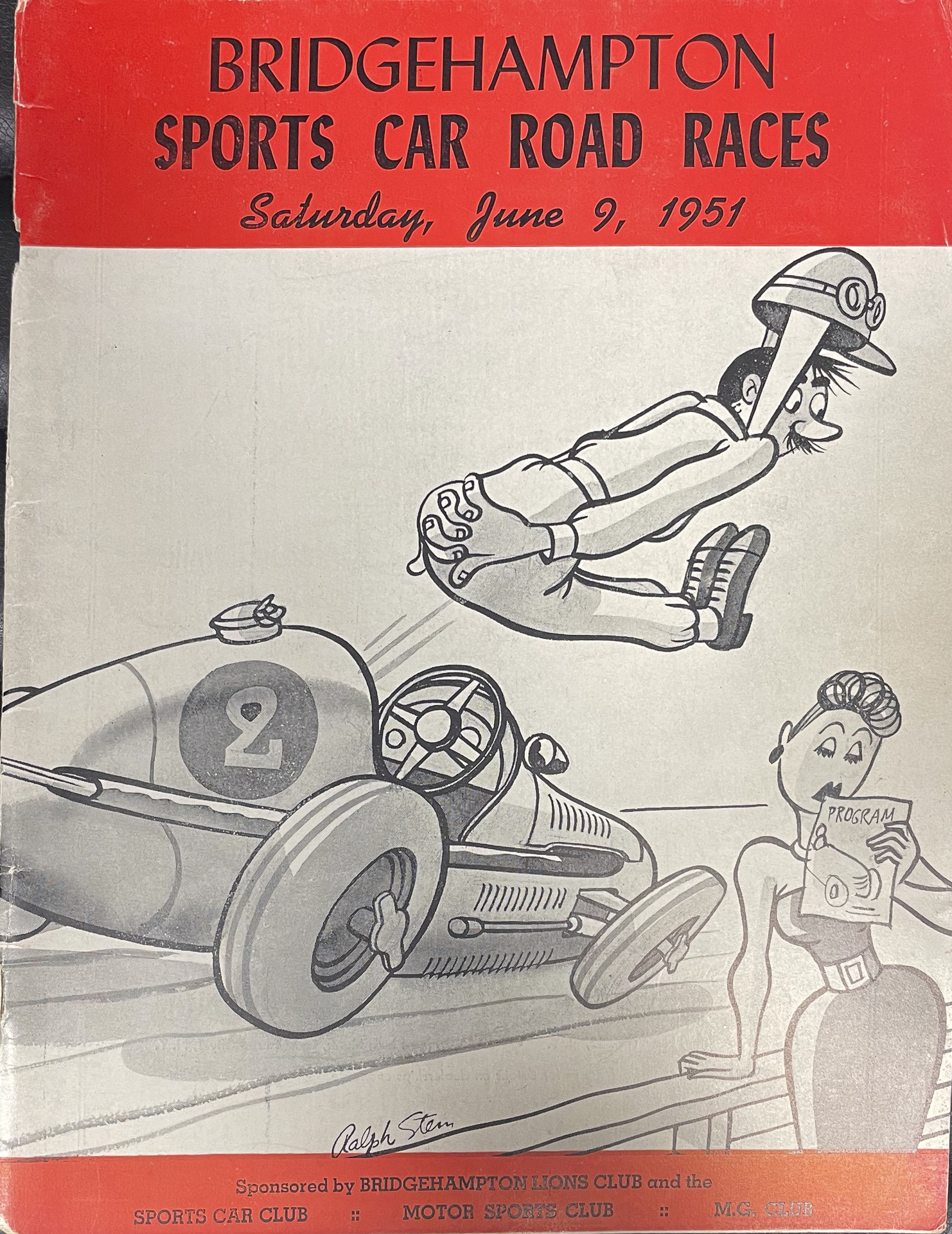
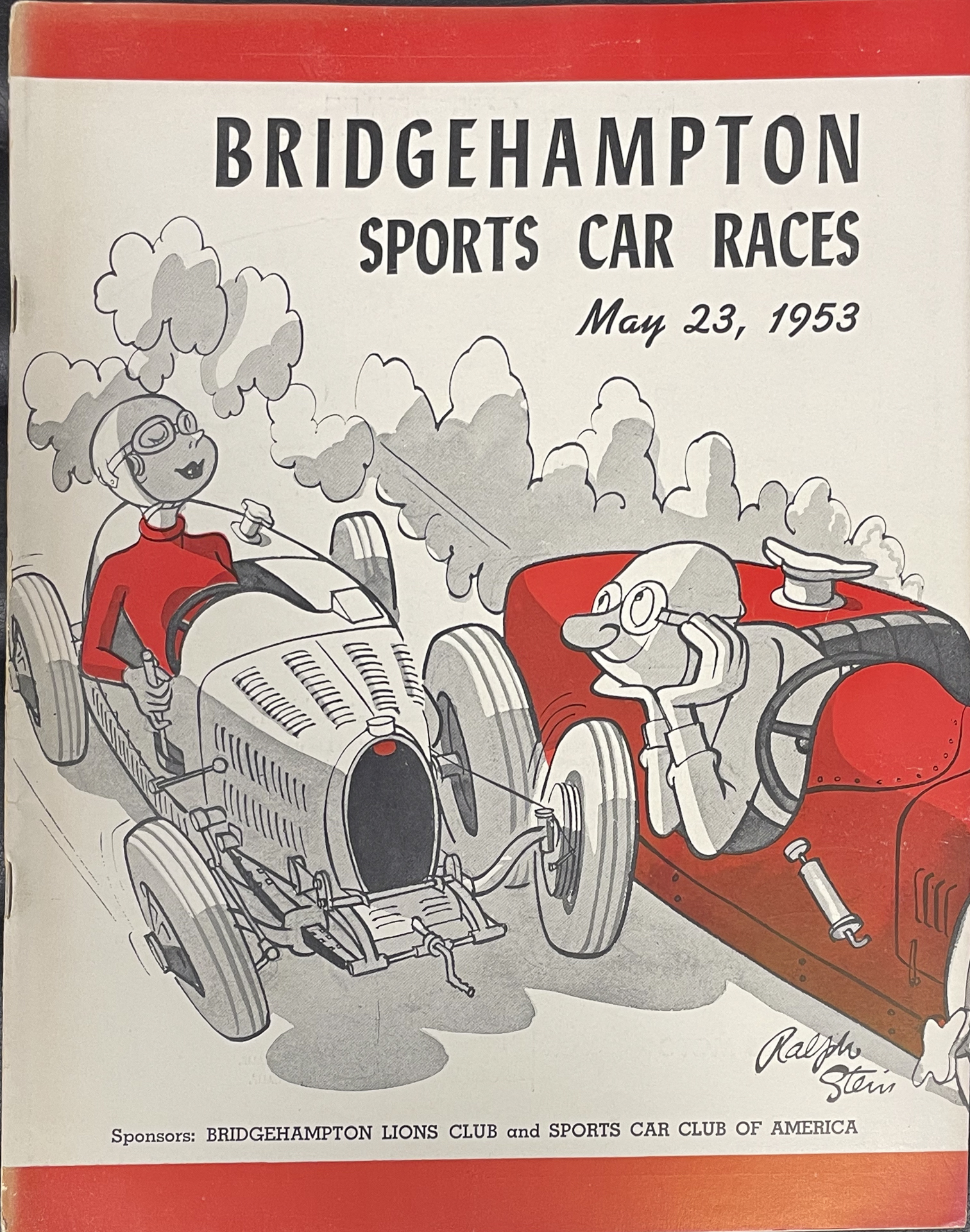
After WWII, racing resumed at the Bridgehampton street circuit with much fanfare. The course was just under two and a half miles long, and while it was simple, it sure looked like a fun course to push a sports car to its limit. Here’s the program for 1949.

The layout remained the same each year. Here's the map as it was shown in the 1949 program.
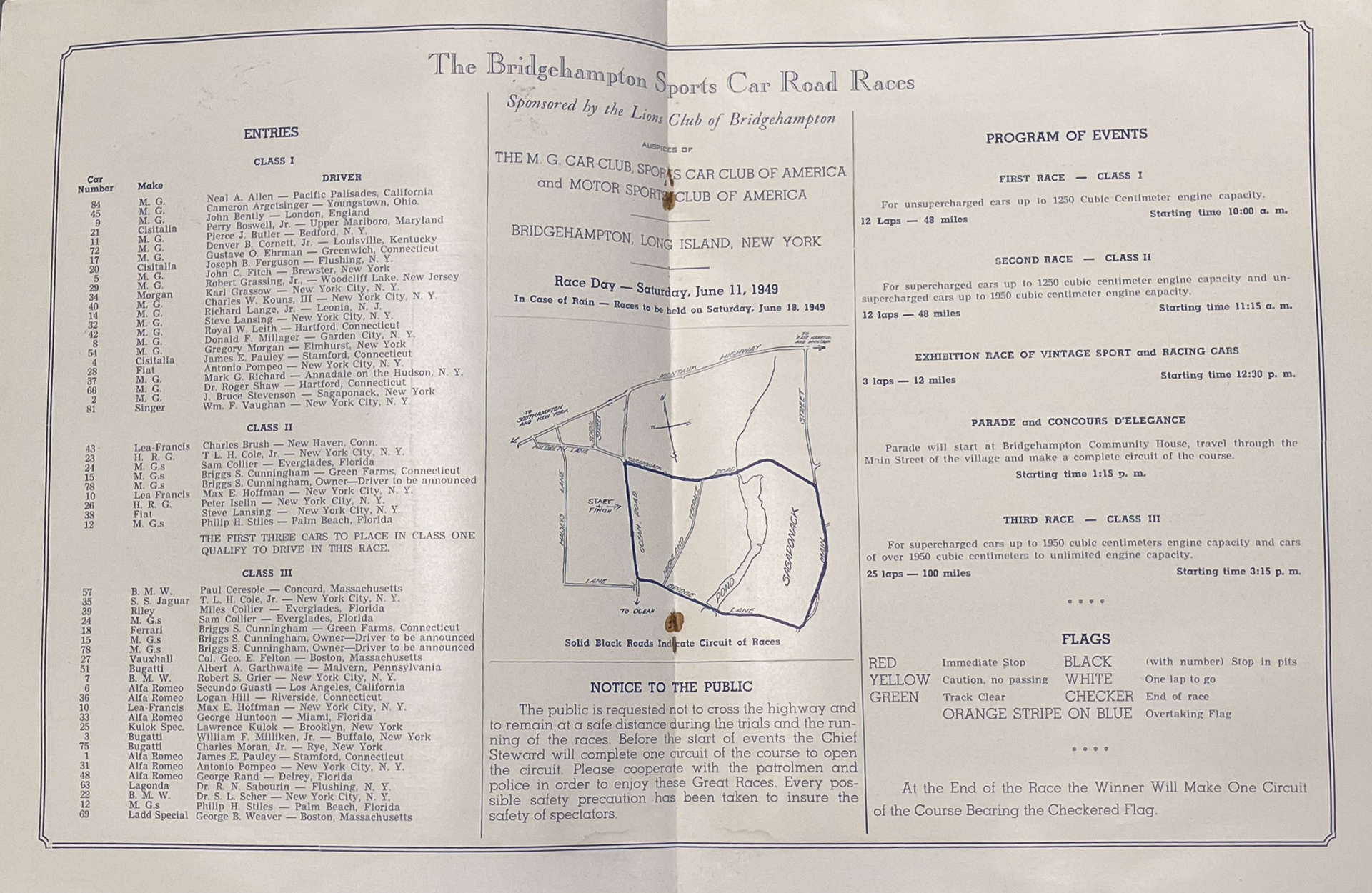
Each year, there were multiple categories of racing car classes that ran throughout the day. Here's a taste of what the day's activities would have been like if you attended the 1949 Bridgehampton race.
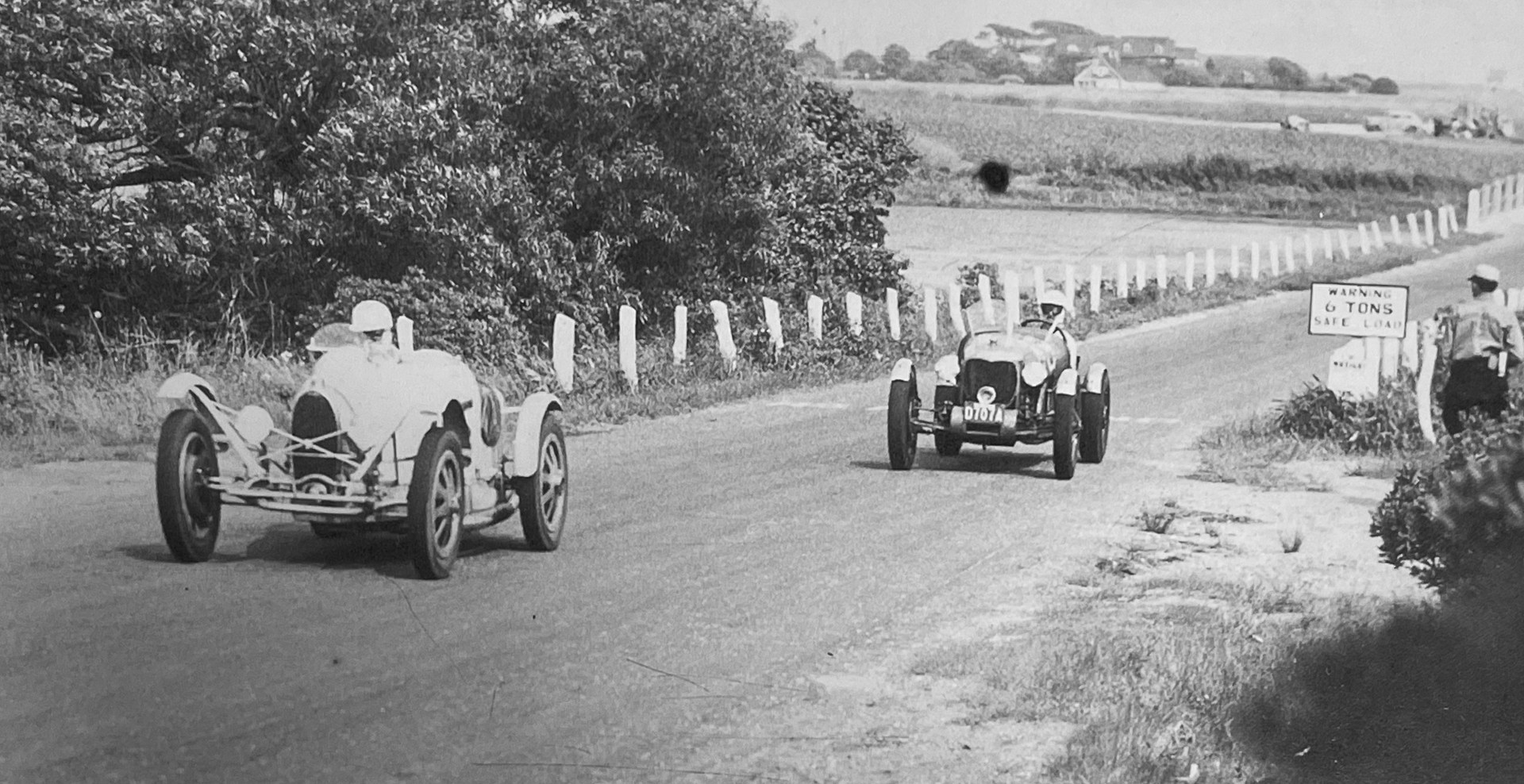
And when it came to the race itself, this image shows Charles Moran in the lead ahead of George Weaver in the Ladd Special as they hit Bridge Lane after crossing the Sag Pond Bridge.
- Image from the book Bridgehampton Racing From the Streets to the Bridge by Joel E Finn
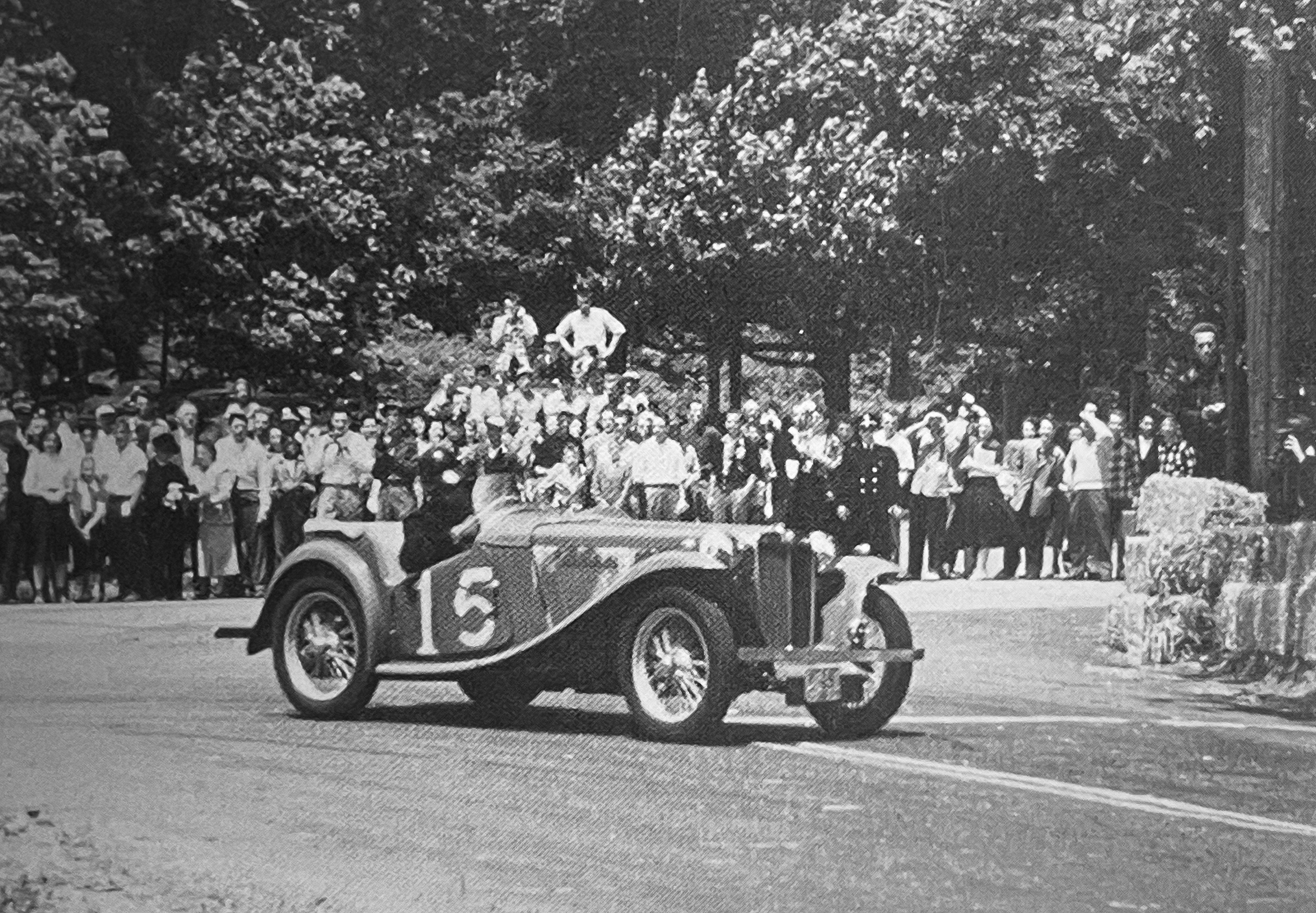
Sam Collier in a MG TC that belongs to Briggs Cunnignham that came in first plcae in race number two.
- Image from the book Bridgehampton Racing From the Streets to the Bridge by Joel E Finn
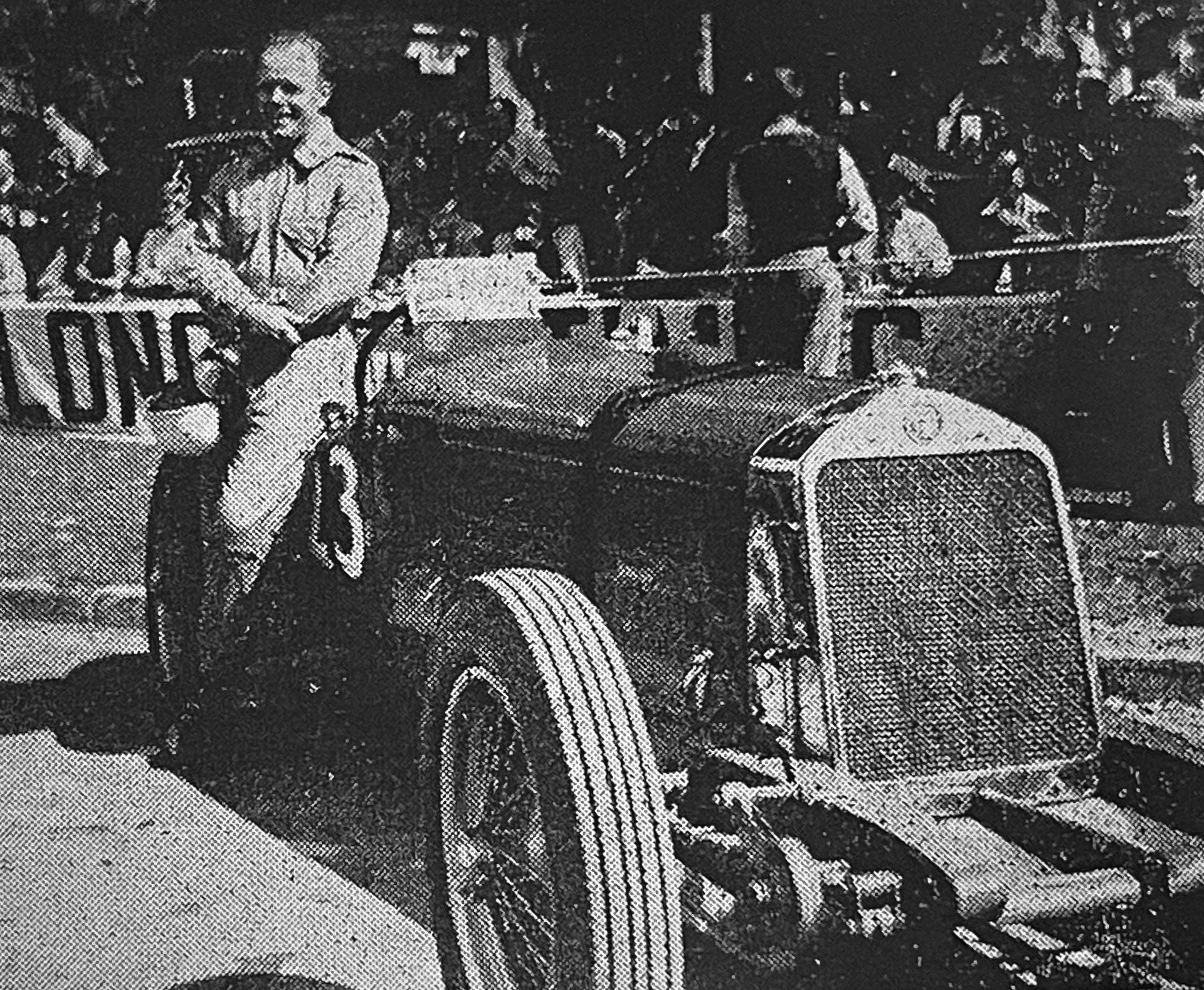
George Huntoon wins the Bridgehampton Road Race in his 14-year-old ( in 1949 ) Allfa Romeo in race number three.
- Image from the 1950 program
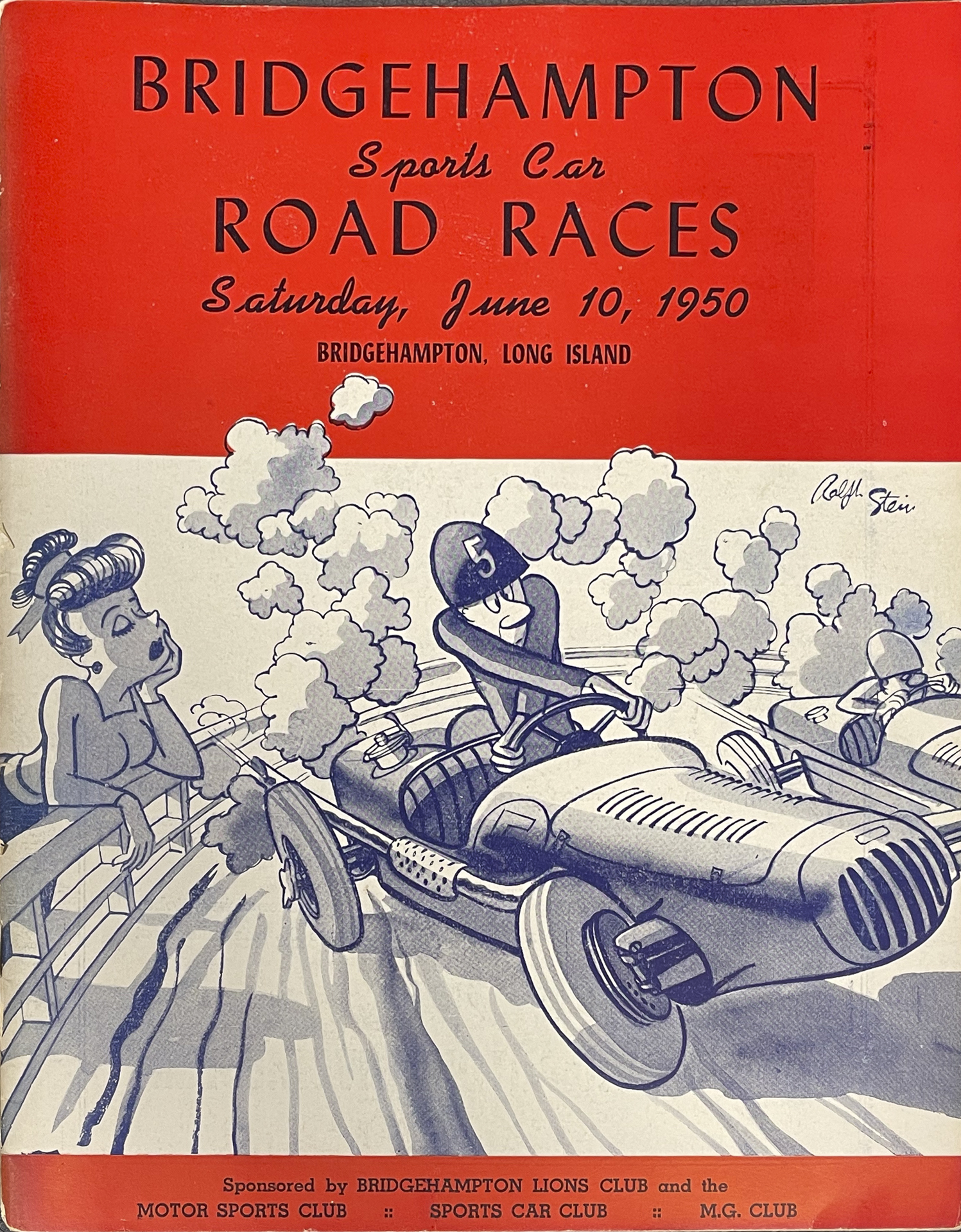
1950
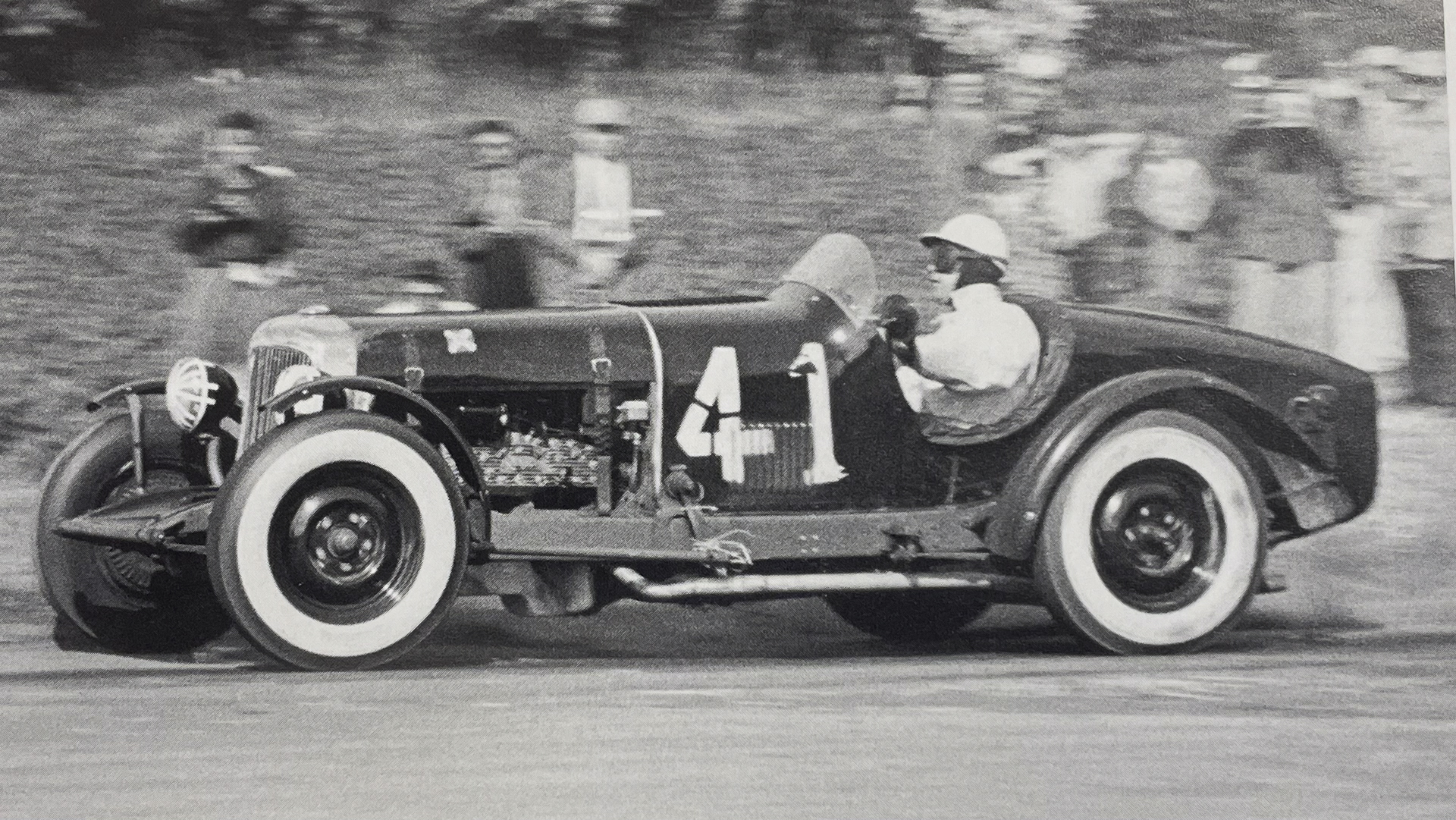
Here comes a Duesenberg, but this one is powered by a Hopped-Up Ford Flathead V8 driven by George Huntoon. He finished in 3rd place in the 1950 race.
- Image from the book Bridgehampton Racing From the Streets to the Bridge by Joel E Finn
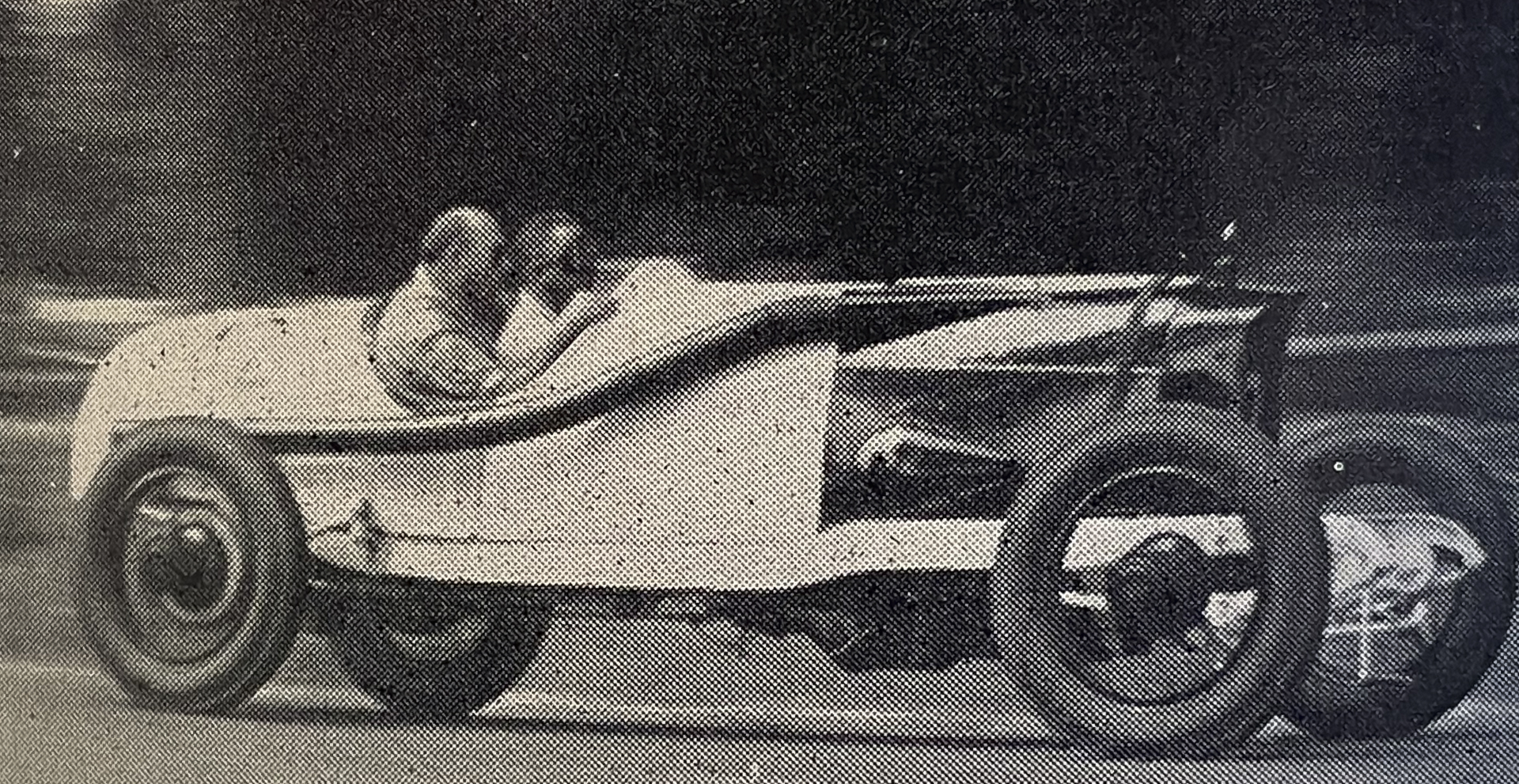
Another Duesenberg was in attendance for the 1950 races; however, this one was featured in the parade showpiece, so while it wasn't racing at full speed, it must have given the spectators a thrill to see.
Lion president B.J. Corrigan behind the wheel with Jack Rhinehart of Gulf Oil in the 1914 Duesenberg racer.
- Image from the book Bridgehampton Racing From the Streets to the Bridge by Joel E Finn
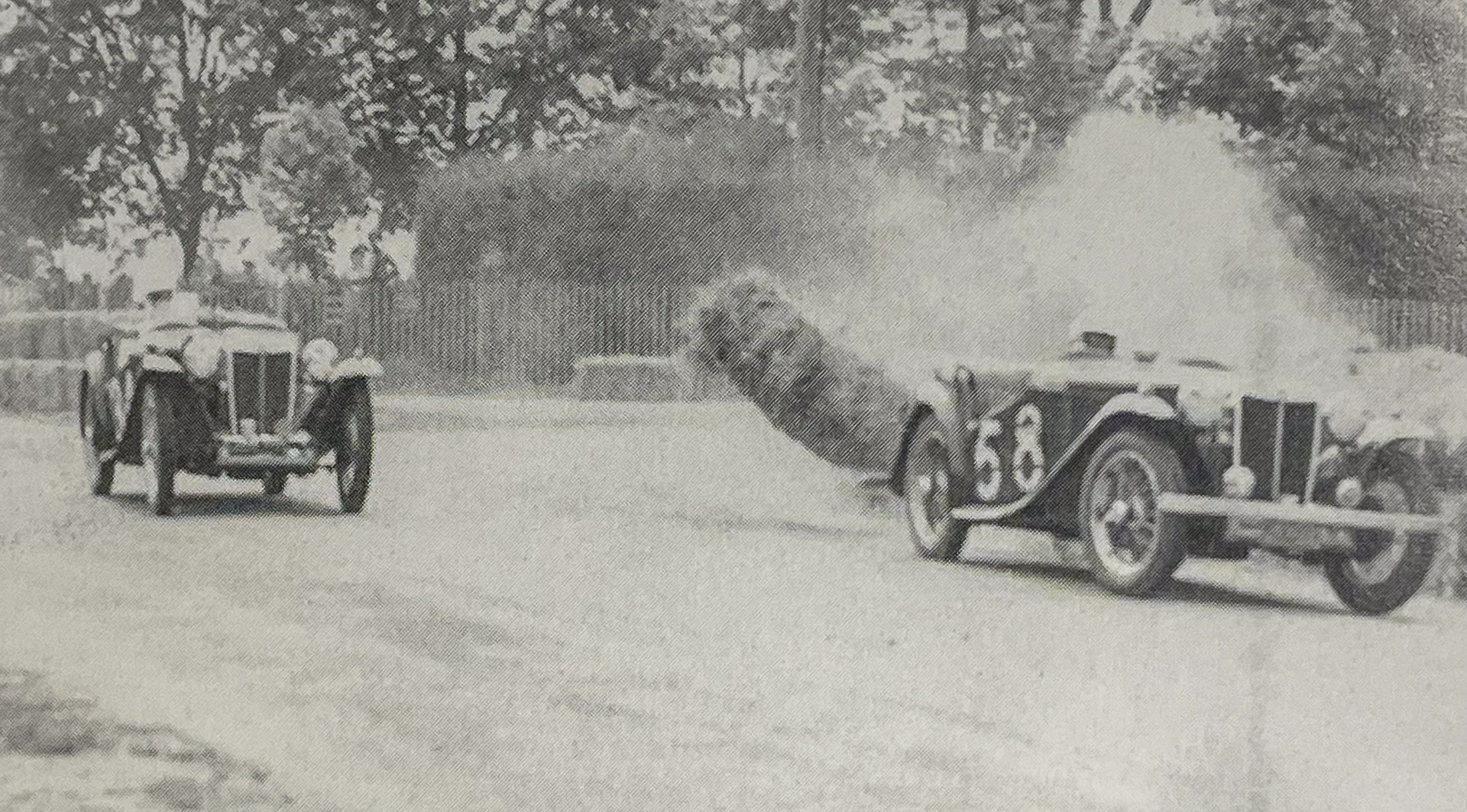
Phil Stiles hits the hay with his MG and sends it flying as Jim Stiles looks on – neither driver finished Race One.
- Image from the book Bridgehampton Racing From the Streets to the Bridge by Joel E Finn
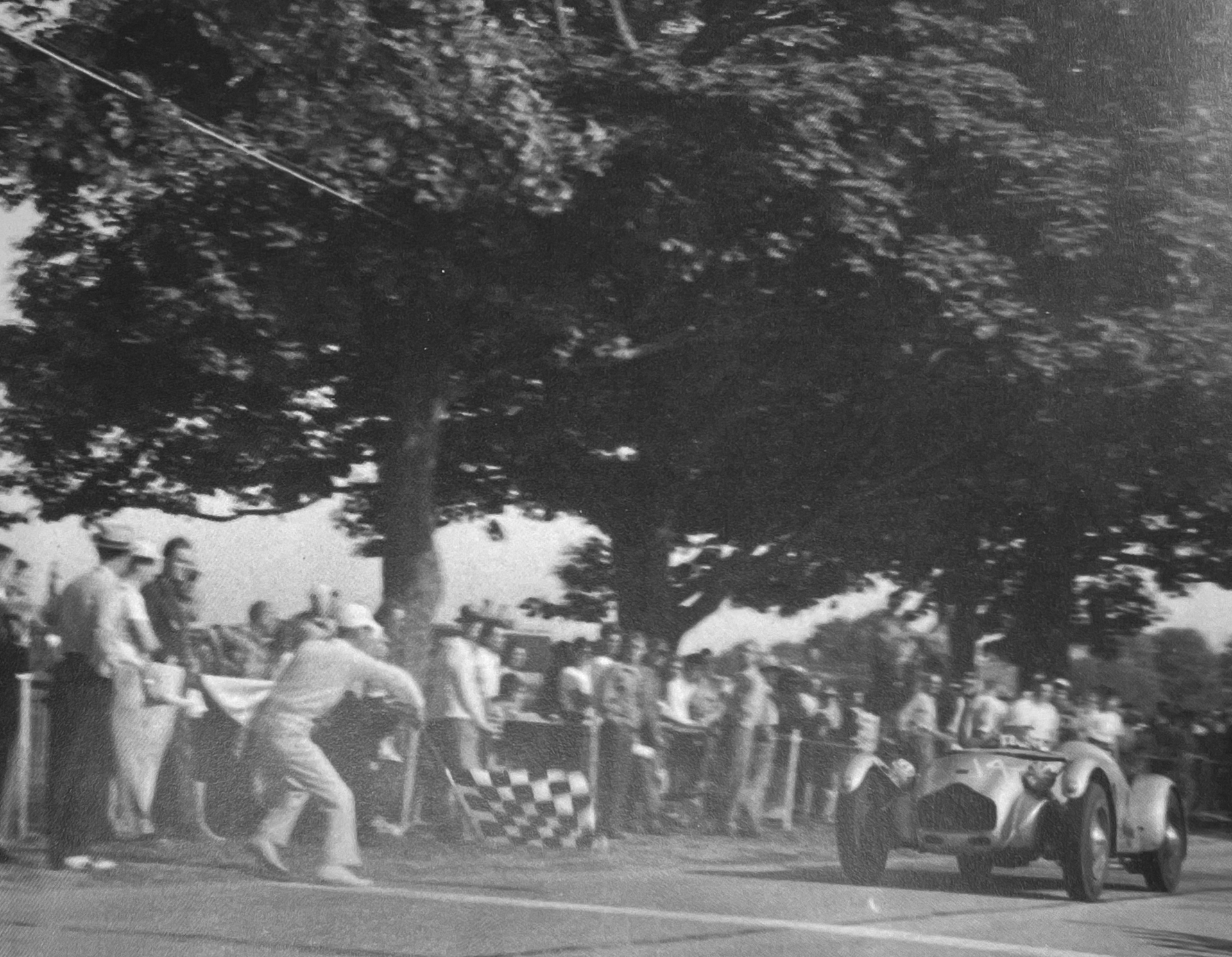
Tom Cole takes the checkered flag, winning the 1950 Bridgehampton Cup Race.
- Image from the book Bridgehampton Racing From the Streets to the Bridge by Joel E Finn
1951
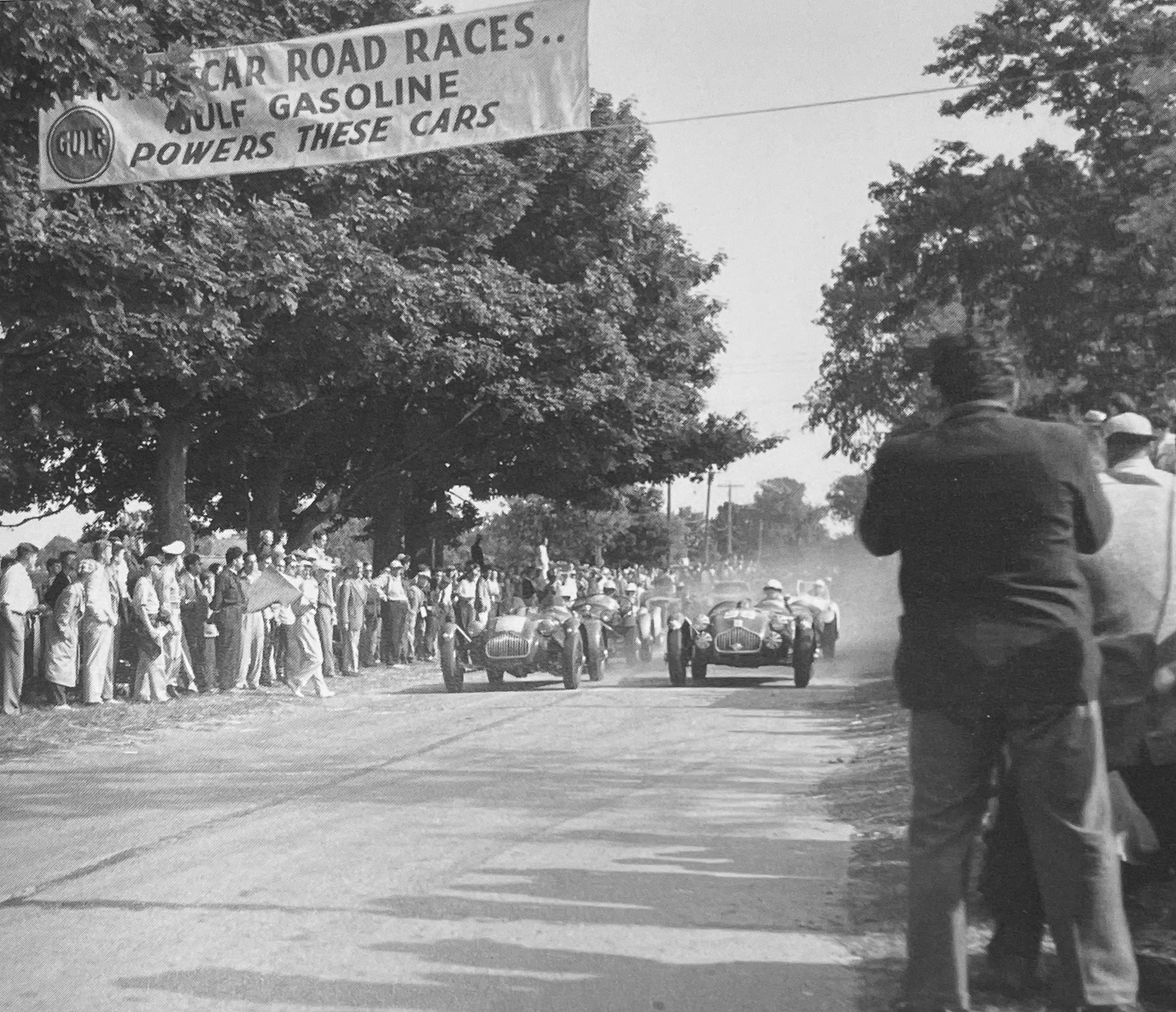
Starter Nils Mickelson waves the green flag at the start of the Bridgehampton Cup Race.
- Image from the book Bridgehampton Racing From the Streets to the Bridge by Joel E Finn
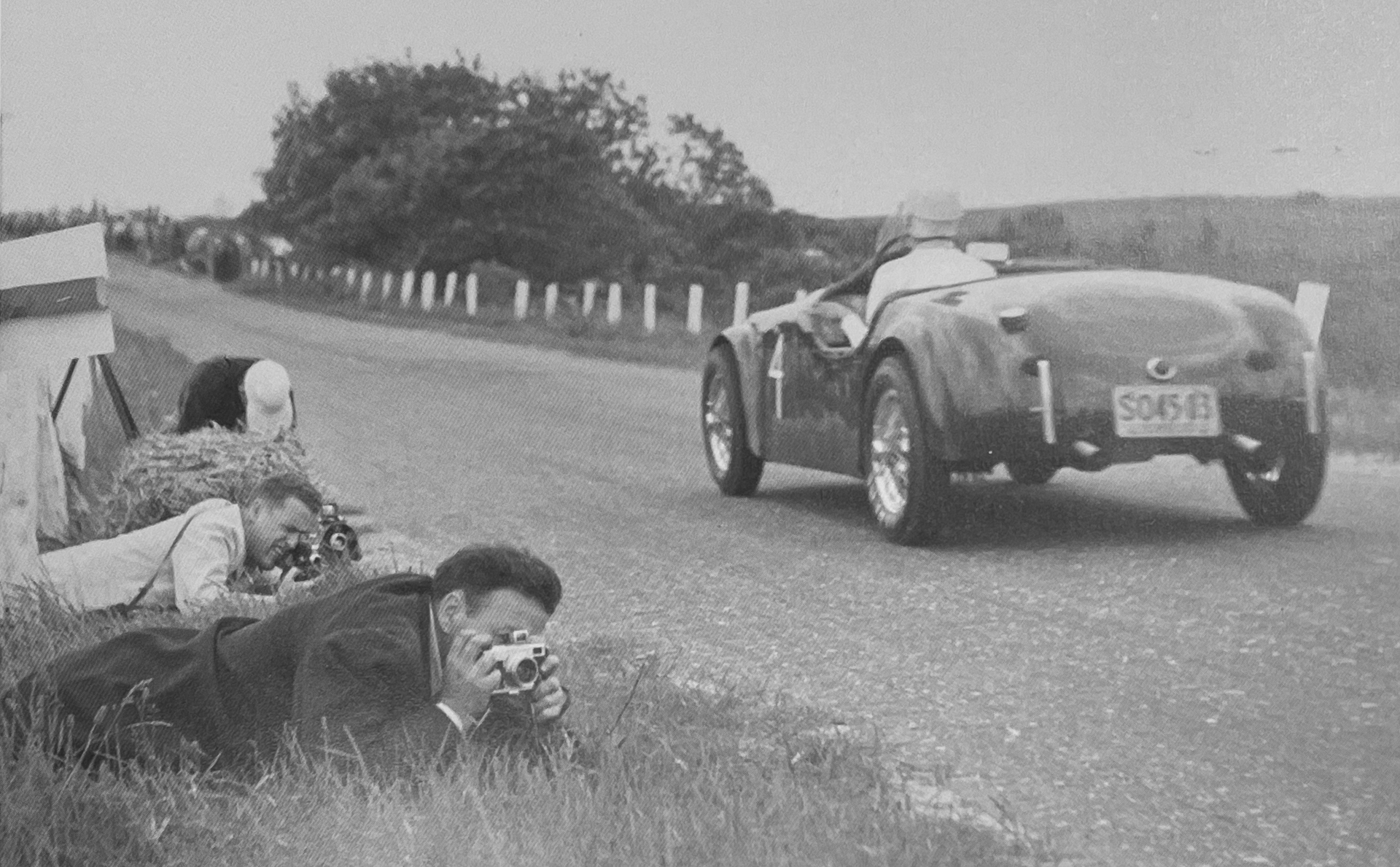
Photographers took plenty of risks to get the perfect shot. Here, Paul O’Shea speeds by in a Ford powered Fiat on Bridge Lane, just west of the Sag Pond Bridge, during the Mecox Race.
- Image from the book Bridgehampton Racing From the Streets to the Bridge by Joel E Finn
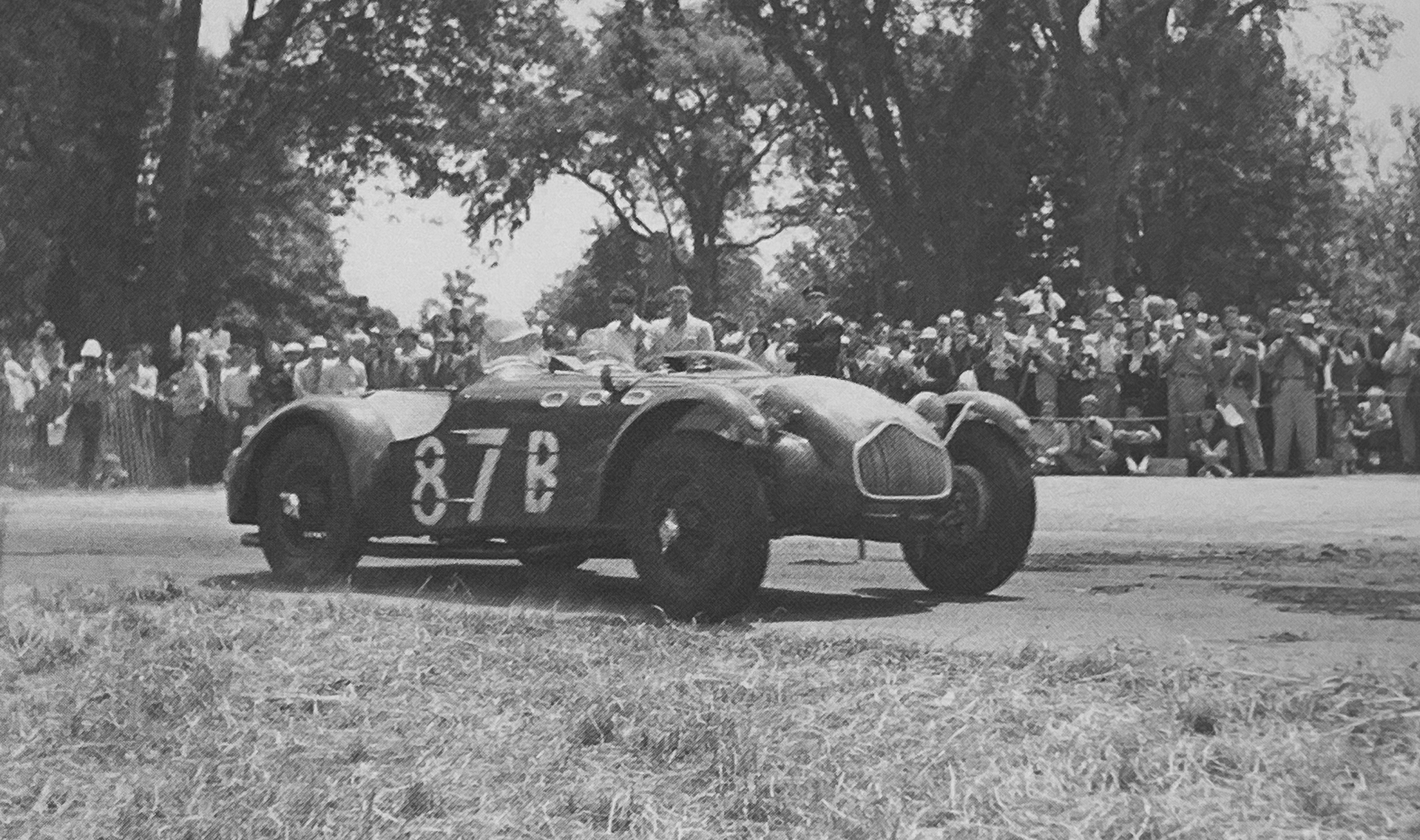
This same year, Tom Cole had an easy time taking the checkered flag in his Allard at the Hampton Cup Race.
- Image from the book Bridgehampton Racing From the Streets to the Bridge by Joel E Finn
Photographs not enough for you? How about a video from 1951 showing the racing action? Click Here
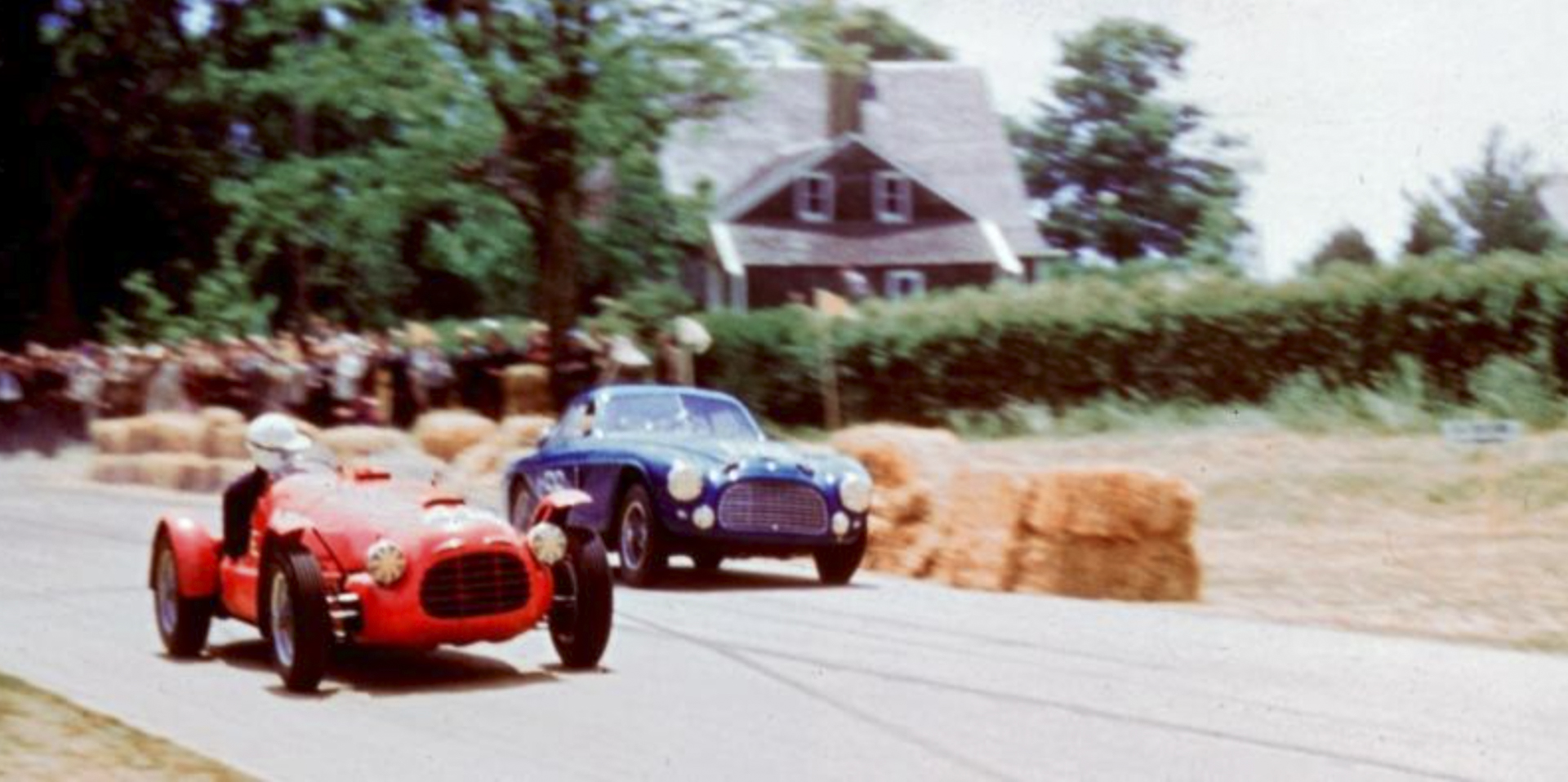
During the early 1950s the technology for making color photography was starting to get more affordable but shooting images in color was still more expensive than shooting in traditional black and white formats. I was, however, able to find some color images from the 1951 race. Here, the red Ferrari F 166 SC #42 driven by Briggs Cunningham and a blue Ferrari #56 Touring Berlinetta LM . - image sourced from York-Alexander Batsch on Flicker
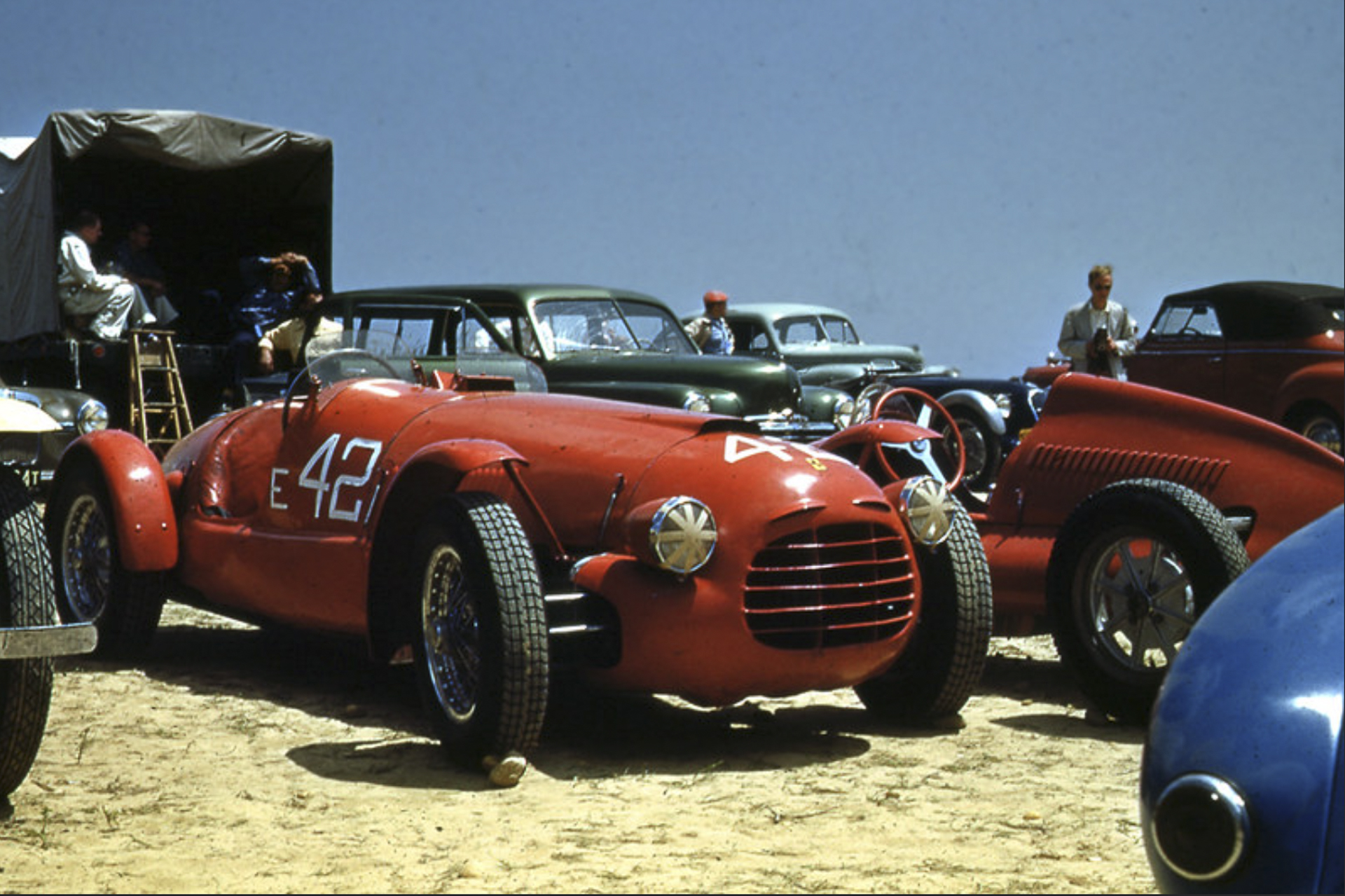
The Ferrari driven by Briggs Cunningham in the pits - image sourced from York-Alexander Batsch on Flicker
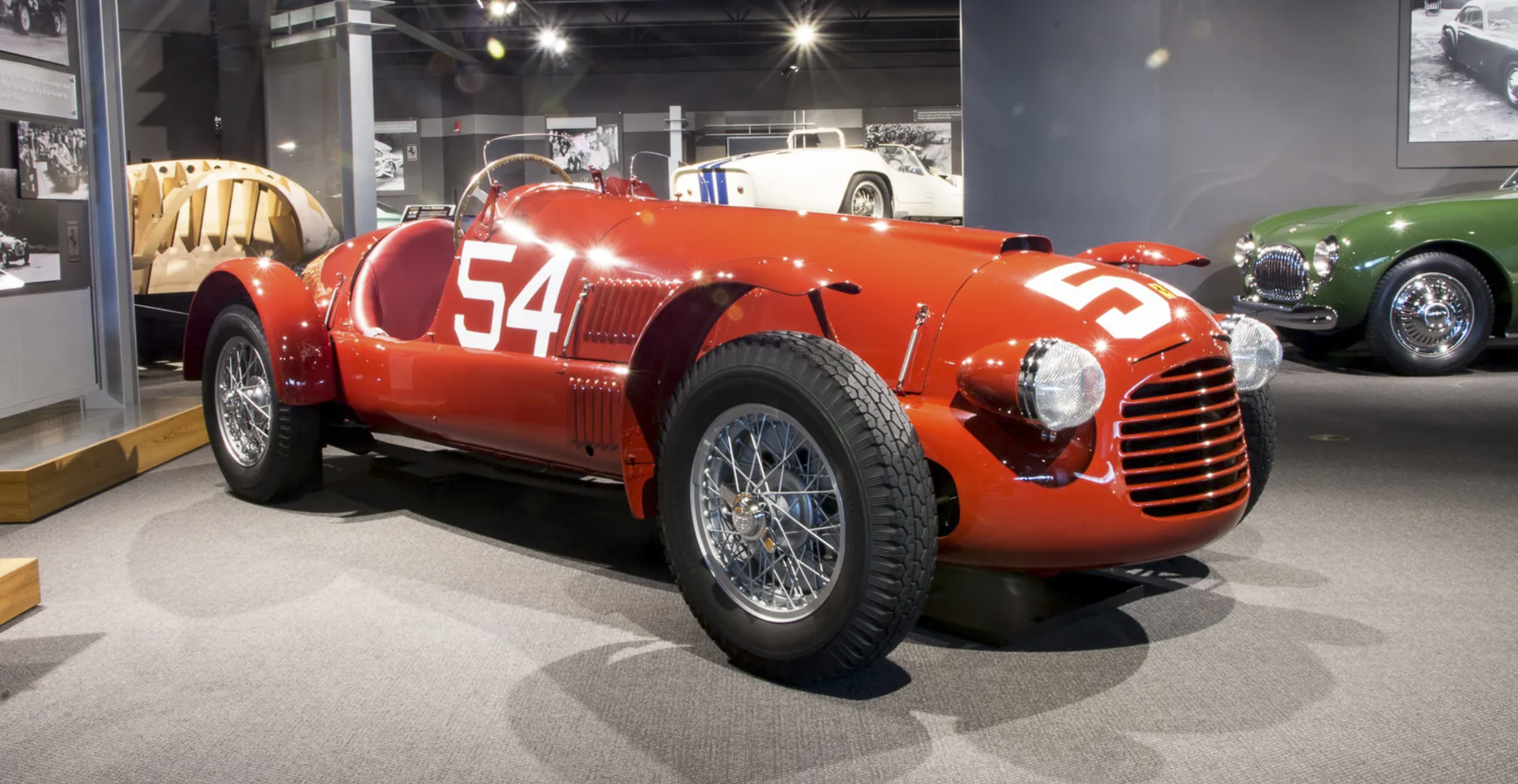
This Ferrari is still around today and is on display at the Revs Institute in Naples, FL.
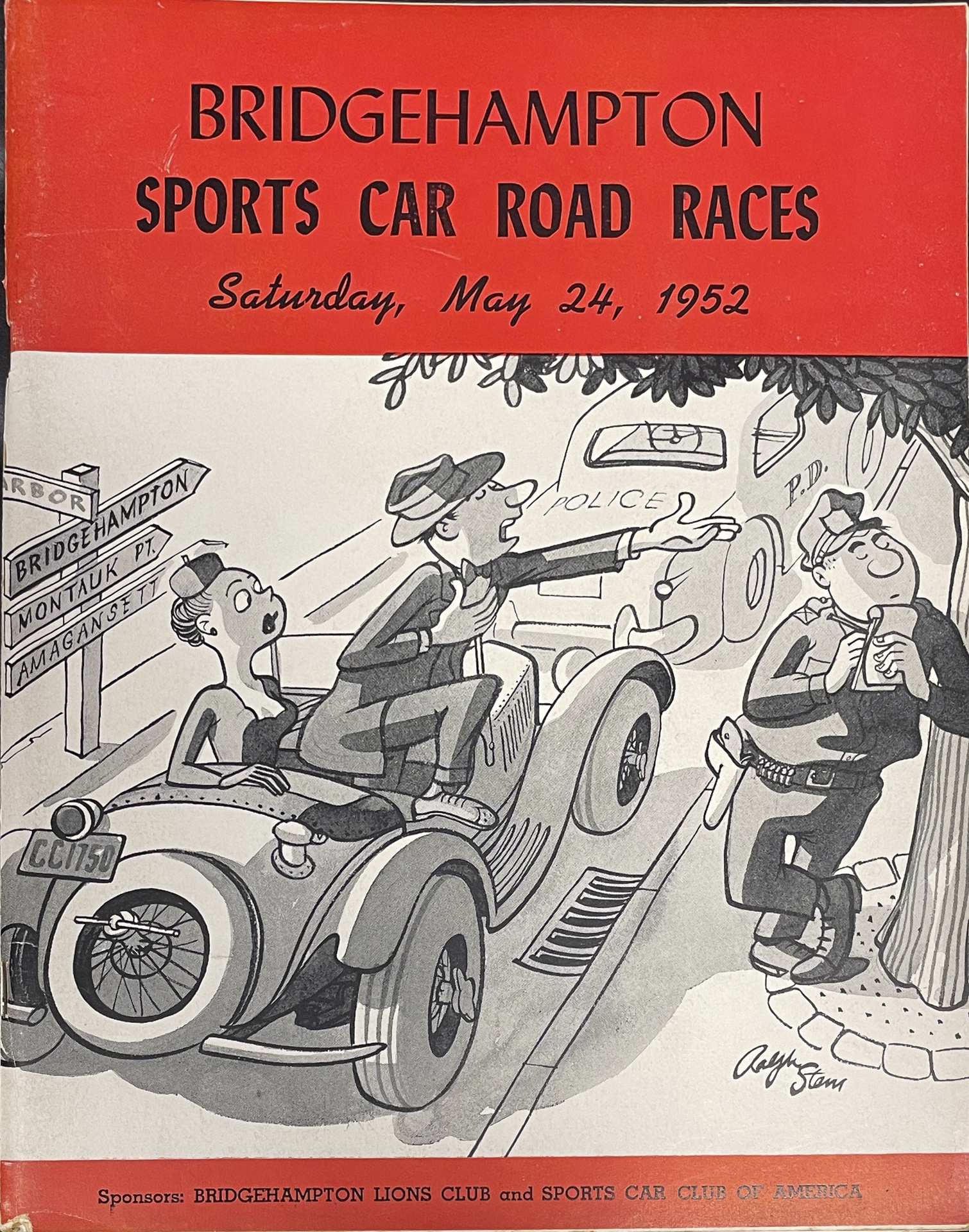
1952
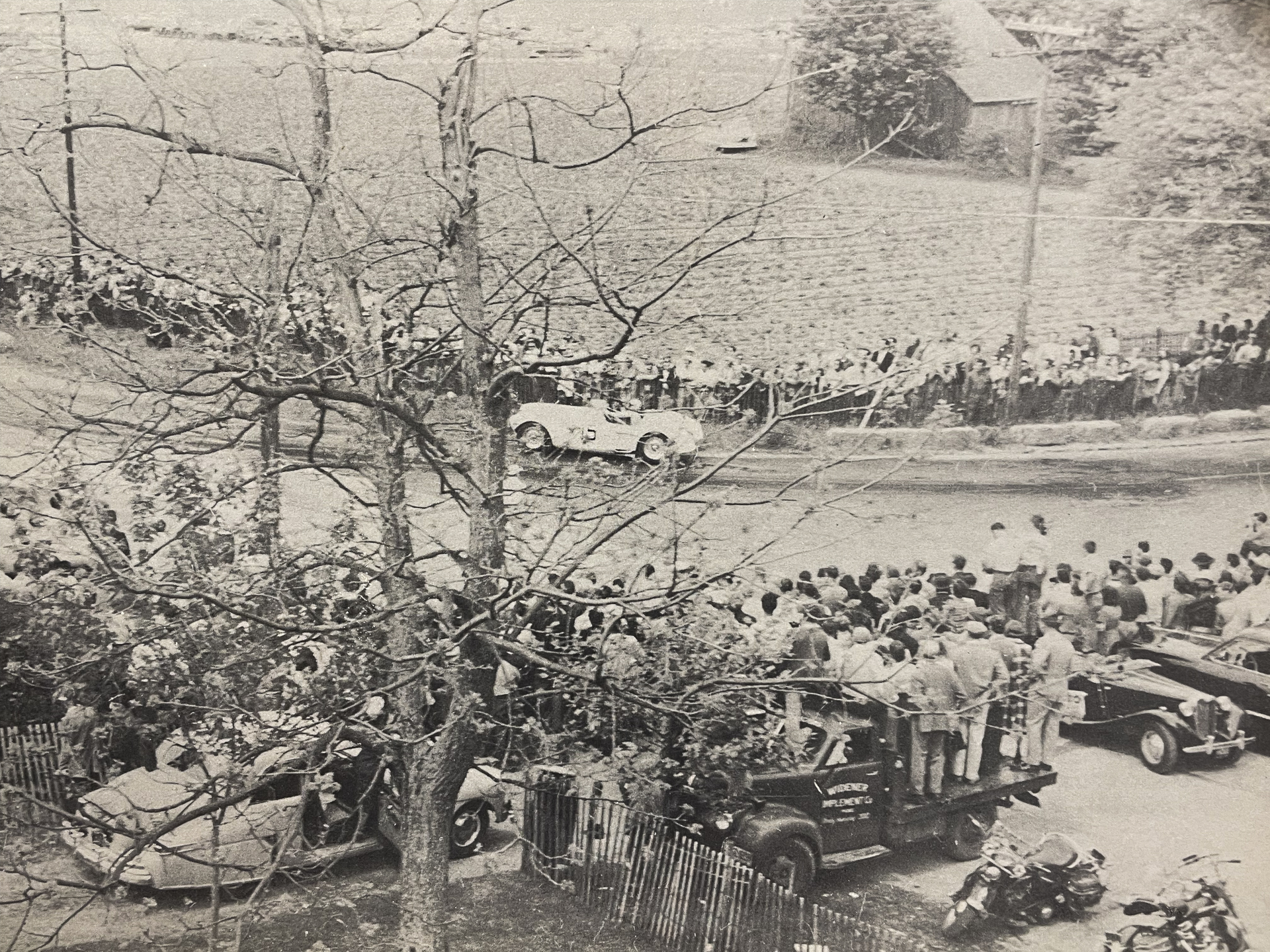
A birds eye view of the racing action in 1952.
Image from Motor Sport Magazine
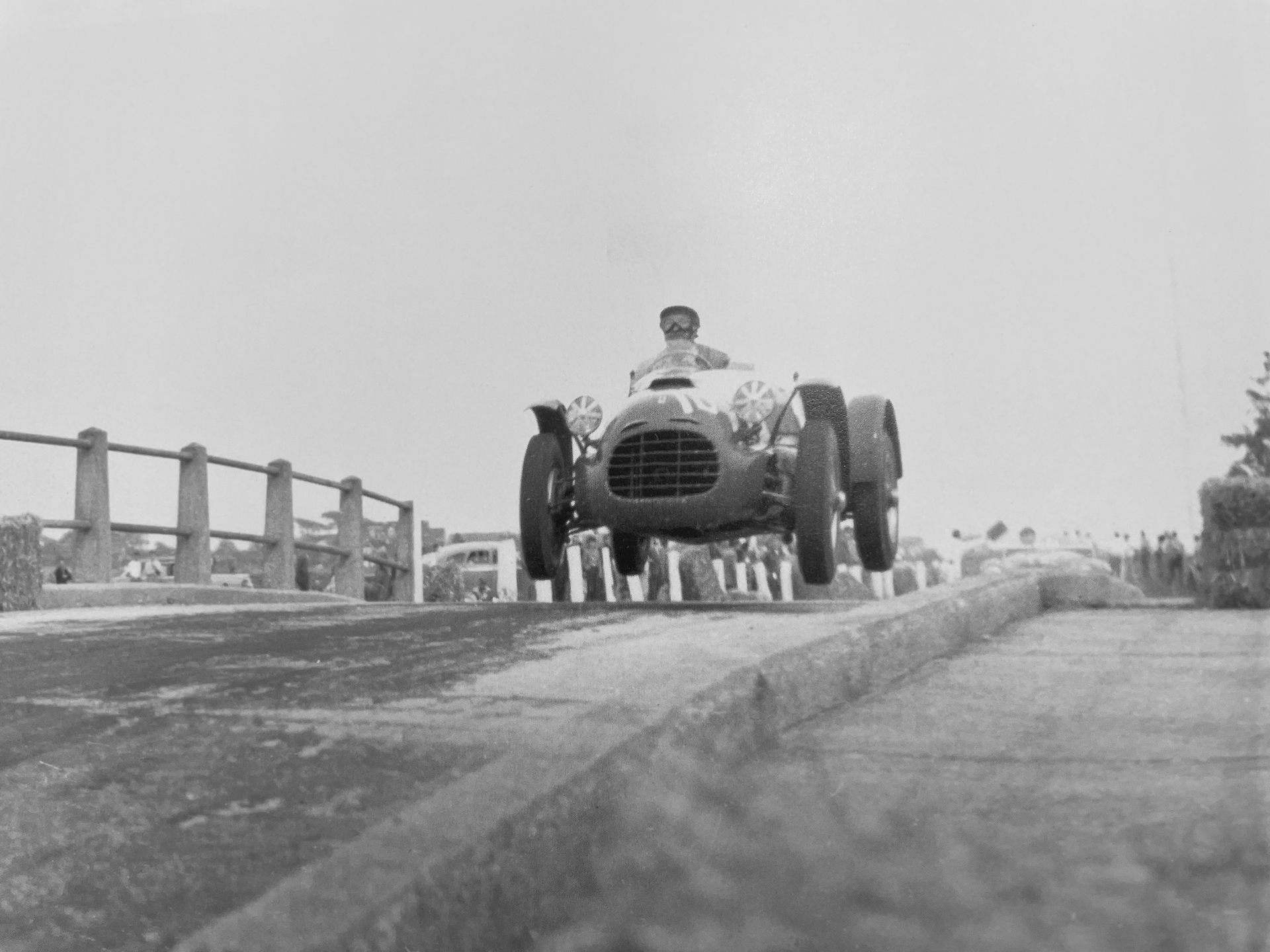
Here comes Briggs Cunnigham back again in 1952 in his Ferrari 166I flying over the Sag Pond Bridge.
- Image from the book Bridgehampton Racing From the Streets to the Bridge by Joel E Finn
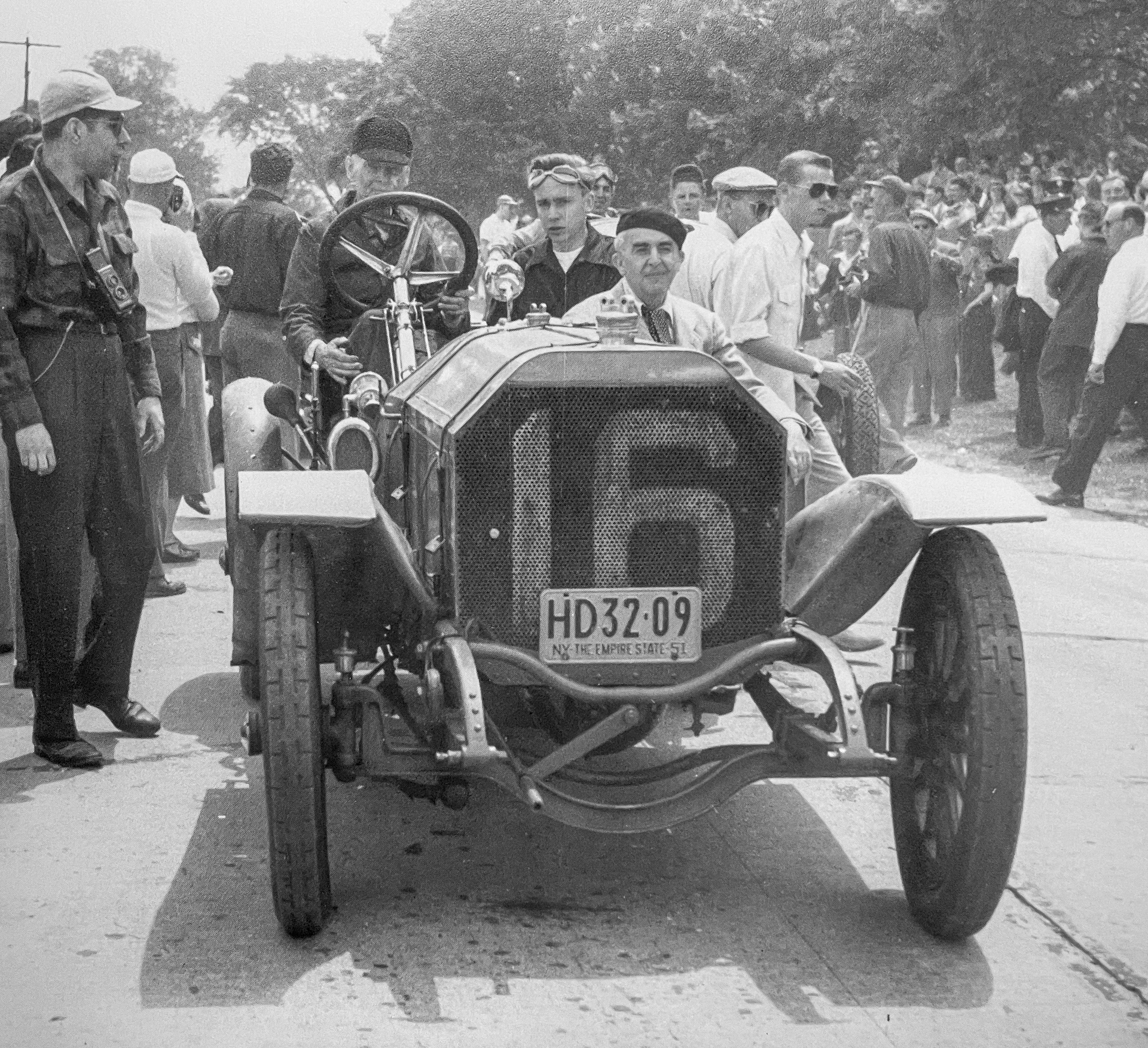
The 1906 Locomobile – winner of the 1908 Vanderbilt Cup and arguably the most famous racecar of all time, is ready for the Vintage Exhibition Run with driver Joe Tracy, who also drove the car in the 1906 Vanderbilt Race. The passenger (wearing the beret) is none other than artist Peter Helck, owner of the car. Peter’s son Jerry is sitting next to Tracy.
- Image from the book Bridgehampton Racing From the Streets to the Bridge by Joel E Finn
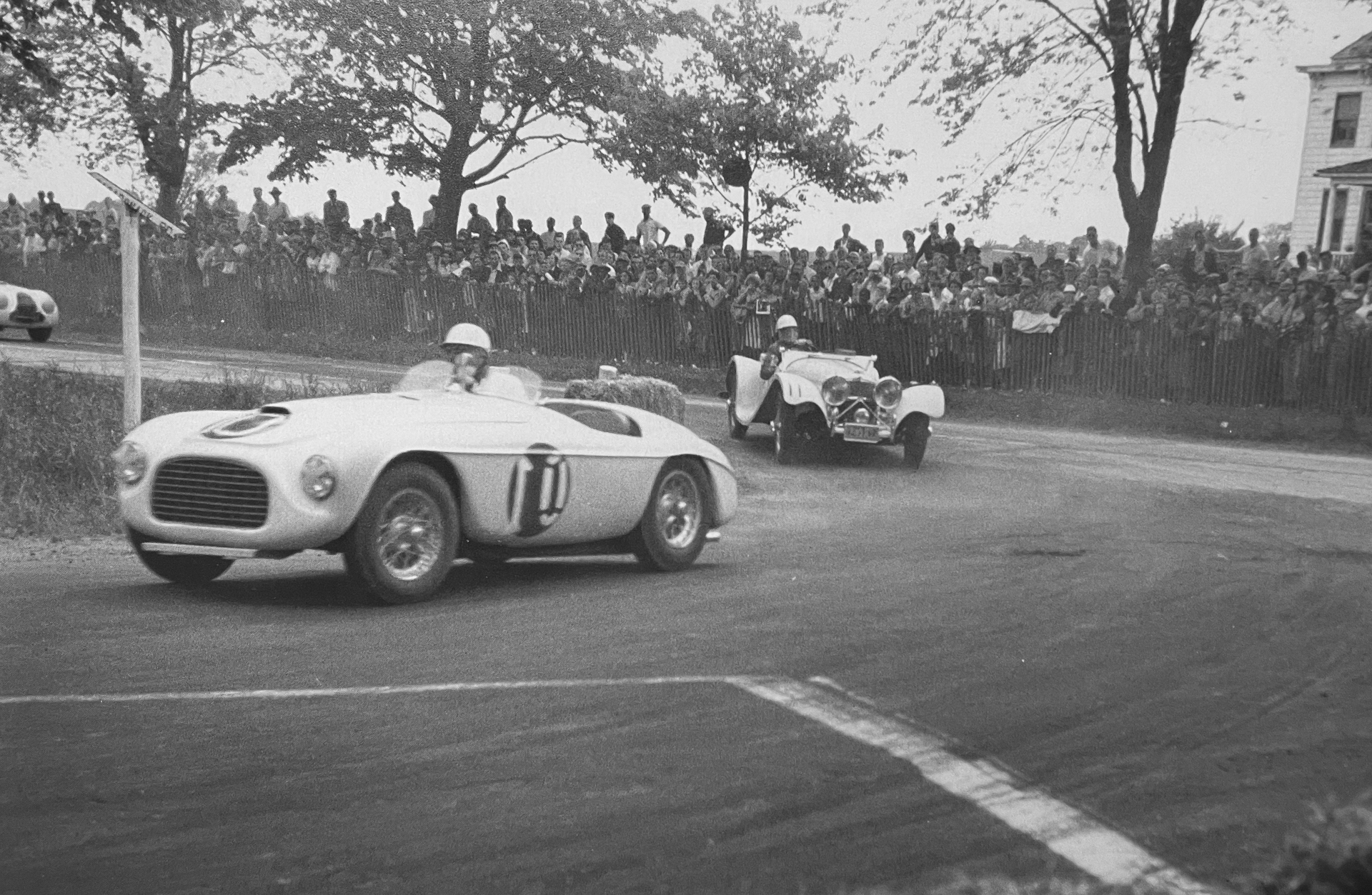
The Ferrari 166 raced by Jim Simpson is seen here ahead of Dave Garroway in his Jaguar SS100.
- Image from the book Bridgehampton Racing From the Streets to the Bridge by Joel E Finn
1953
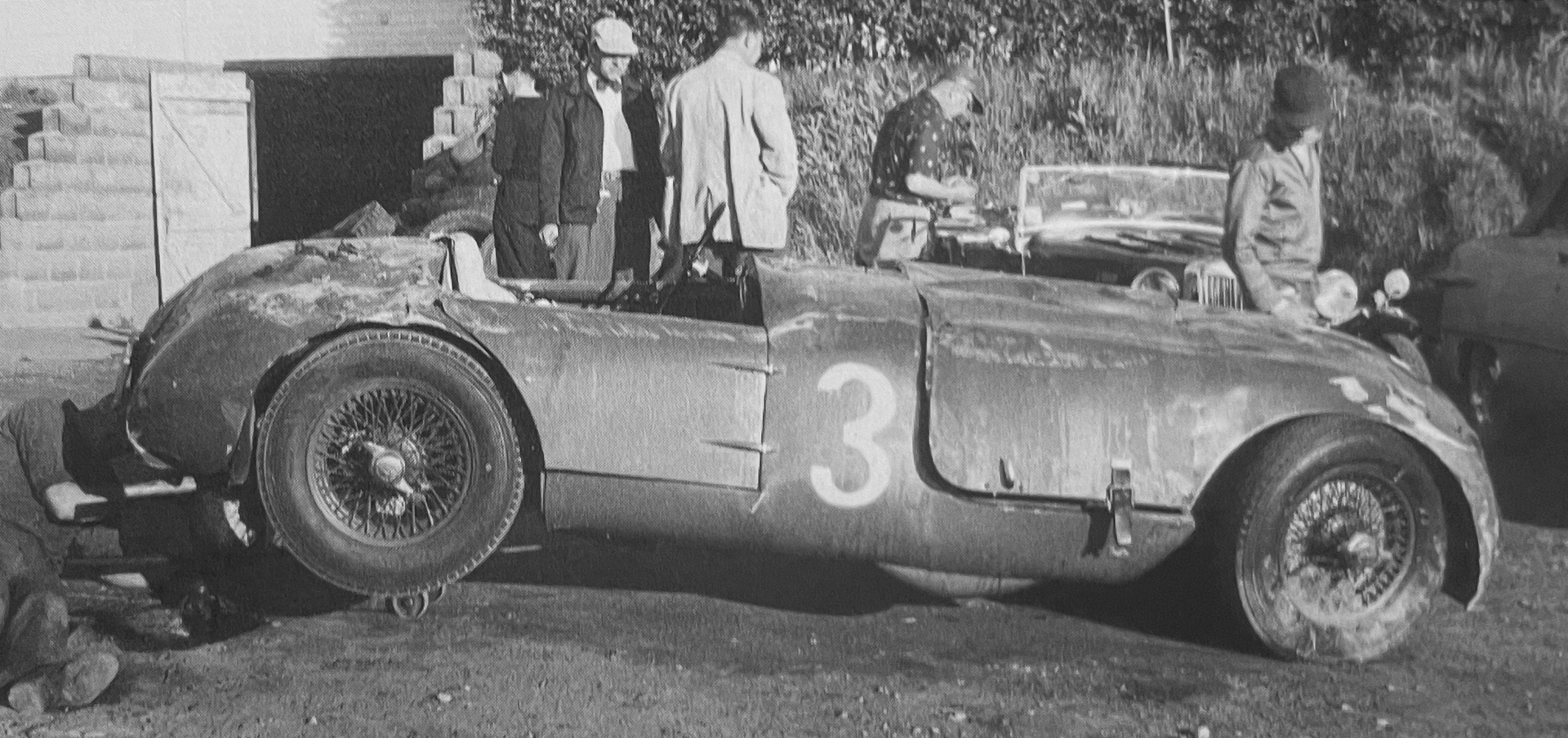
By 1953, New York State had banned all racing organized on closed public streets due to the death of a spectator at the Watkins Glen road race series the year prior and the death of a driver named Bob Wilder at the 1953 Bridgehampton’s qualifying session. His crashed Allard is seen here in this photo.
This marked the end of an era for racing, but not the end of the road. Enthusiasts joined together to buy land in Bridgehampton to build a purpose-built racing track.
- Image from the book Bridgehampton Racing From the Streets to the Bridge by Joel E Finn
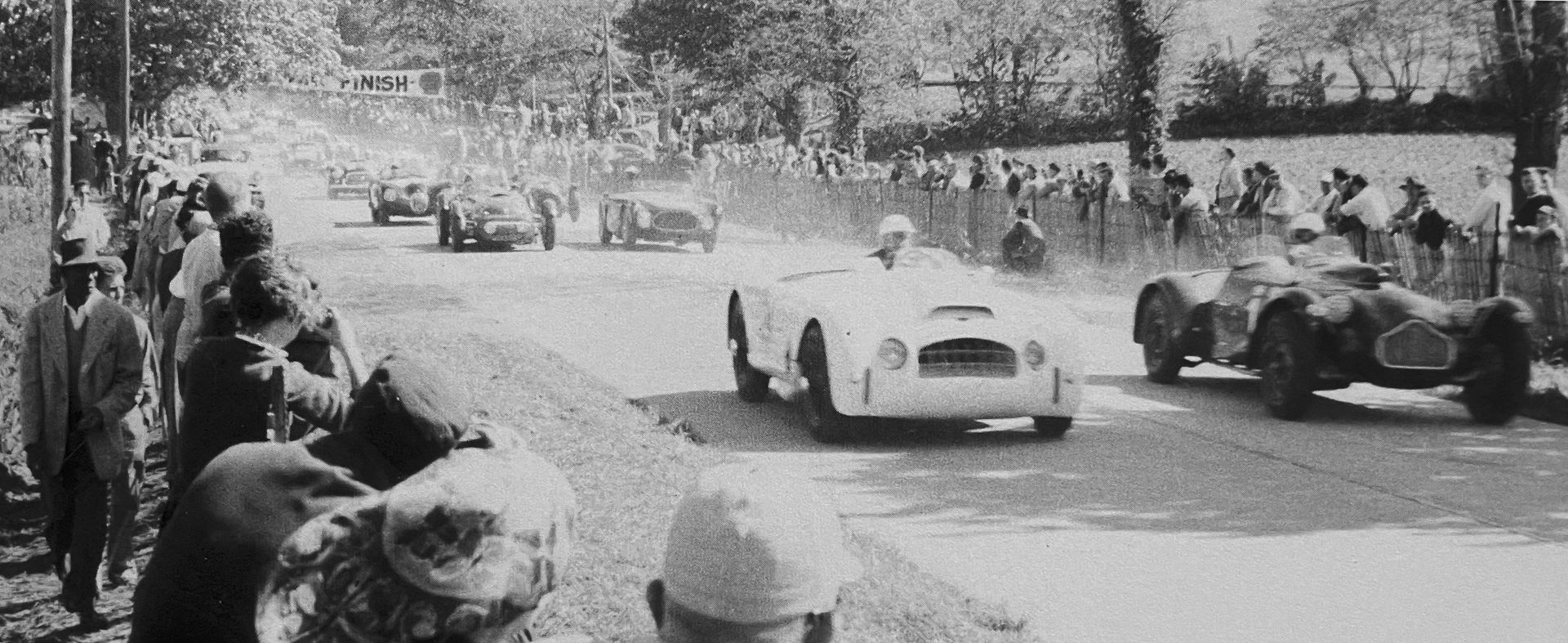
The start of the race from 1953 went on despite Bob Wilders death during qualifying earlyer in the week.
- Image from the book Bridgehampton Racing From the Streets to the Bridge by Joel E Finn
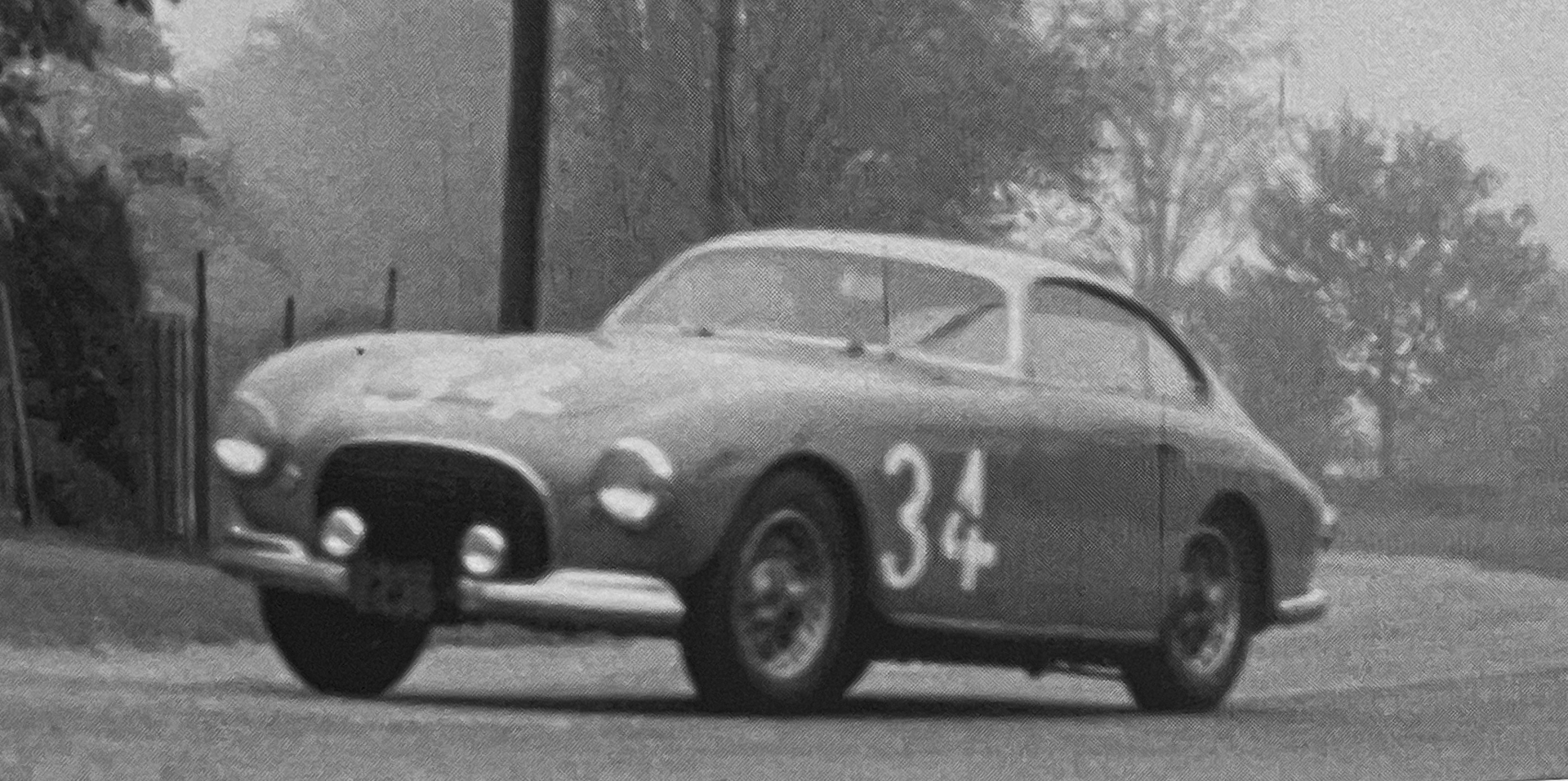
A lone Ferrari driven by Vivian Corradini setting up for the turn off Main Street onto Bridge Lane.
- Image from the book Bridgehampton Racing From the Streets to the Bridge by Joel E Finn

Bill Spear driving his Ferrari 340MM to the eventual win of race number 3.
- Image from the book Bridgehampton Racing From the Streets to the Bridge by Joel E Finn
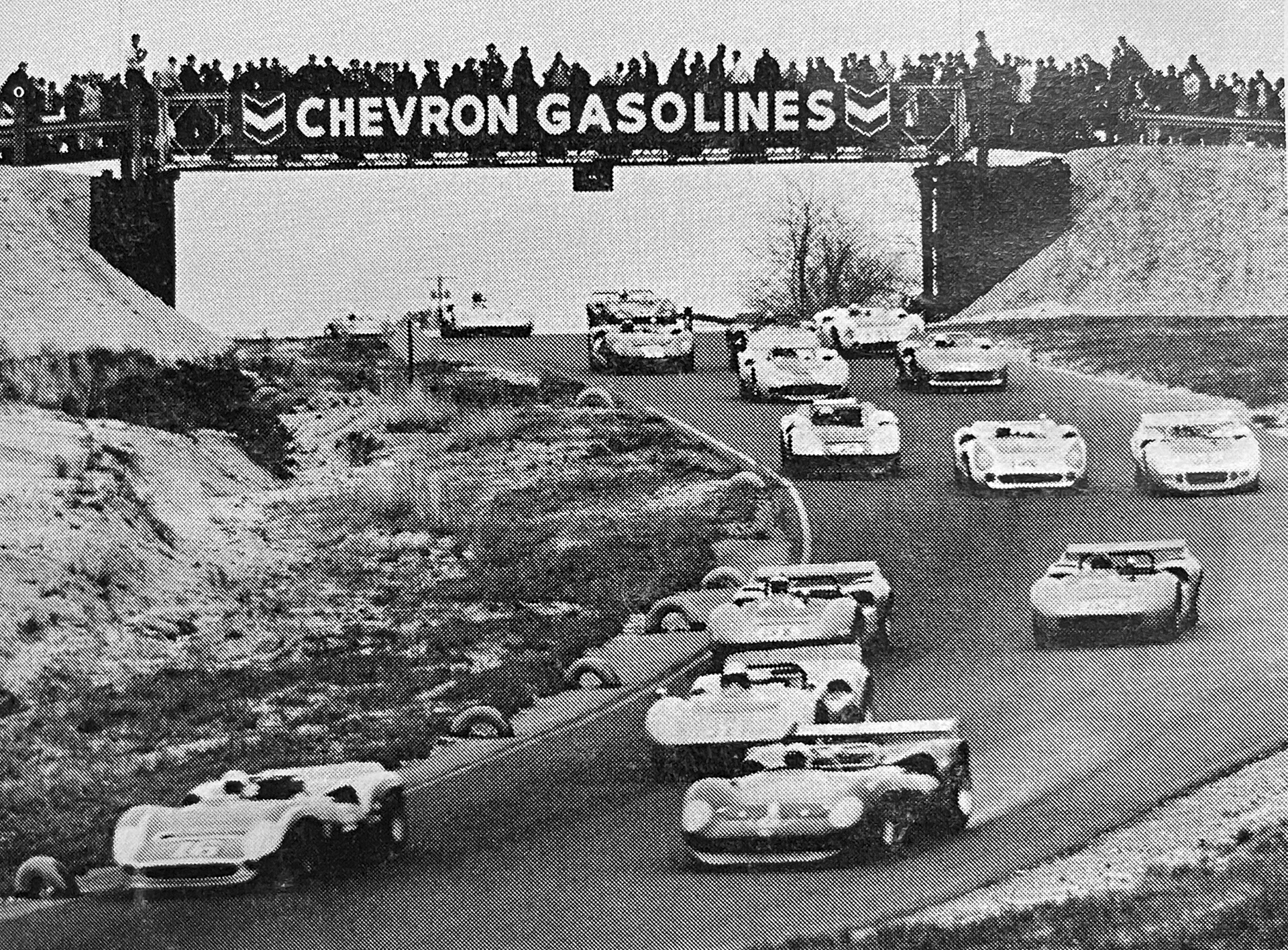
In 1957 the iconic Bridgehampton race track opened, starting a new chapter in the area’s racing history (the next article in the series will cover this development).
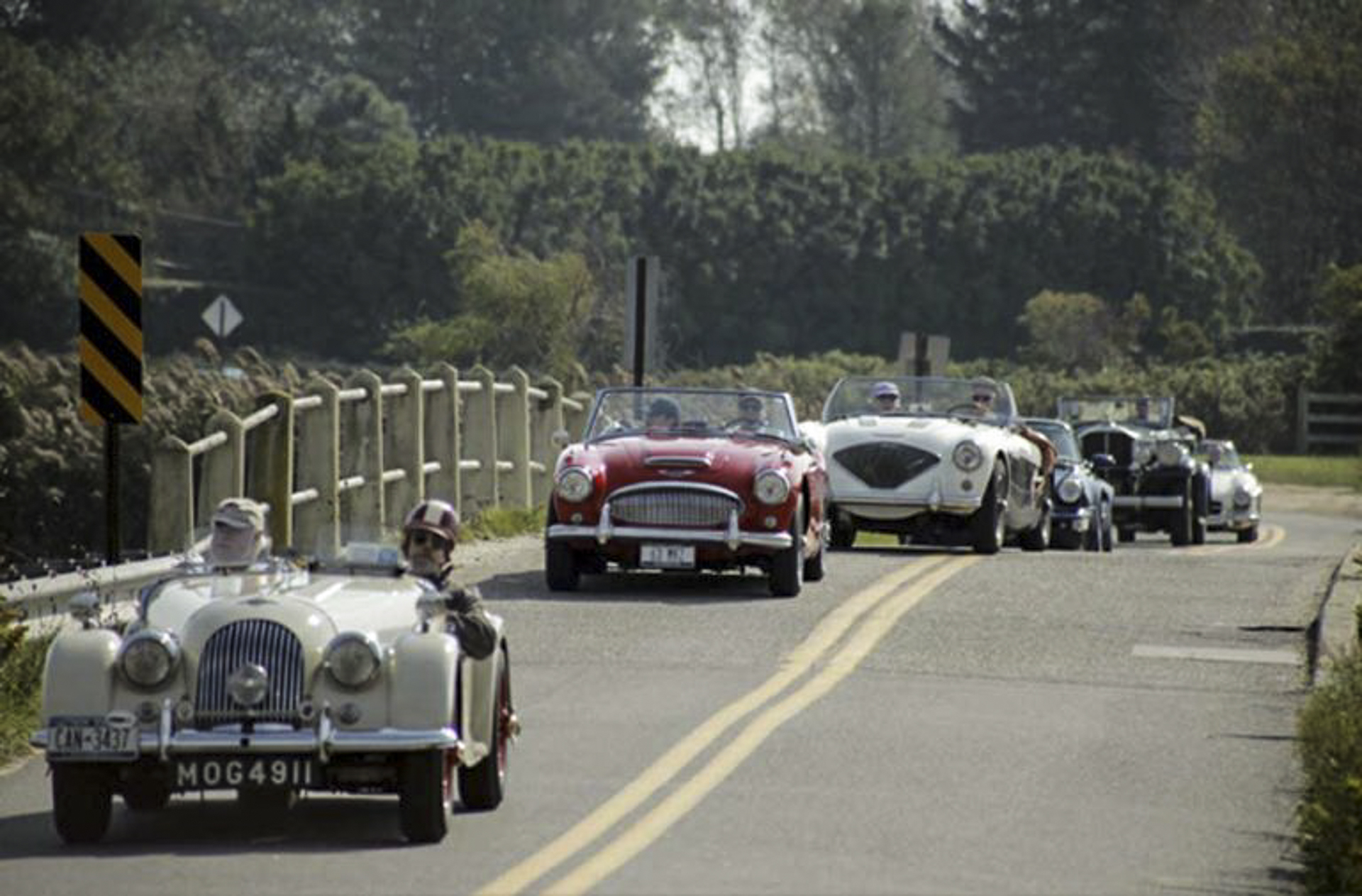
The roads that made up the Bridgehampton street circuit are still around today and I would give anything to drive the course in a little MGB listening to the sound of the engine purr. A little Dire Straits or Chris Rea on the sound system and life would be perfect. Actually, there are classic car road tours held in Bridgehampton that pay tribute to the original road course. Here is an image taken by Corbin Vreeland in 2019 of some of the cars going over the famous bridge.
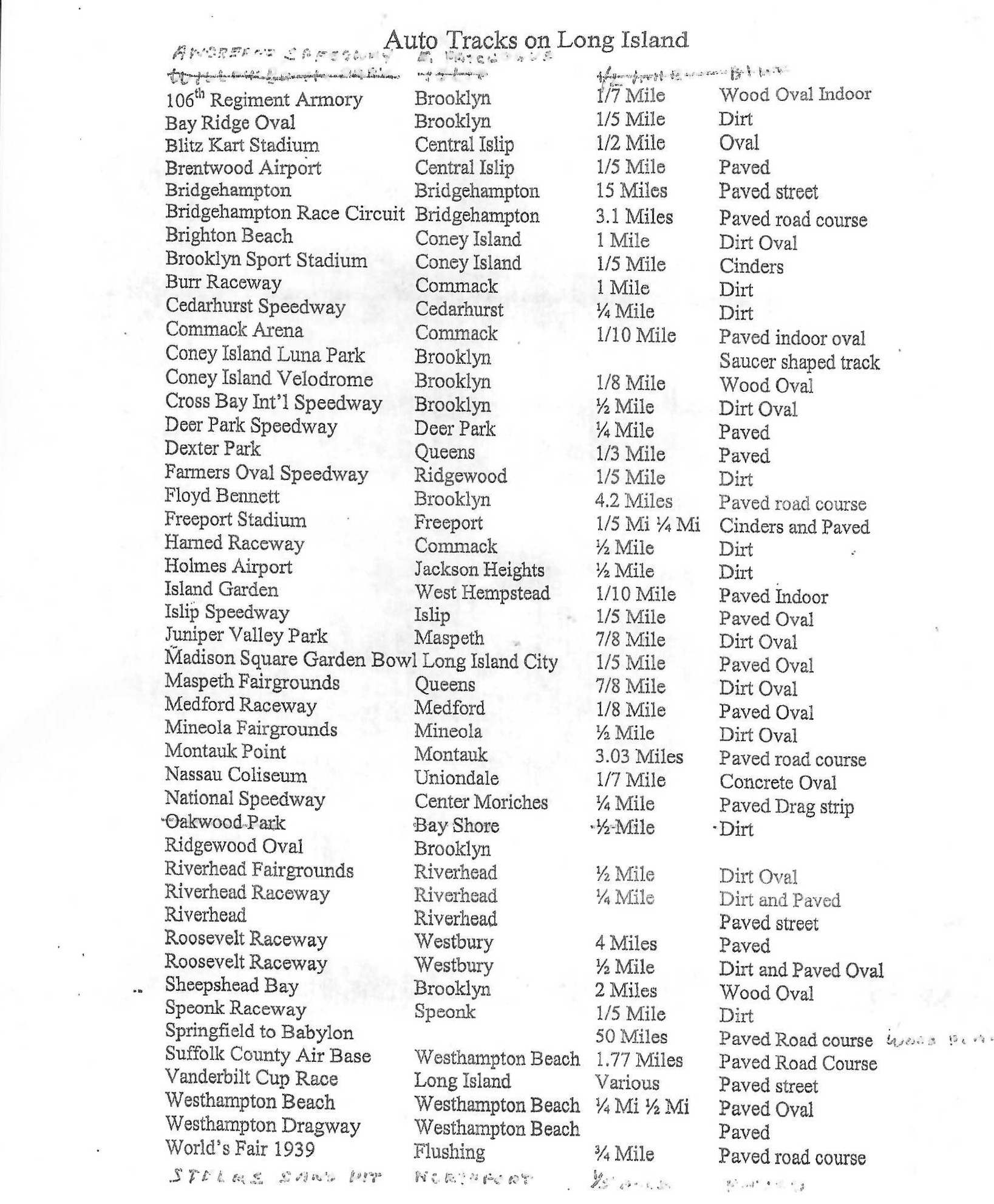
As a reminder, I will be doing multiple historical deep dives on all the race tracks that once were on Long Island. My introduction post to this series got a lot of comments with photos of the tracks listed.
My next story for this series will be on the Bridgehampton closed course race track, so if you have images you want to share and possibly be used ( with credit ) on my next post, please comment below!




Comments
Outstanding article! Can’t wait for the next one!
The writeup and pictures are right on, some I’ve never seen before. If I can attach a couple more from the later years, 1071-94, I will. Racing in those years was Formula Atlantic, motorcycle road racing and motocross, SCCA, EMRA and other club racing and Formula Ford schools. One year at Indy the first 2 rows were all drivers who got their training in Formula Atlantic at Bridgehampton.
_____________________________________________________________________________________
Earl, wonderful images. Keep them coming. Thanks for sharing! Howard Kroplick
Race car 41 may have a Model A Duesenberg chassis but the radiator looks like a 1931 Chrysler. This car may have been in the Specials Series of a Sportscar magazine years ago.
I’ve been curious about so many of the details covered here all my life. My initial love for all Motorsport started with an awareness of the races at Bridgehamton. My first racing hero, Walt Hangsen, was a racetrack favorite there as was Marc Donahue.
There are a few typos that could be fixed. The “well known” author referred to in the intro is Ken Purdy, not “Purdly.” The Huntoon car is an Alfa Romeo, not an “Alpha” (this mistake is made often). And the caption of the photo of the modern race track says it opened in 1954 when, in fact, it was 1957.
But, still, a very fun read, so thanks!
———————————————————————-
Michael, excellent catches! Thanks. Howard Kroplick