InstaGRAM report: The history behind the 1939 Midget Racing National Championship at Roosevelt Raceway
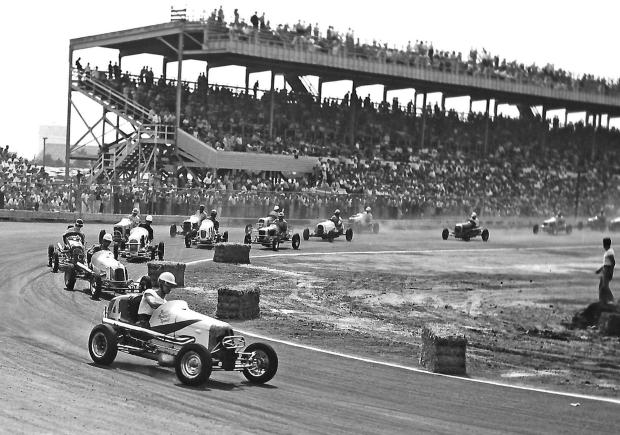
Long Island’s Roosevelt Raceway was modified to become a ½-mile oval and home to the Midget Racing National Championship on August 12th,1939. There has been almost no photo documentation published online about this race until now. A binder rediscovered in our archives revealed forgotten photography of this race, along with additional images from Revs Institute’s photography internet archives. The 1939 Midget Racing National Championship was one of the last automotive races held at Roosevelt Raceway. By 1940, the track owners converted the car racing circuit to a horse racing track.
If you missed my last article about the 1940 New York World's Fair Grand Prix race, click here.
By Gram Spina

While reviewing the images we have from the 1939 Roosevelt Raceway midget race, I came across two striking shots of the Tieken Special—likely photographed just after it was unloaded at the track. These images offer a clear look not only at the car itself but also at the surroundings and what the property looked like beyond the raceway.

In this image, you can see a prop-driven airplane in the background. The Roosevelt Field area was home to Long Island's aviation industry and, of course, the automotive race track. It's no surprise that the two worlds of automotive racing and aviation went hand in hand on the grounds of Roosevelt Raceway.
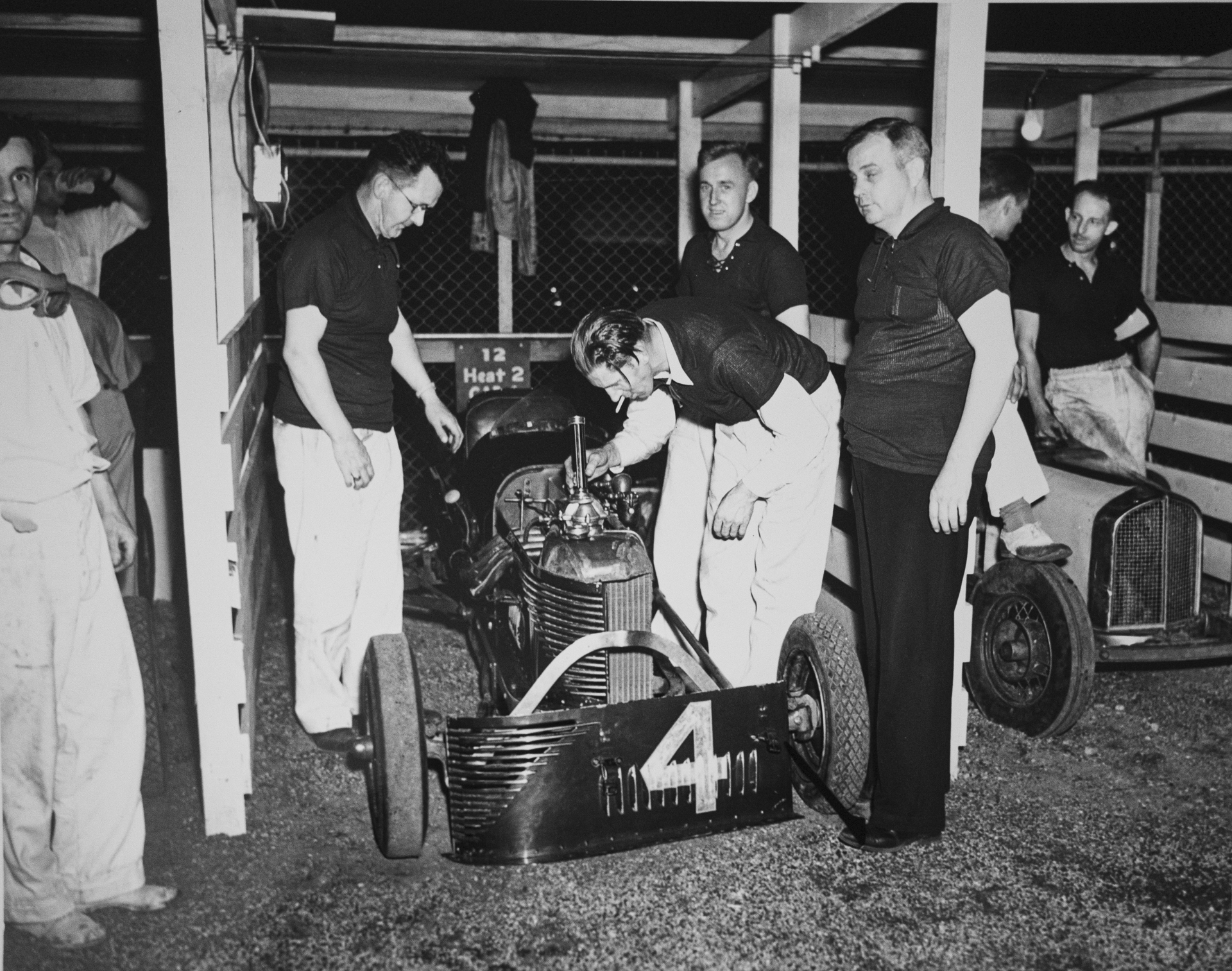
A look inside the pit garages at Roosevelt Raceway: here, driver Smith Harold looks over his engine in his Mighty #4 racing midget.
Take a look at his front tires: one side is seemingly slick, while the other has tread. I've noticed this multiple times when looking at historic midget racing images, and it always left me wondering if it was a way to stretch a racing budget ( using tires until they simply can't hold air anymore) or if it was a strategy to maximize grip on the corners. If anyone has an idea, I would appreciate hearing your thoughts in the comments.

Here’s Joey Chitwood in the pit garage area with his racing midget. This photo highlights just how bare-bones the pit garages were—little more than a brick wall with a few wooden pallets serving as a makeshift roof.
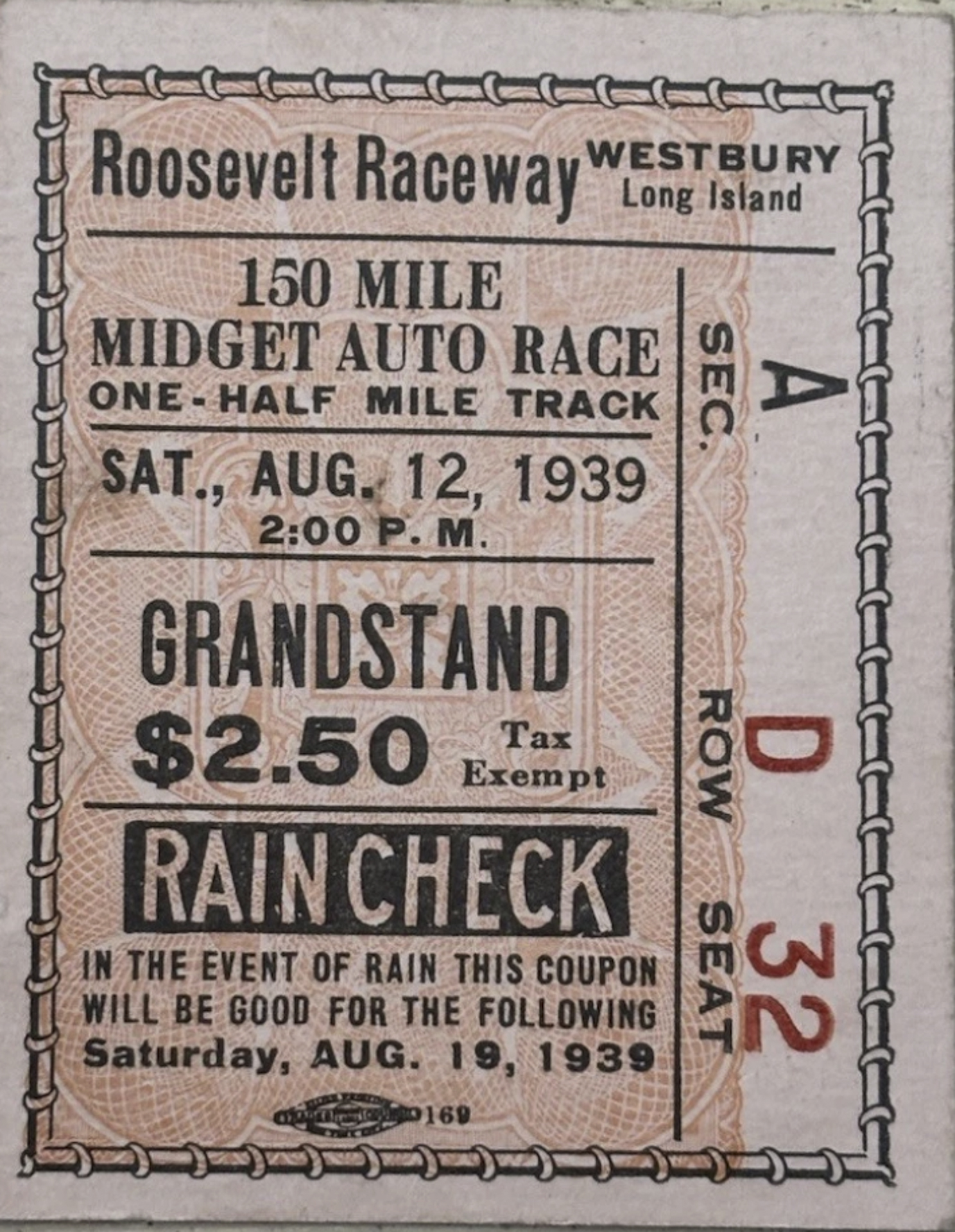
And now, on to the racing action—but first, a look at a ticket stub from the Championship Midget Race. Priced at $2.50 in 1939, that would be equivalent to $58.00 in 2025.
To put that into perspective, if you attend a race today at Riverhead Raceway, an adult ticket is around $30. I believe the reason why the admission price for the 1939 Roosevelt Raceway midget race is so high is that it was the grand finale of the season.
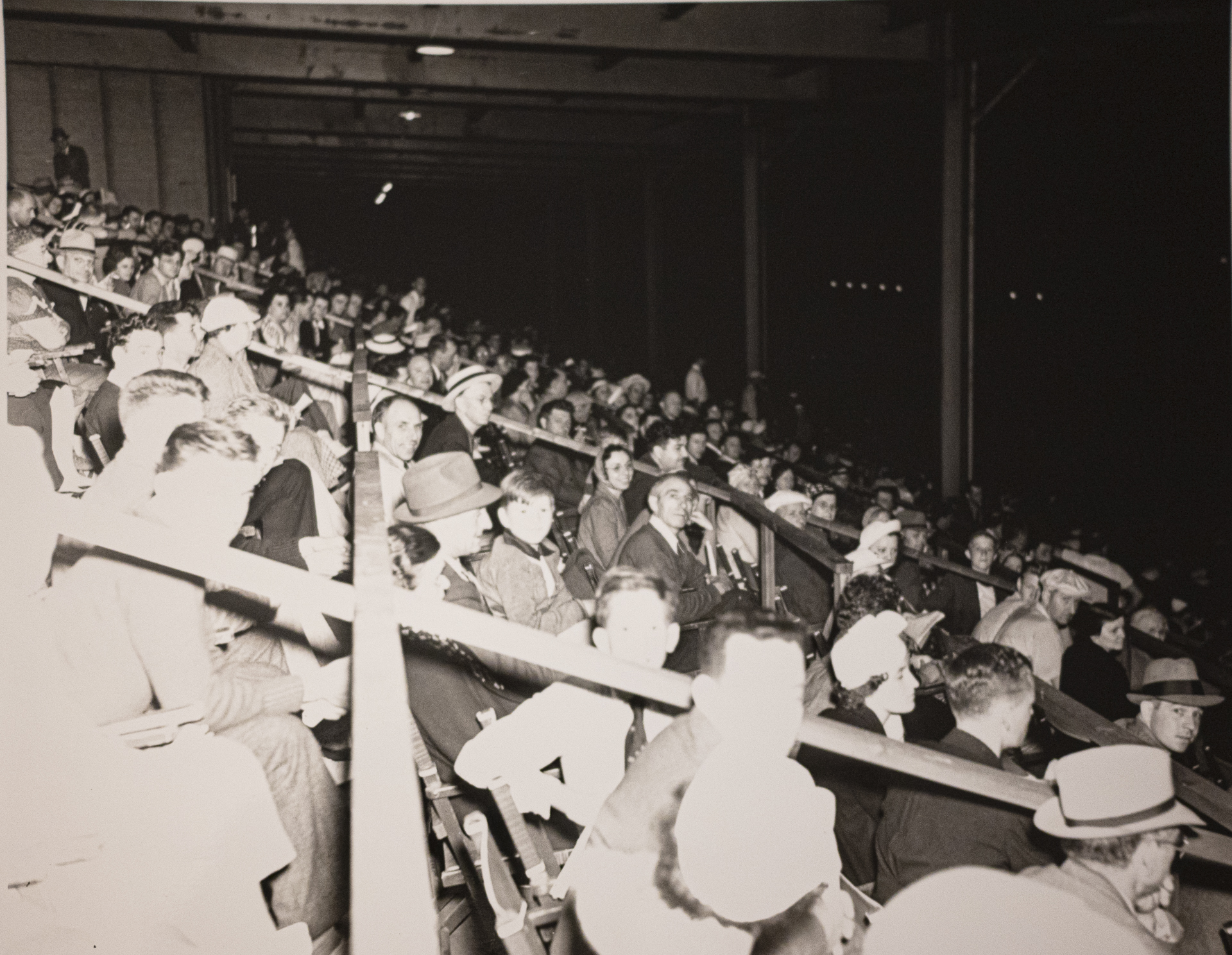
That being said, the grandstands were packed in 1939. Here is a rare photograph taken of race spectators.
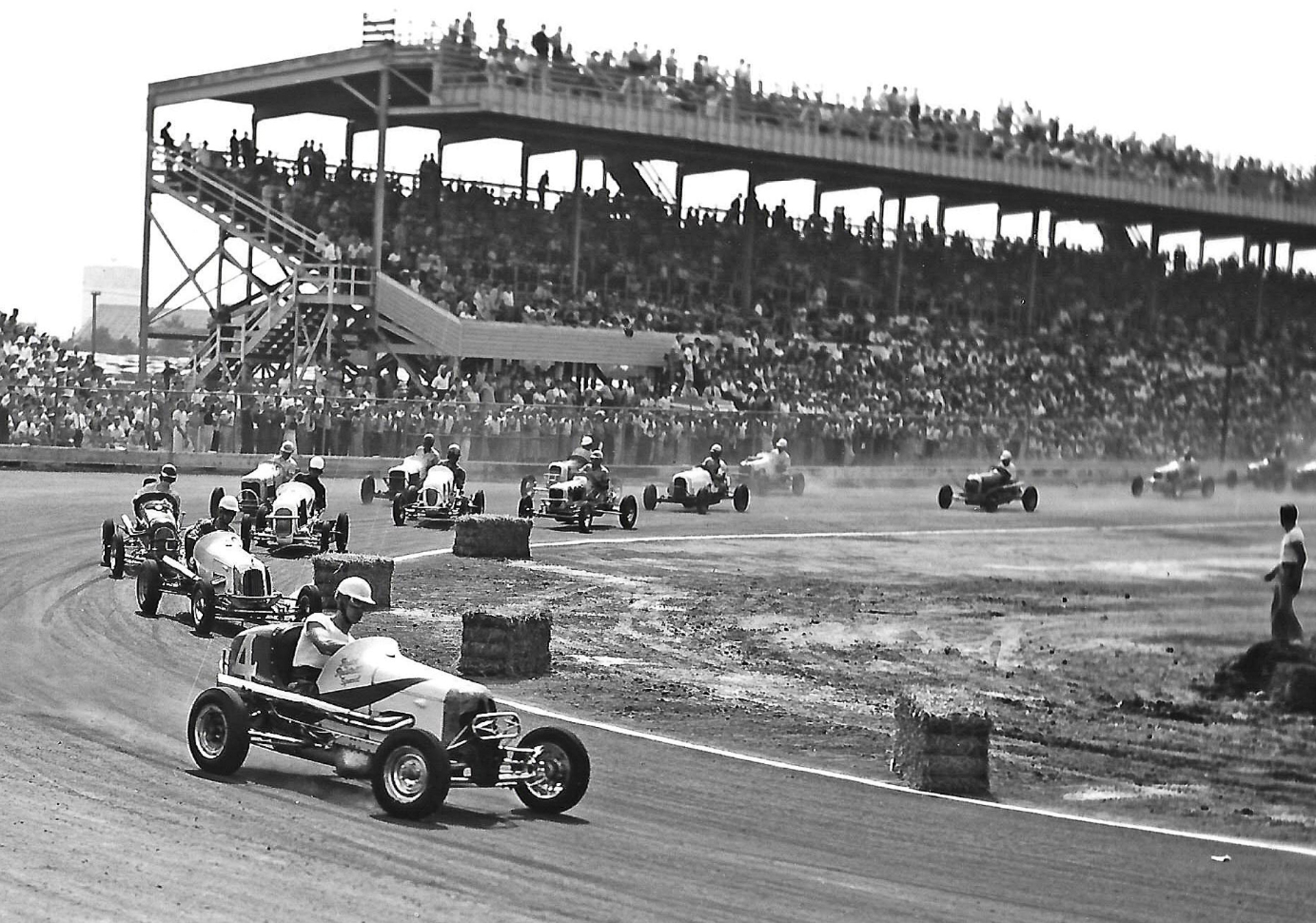
Bud Walker is seen here leading the race in front of a jam-packed crowd at Roosevelt Raceway.
Photo credit Bruce Craig
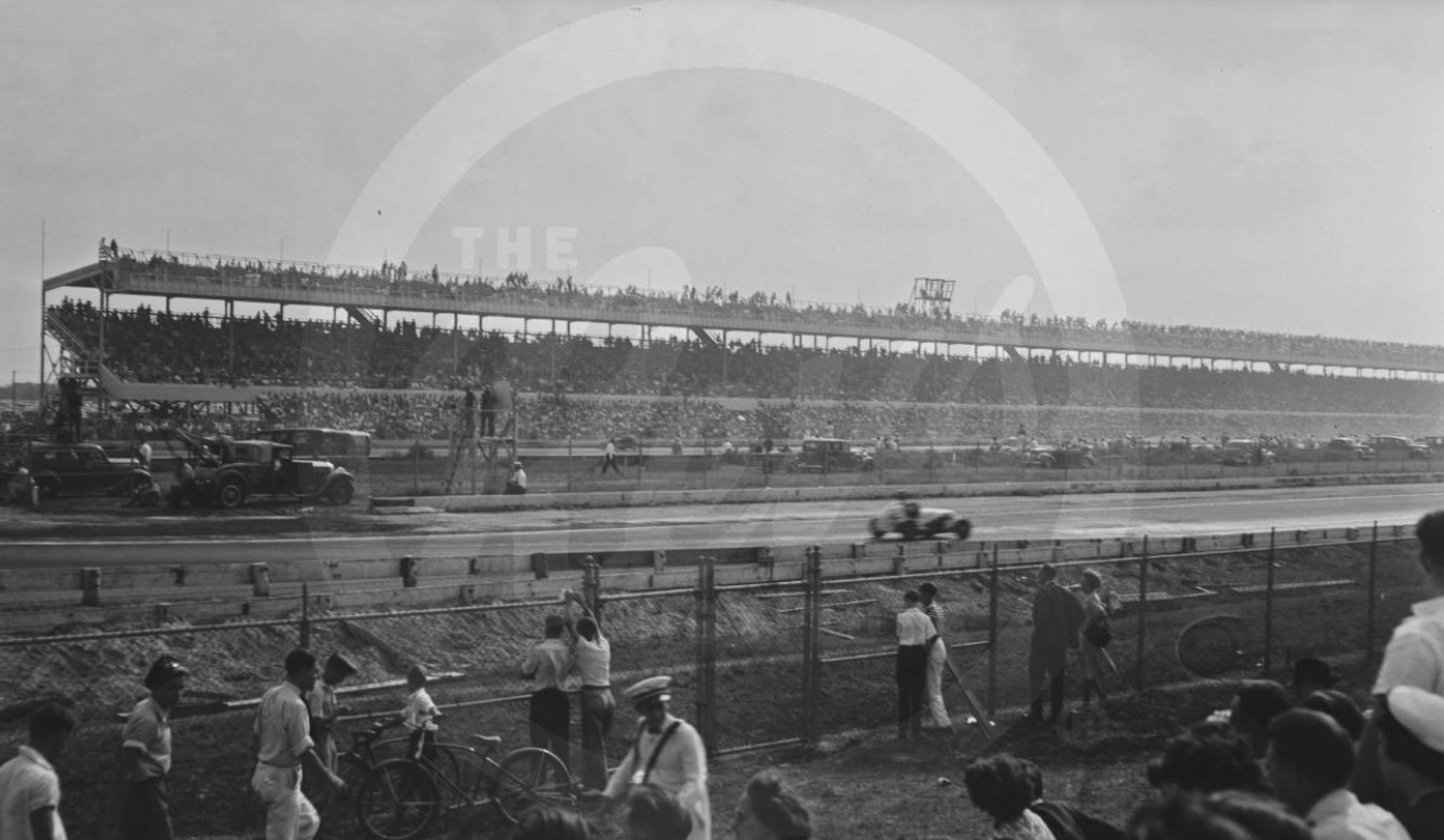
A wide-angle photo of the racing action along the back stretch of the track. A recovery tow truck is seen in the infield, which appears to be a Packard car converted into a tow truck.
Image courtesy of the Revs Institute photography archives.
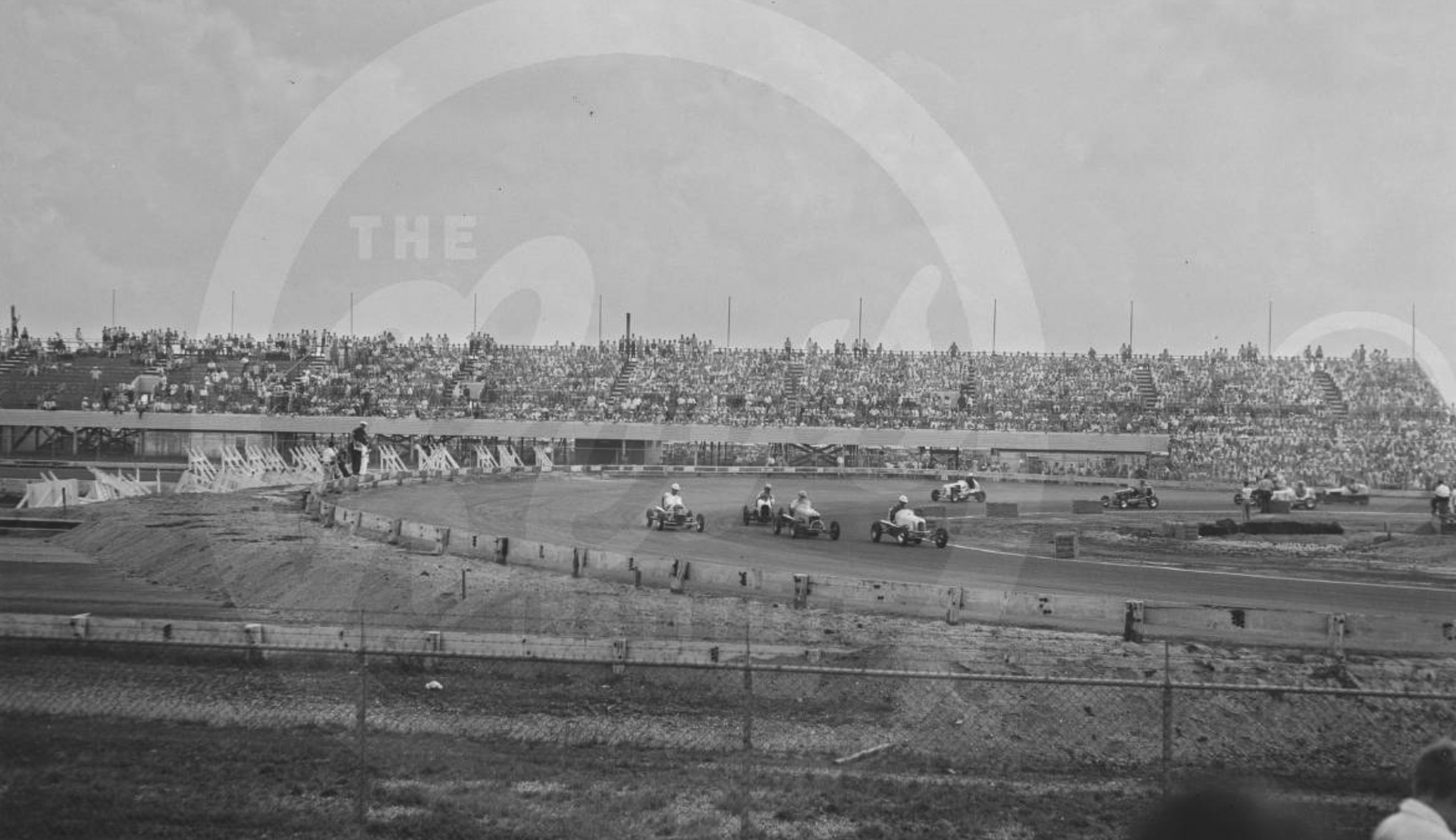
A unique perspective of the midgets going around the first two corners of the track. The grandstands are still packed with people, but it is less dense once the perimeter of the grandstands goes beyond the half-mile oval midget track.
Image courtesy of the Revs Institute photography archives.
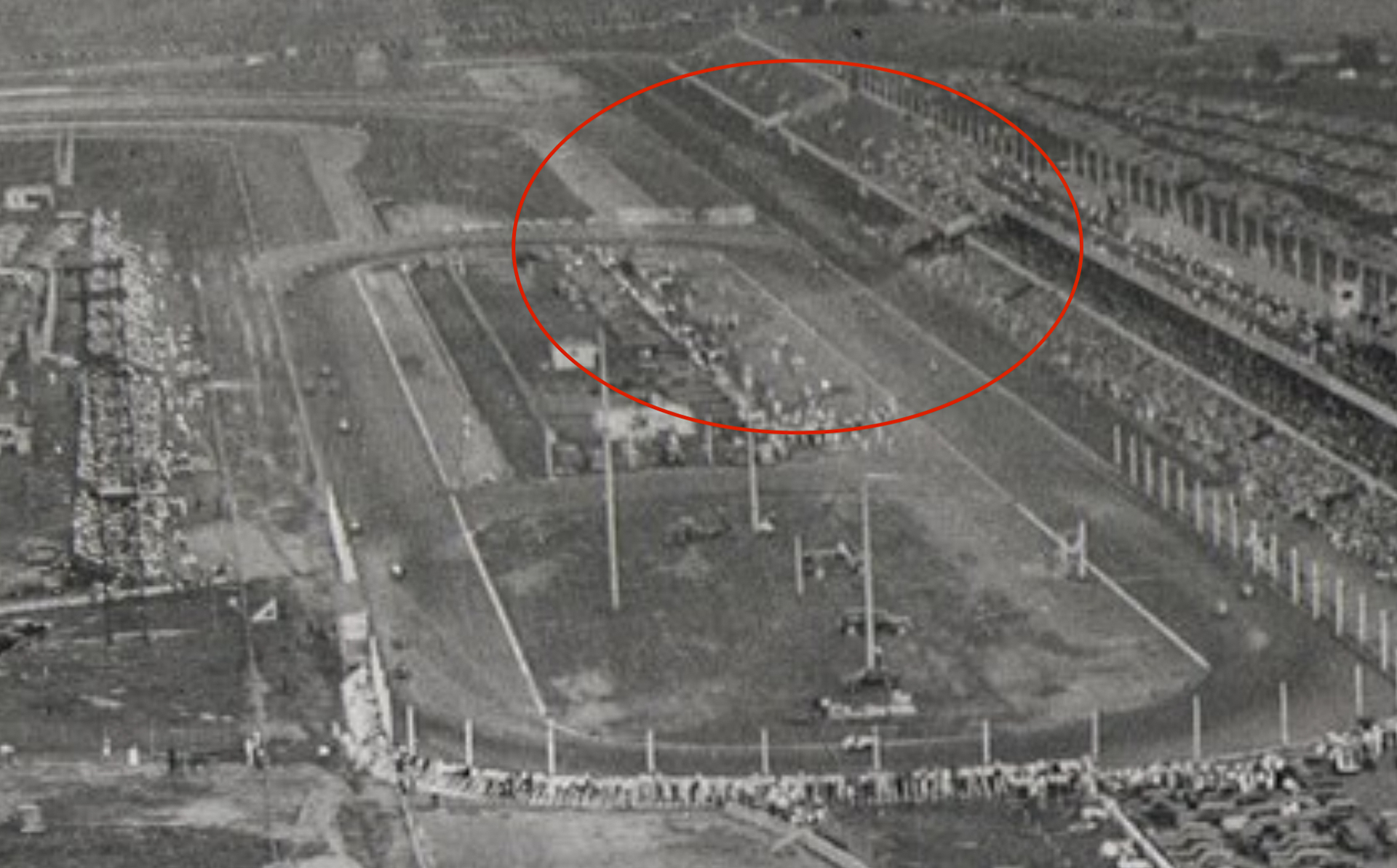
Here is last week's mystery photo of the half-mile oval race track at Roosevelt Raceway. I circled the section where the image above is taken, since you can see the half-filled grandstands compared to the rest of the track in this overhead image.
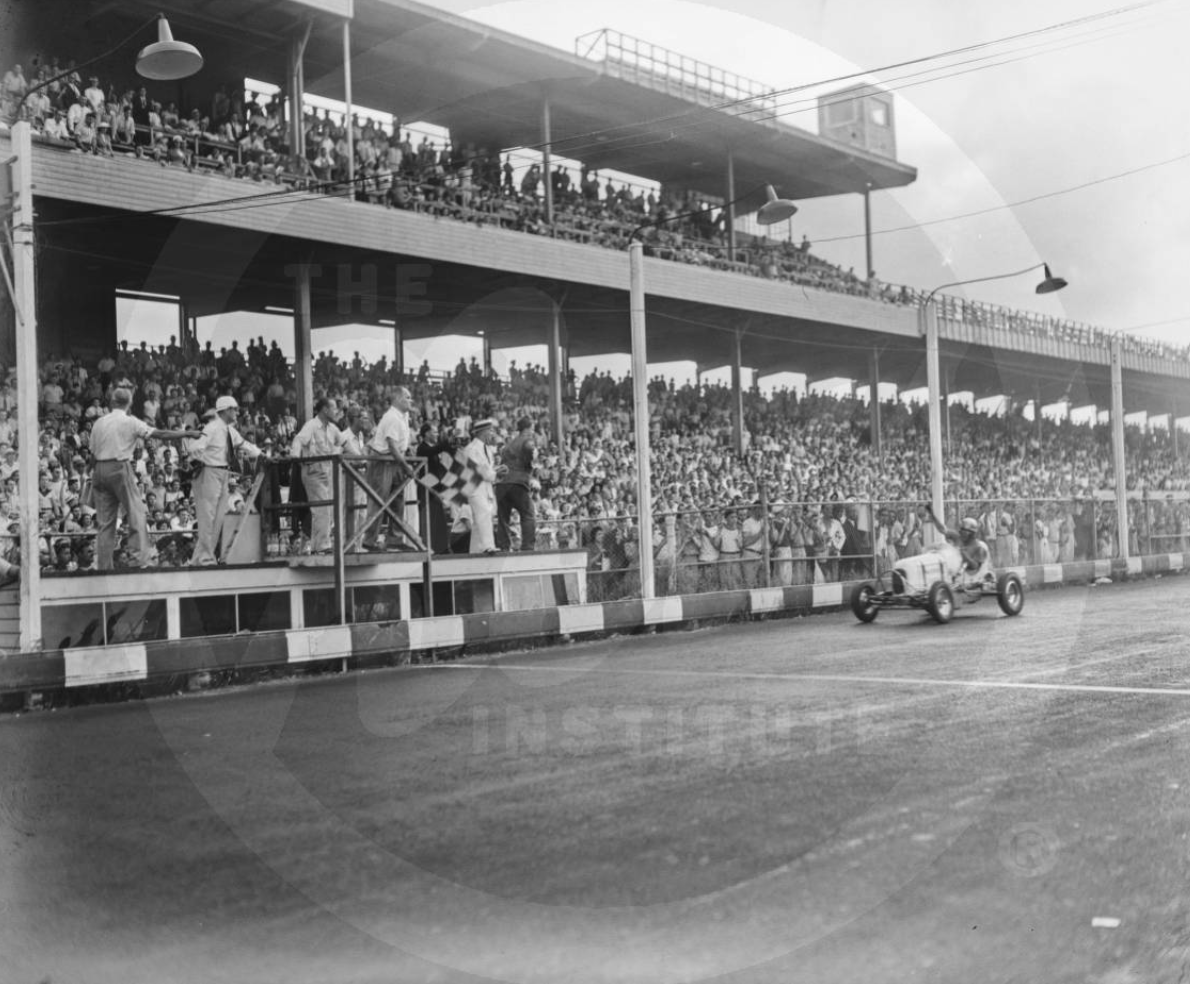
Here's Morris "Babe" Bower crossing the finish line, achieving his 1939 Midget Racing Championship title.
Image courtesy of the Revs Institute photography archives.
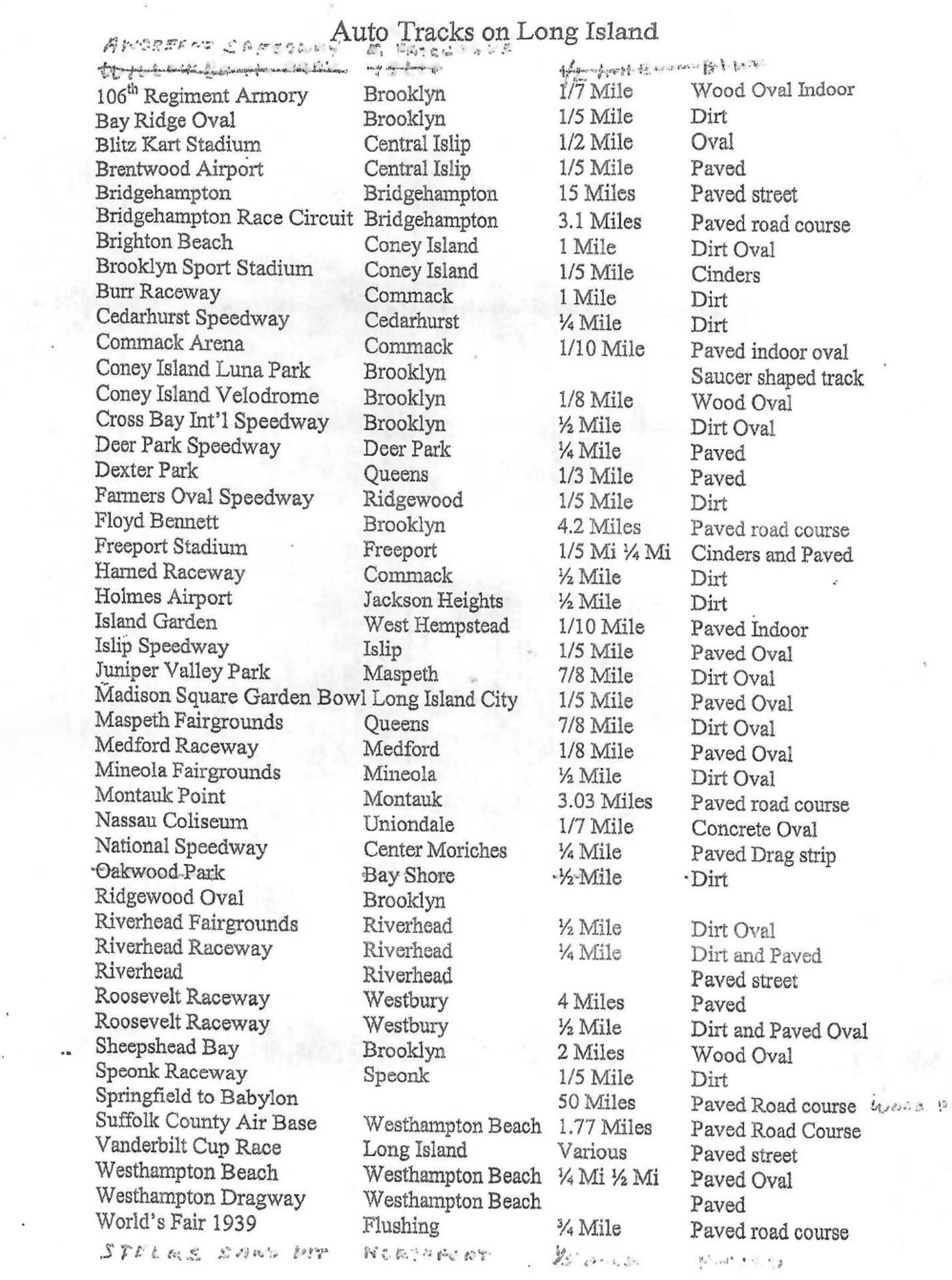
Long Island has hosted a wide variety of race tracks over the years, and I’m thoroughly enjoying the research and writing for this series—though I’ve only just begun to scratch the surface. What would our readers like to see in the next installment?
Click here to explore all the race tracks we’ve covered so far (excluding the Vanderbilt Cup Races).
I’ll be diving deeper into the history of Roosevelt Raceway in a future article. While researching this piece, I uncovered even more fascinating details about the track, and I’m curious to hear which aspects our readers would like me to explore next.


Comments
Excellent! Superb! Wish I could have experienced all of this in person. As a child my family would pass this raceway as it hosted jam packed trotter events. Old Country Road was filled with cars and buses getting the crowds to this enormously popular horse race track. As a nine year old I was already wishing it was an auto race venue. For many years there remained a Racetrack Parking sign on a eastern border street to the track quite near where Bed Bath and Beyond was until it closed and I’m quite sure that now-gone sign dated to the days of the area’s motorsport history.
Excellent article. Love hearing about all this all but forgotten history. Thanks for your research and dedication!
Great images and post of the Midget races on the old Roosevelt Raceway track! Until now, I’ve heard or seen little or null about these races. As a child, I dreamt of being the first kid to drive a similar-sized car around the neighborhood : )
Thanks Gram I assumed it was Roosevelt but never knew about this race Great work Jerry and Rita” JeRita”
I forgot to add the photo of the early mobile starting gate introduced at Roosevelt raceway that became the standard to this day for all harness racing. It looks like a 1940’s era Packard, later they used Cadillac Eldorado because of the front wheel drive Today they use 4wd pick-ups JeRita