InstaGRAM Report: The Surprising Connections Between the 1939-1940 New York World’s Fair and Automotive History
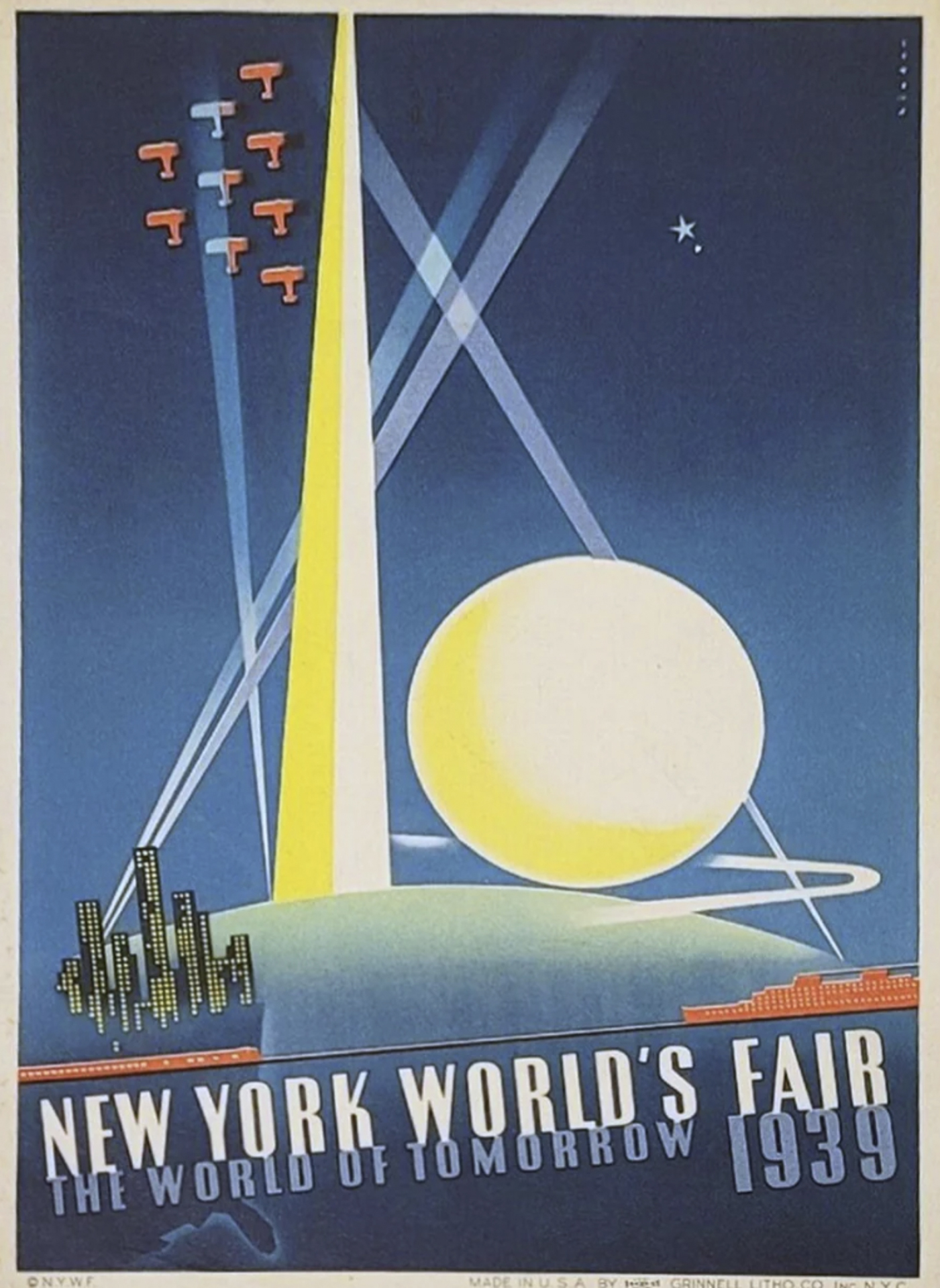
Few people realize that the 1939 - 1940 World’s Fair in New York brought a European-style Grand Prix race to American audiences. The first New York World’s Fair also unveiled new automotive technology, including the GM Futureliner and the dazzling see-through Pontiac car. This intersection of World’s Fair showmanship and automotive innovation remains a fascinating chapter in automobile history.
By the 1960s, however, the Fair had shifted gears, unveiling bold visions of tomorrow with cars like the Ford Mustang and Chrysler Turbine-powered cars. And while there was no Grand Prix-style race in the 1960s, there was much excitement in the automotive world. This will be a subject for a future article; for now, let's travel back in time to the first New York World’s Fair.
If you didn’t read my last article on the Dexter Park Racetrack in Queens, click here to catch up.
By Gram Spina
The Grand Prix during the first New York World's Fair was held on a Sunday morning in 1940. It was organized by the Automobile Racing Club of America (ARCA) and was a one-time-only event.
The following year, the United States entered WWII in 1941, prompting the New York World's Fair to an early close. By the time the Fair returned to New York in 1964, there were simply too many expositions on the site and nowhere to hold a race amid such a popular spectacle.
The Grand Prix-style race remains one of the most obscure and little-known organized races held on Long Island – perhaps this is because there wasn’t a lot of media coverage at the time, and the location itself was unusual.
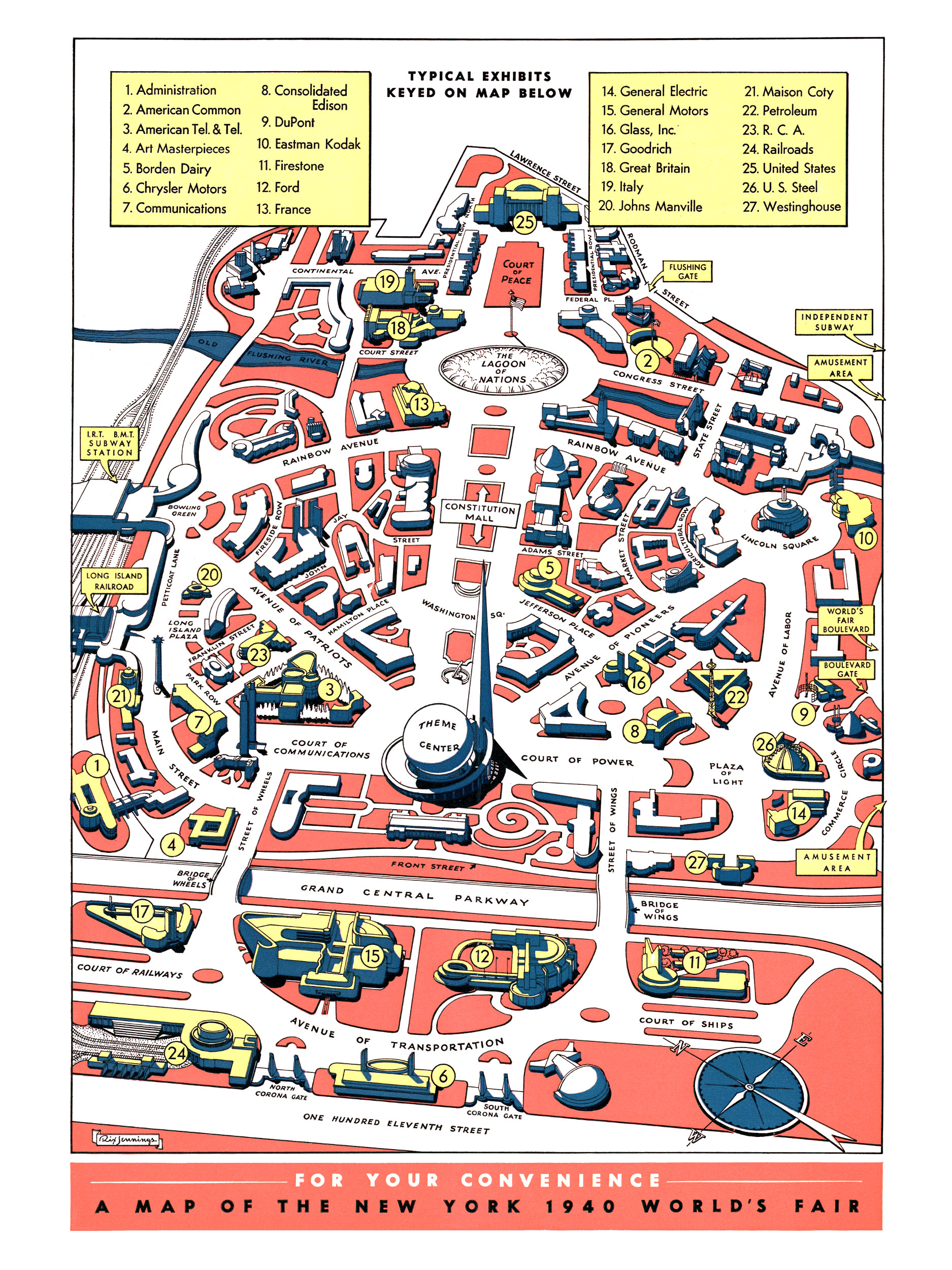
The race track covered three-quarters of a mile and was woven around multiple national exhibit centers. The start/finish line was directly in front of the United States Expo Center. The track circled the Court of Peace and ran past the Netherlands, Poland, Switzerland, Peru, and Finland pavilions. (Information sourced from “Cunningham: The Life and Cars of Briggs Swift Cunningham,” by Dean Batchelor and Albert R. Bochroch )
Attached here is a map of the 1940 World's Fair. No known map shows where the automotive race course was, but we can assume, based on the information I found in the Cunningham book, that it took place on the upper portion of the fair.
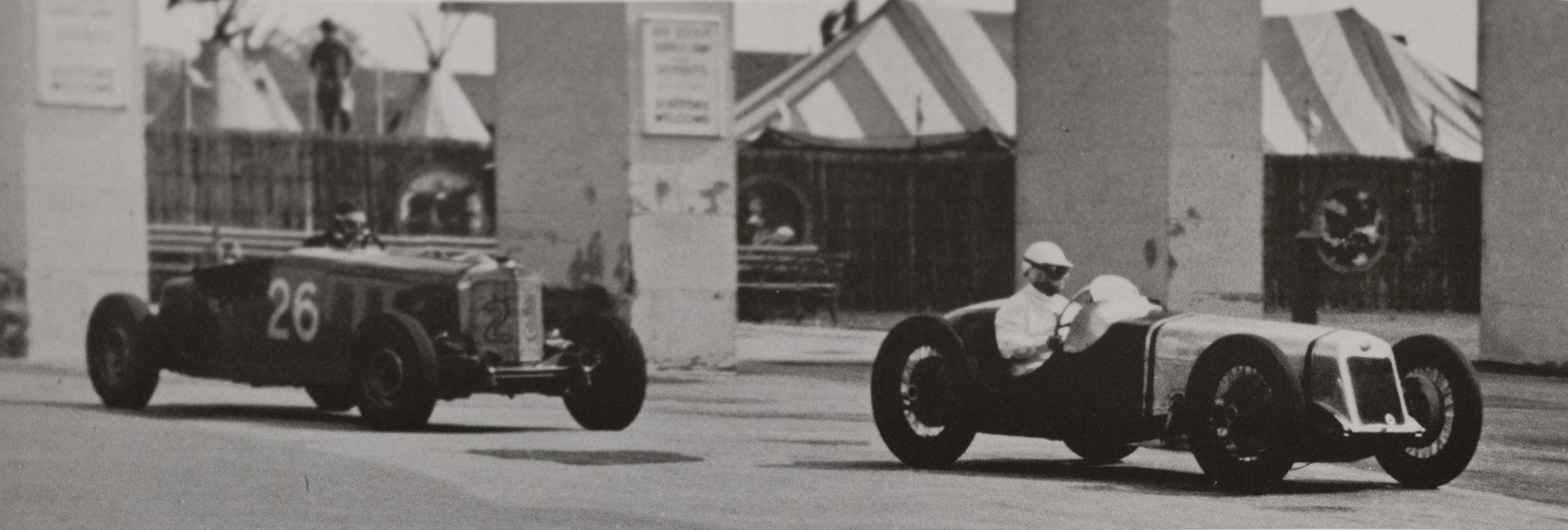
Here's some racing action between Miles Collier in the #26 Bu-Merc against a 1927 Delage Grand Prix car.
Image sourced from “Cunningham: The Life and Cars of Briggs Swift Cunningham,” by Dean Batchelor and Albert R. Bochroch
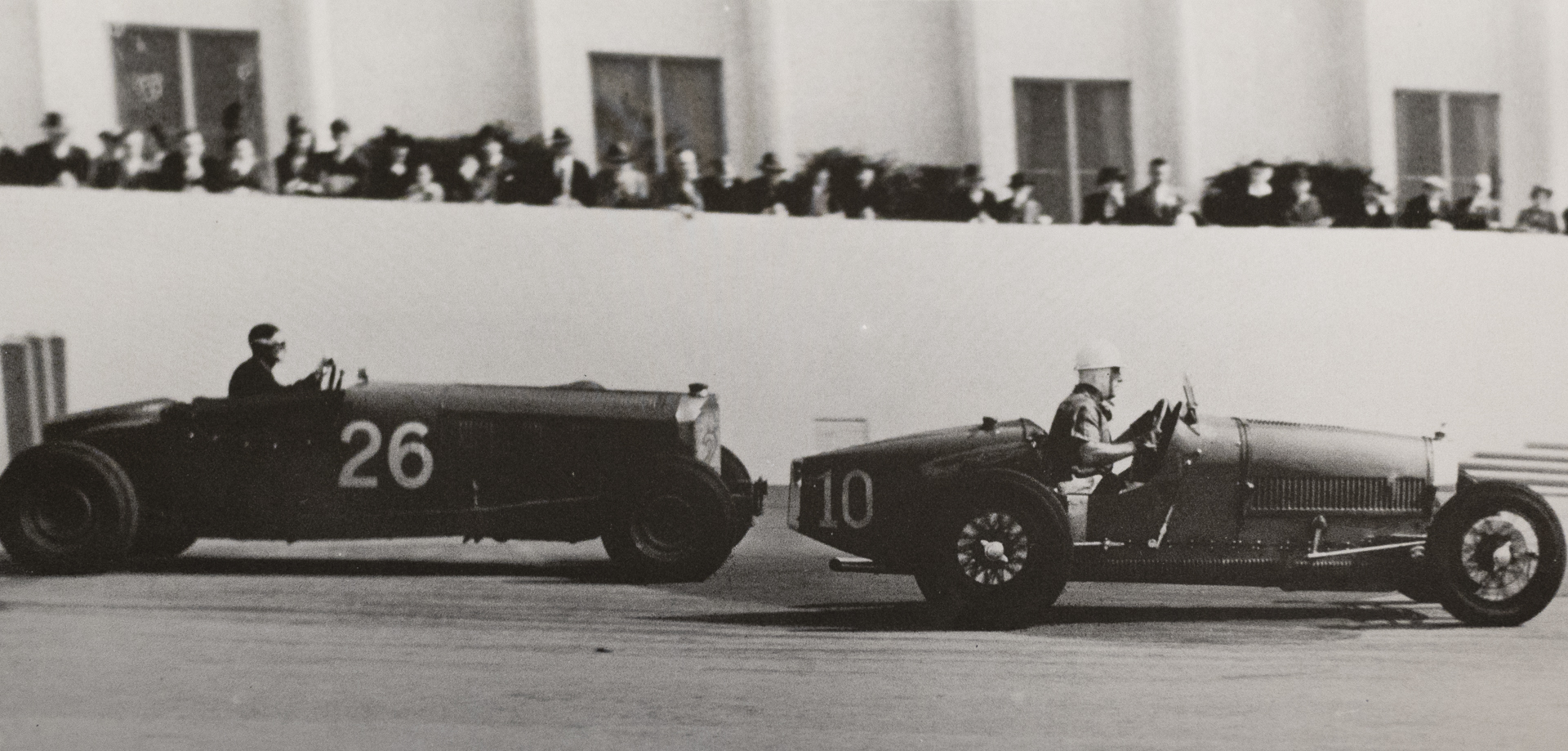
The Bu-Merc is seen here again behind a Bugatti.
Image sourced from “Cunningham: The Life and Cars of Briggs Swift Cunningham,” by Dean Batchelor and Albert R. Bochroch
While researching, I stumbled across a YouTube video that captures the racing action during the 1940 World's Fair.
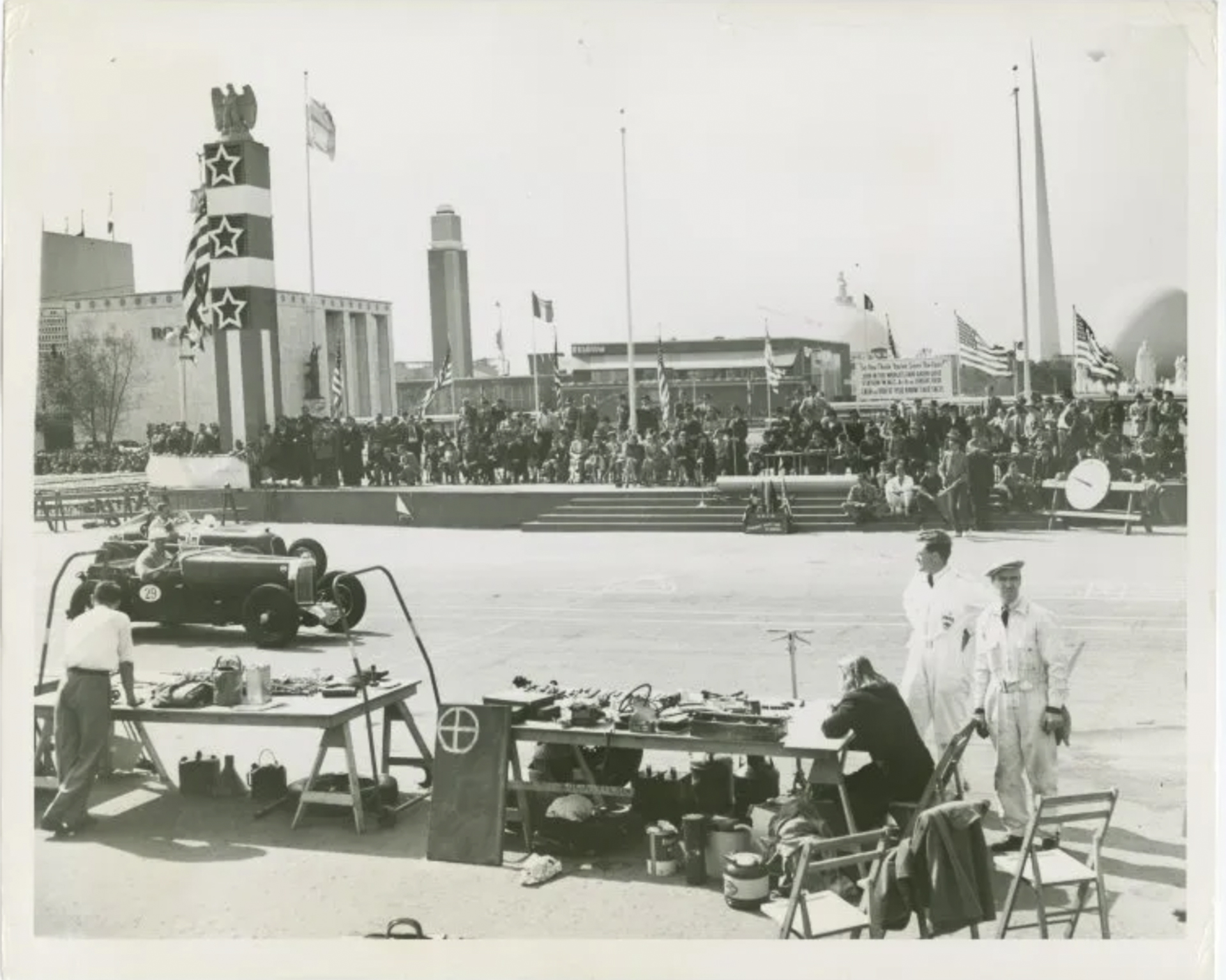
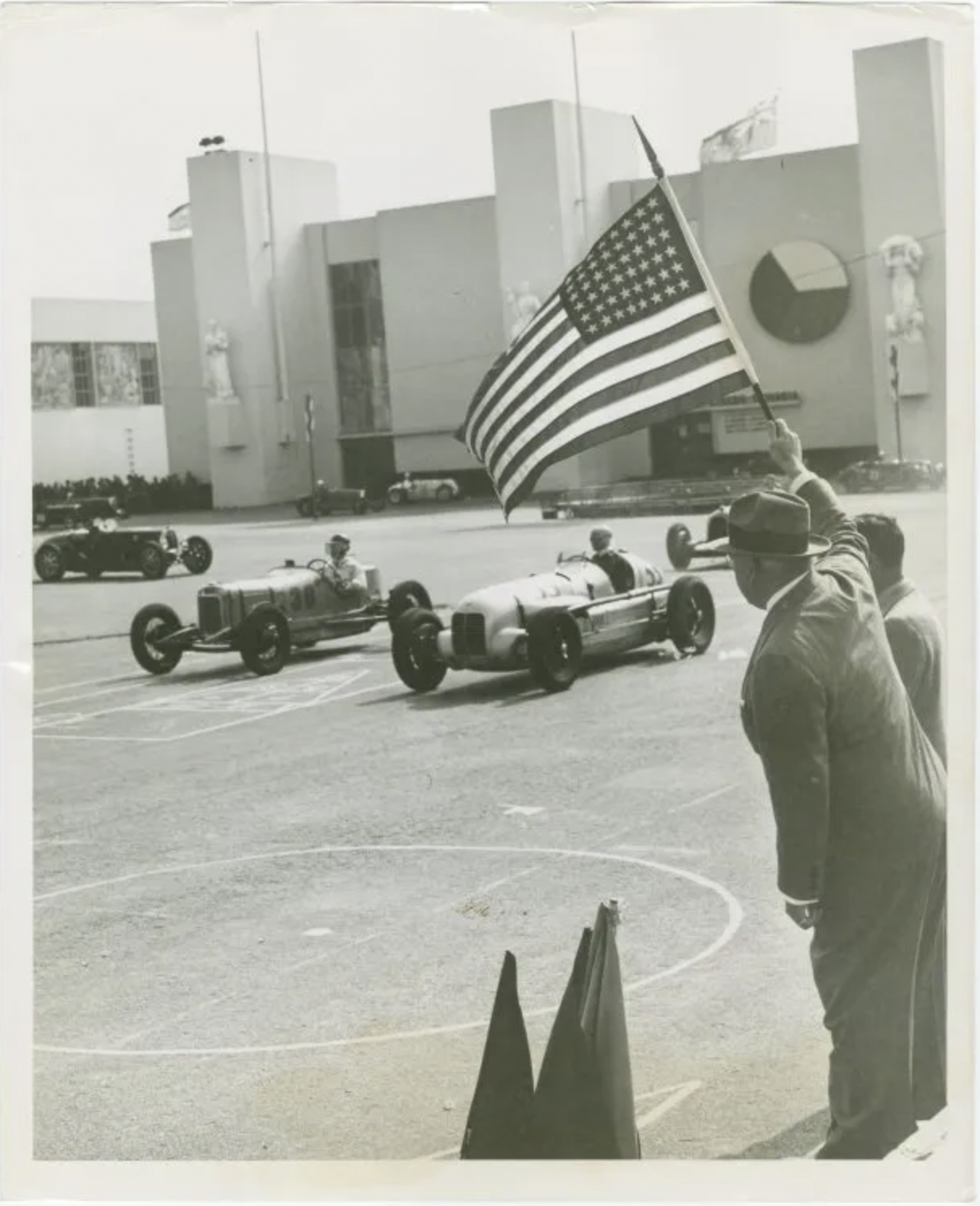
A different viewpoint of the start/finish line is seen here. In the foreground is the equipment used by track officials to monitor each car's position and the number of laps completed.
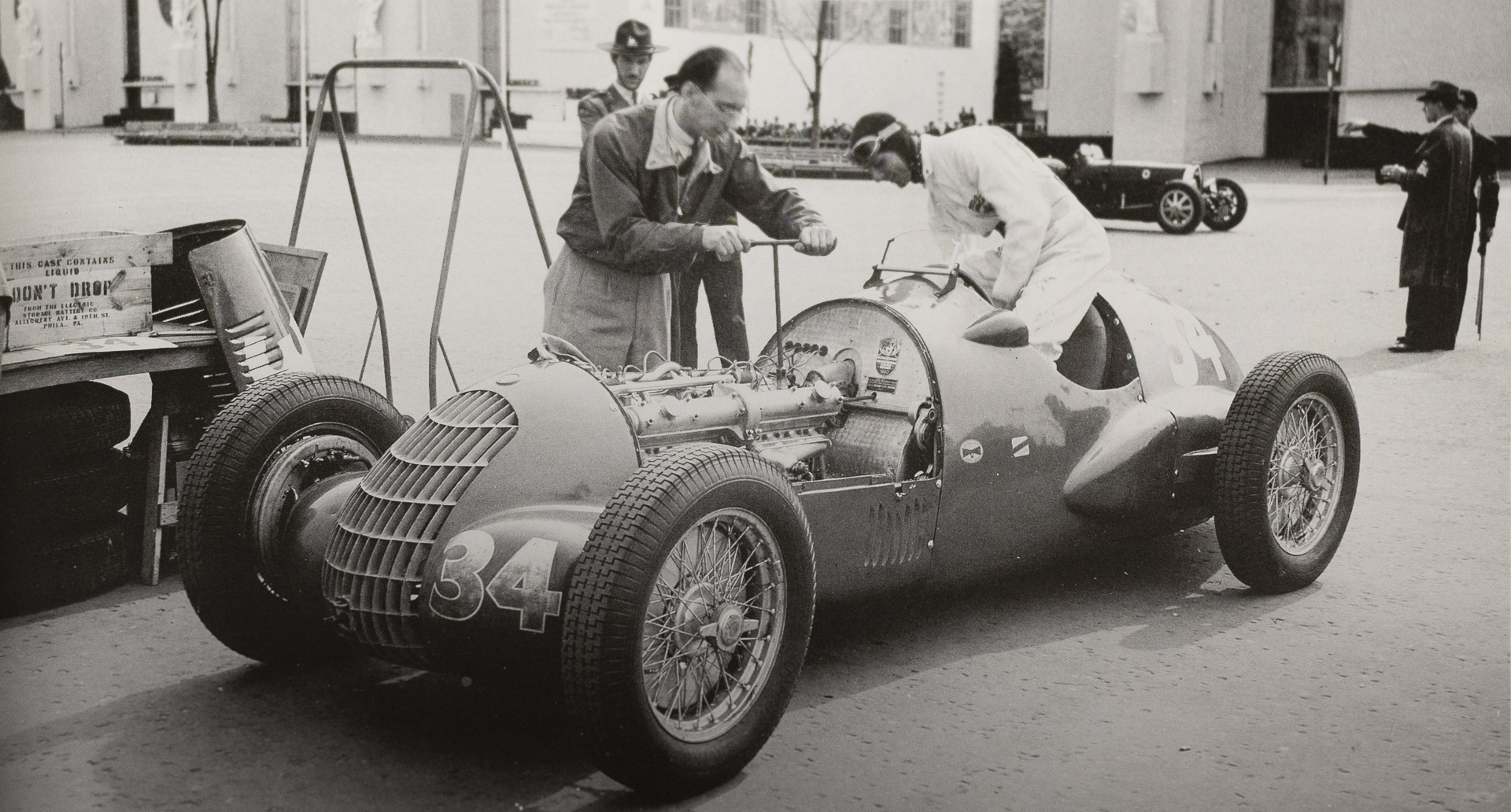
Driver Dick Wharton is in his 3.0-liter Alfa Romeo 308, preparing for his practice laps before the primary race gets underway.
Image sourced from “Cunningham: The Life and Cars of Briggs Swift Cunningham,” by Dean Batchelor and Albert R. Bochroch
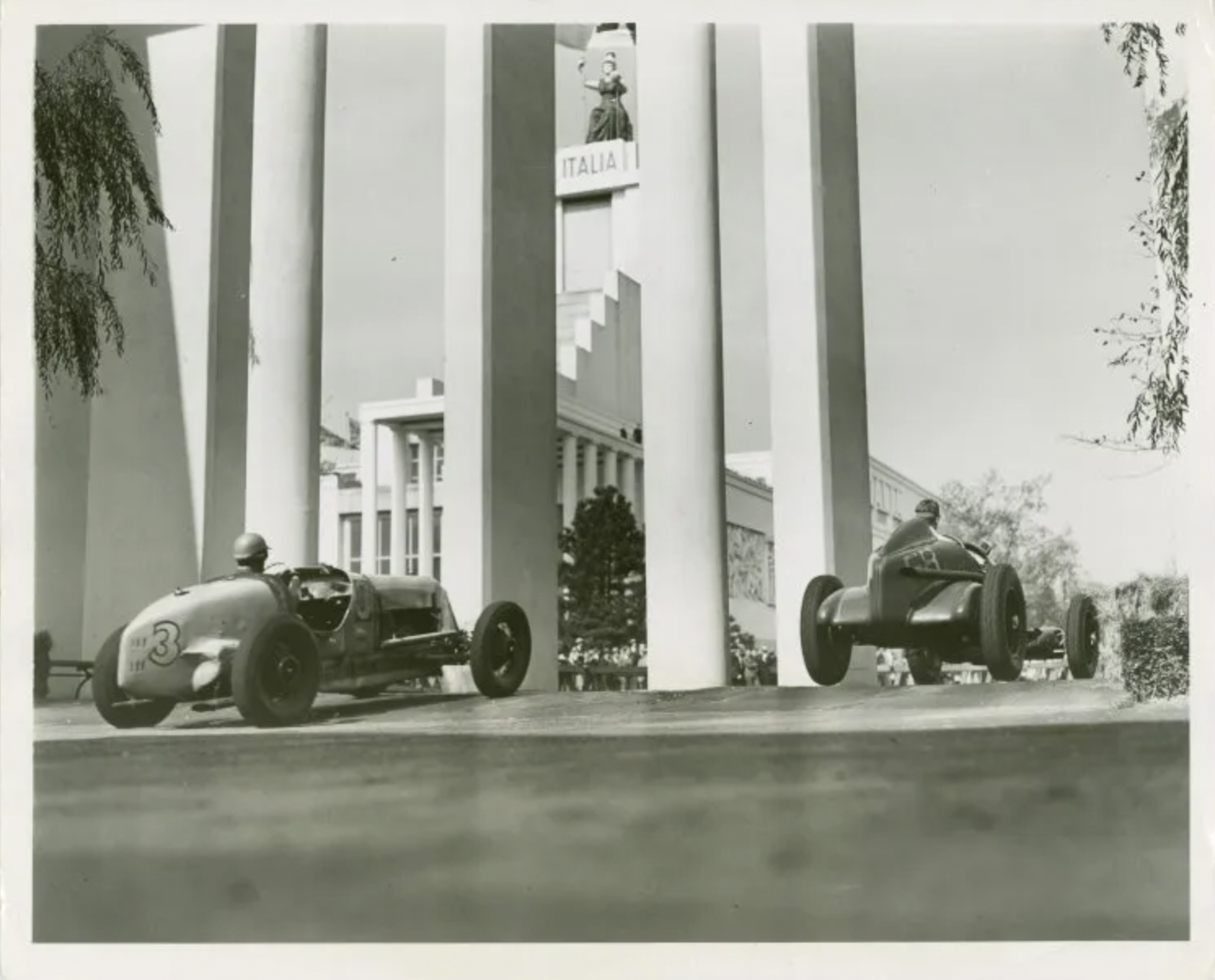
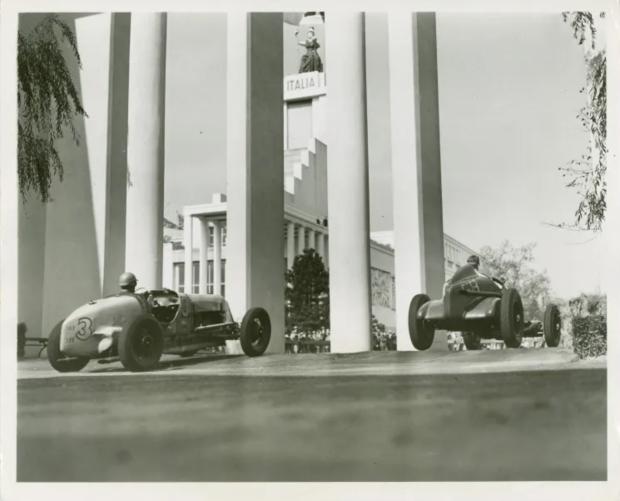
There are very few images of the 1940 New York World's Fair Grand Prix, but among the handful I have found during my research, this is my favorite.
Two of the racers are splitting between the columns of the Italy pavilion, headed towards the Gardens on Parade.
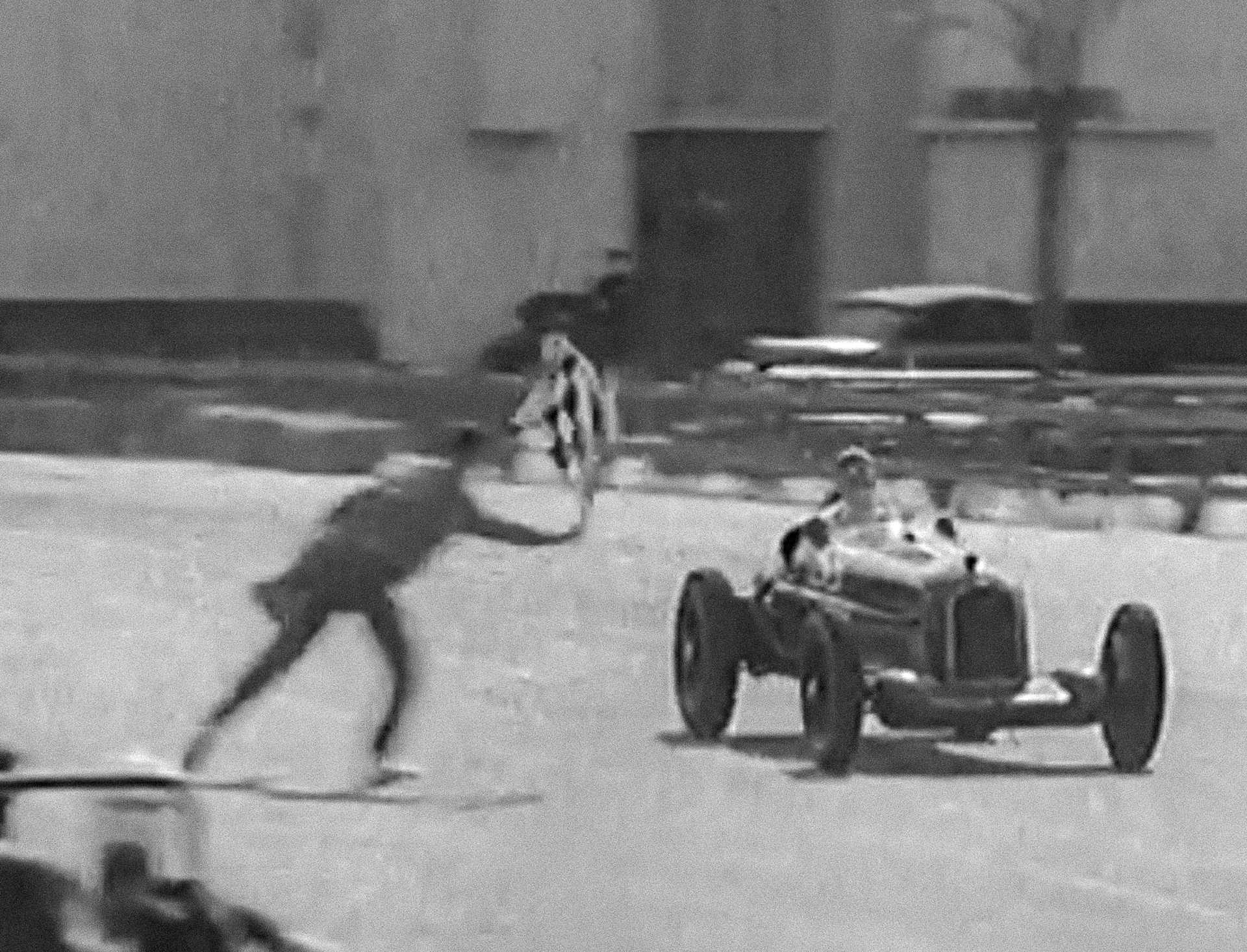
Frank Griswold, in his Alfa Romeo is seen here taking the checkered flag after the 99-lap race. Only 11 racers completed the race.
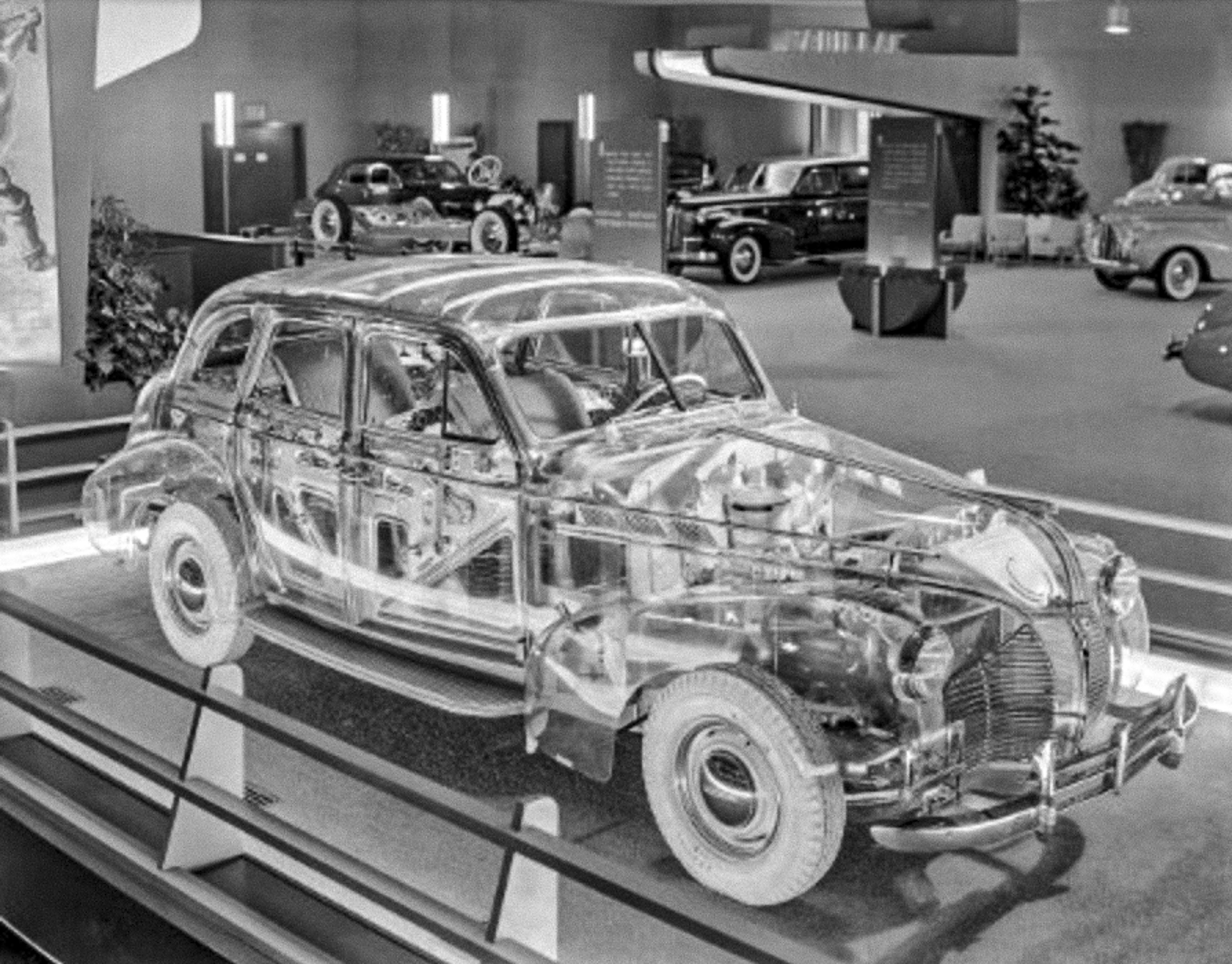
1939-1940 New York World's Fair: Automotive History
Pontiac Ghost Car
Pontiac debuted a see-through version of its 1939 Deluxe model, featuring a completely transparent body made of clear acrylic plastic. This allowed Fair visitors a clear view of the inner structure beneath painted steel. It was a fully operational car that not only showed what goes on behind the scenes at Pontiac's automotive operations, but also the new ways plastics were molded and used.
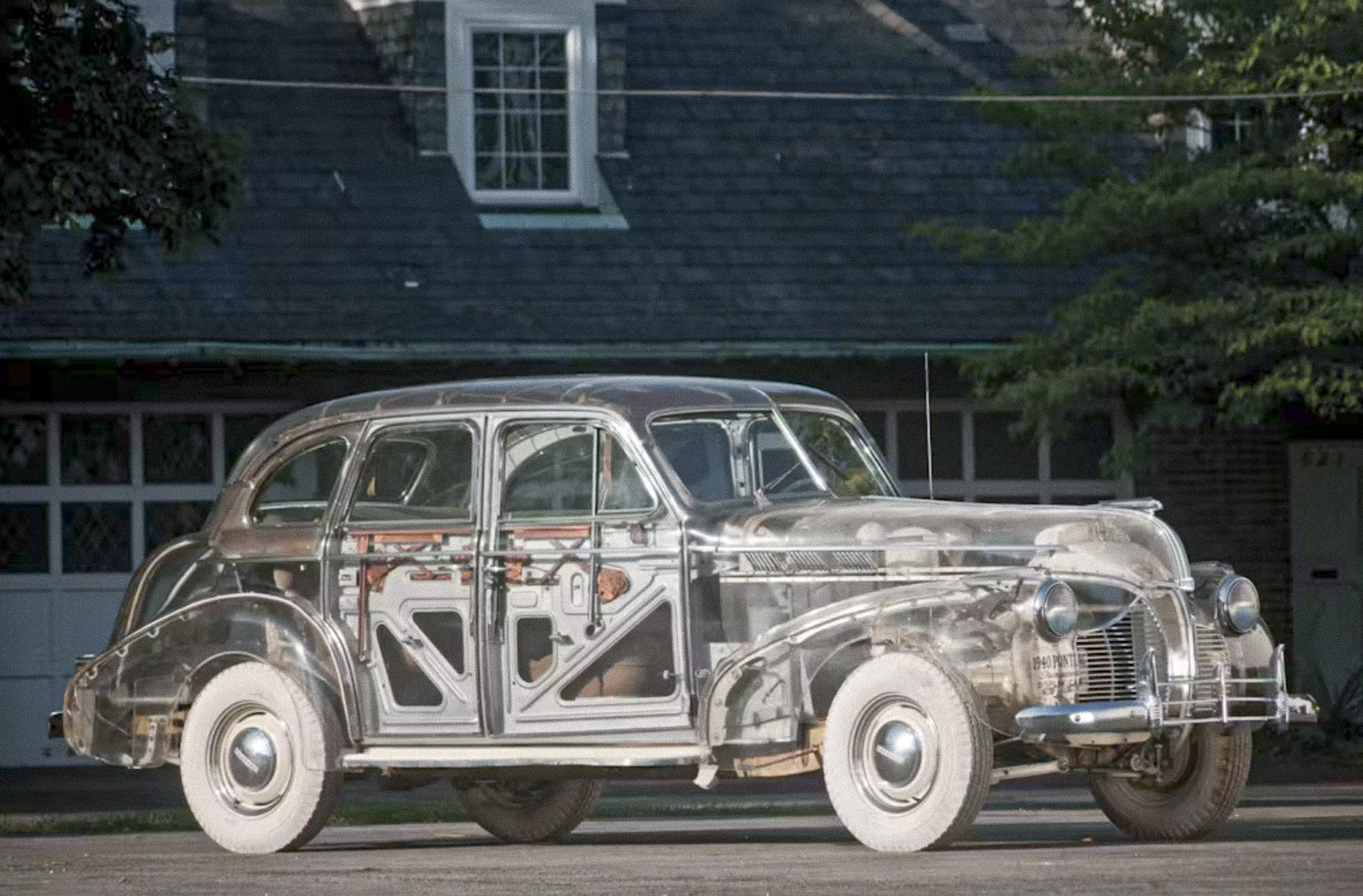
Pontiac made two of these clear-body examples for the World's Fair, and afterward, they were displayed at various dealerships. Today, only one survives. It was last publicly seen at an RM auction in 2011, where it sold for $308,000, and is now owned by an unknown private collector. Hopefully, it is still in the United States, but it could be anywhere in the world.
To see more photos of this Pontiac, click here for the RM auction listing.
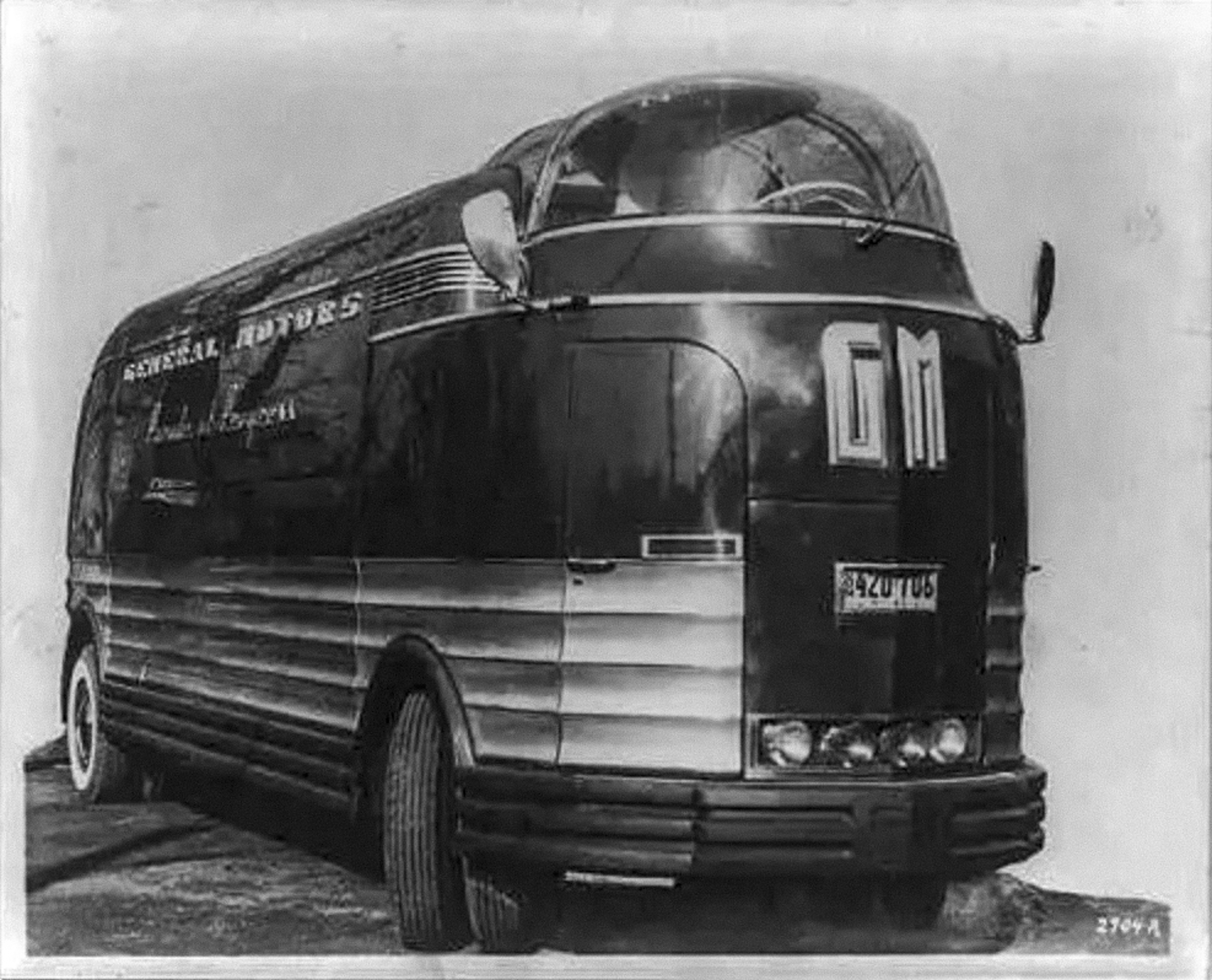
GM Futurliner 1939-1940
General Motors built a fleet of showcase buses that served as rolling display cases for new technologies under development. Here is how they looked for this World's Fair, featuring art deco styling and a bubble top. The middle section of the Futurliner opens in a clamshell style, revealing a display for public viewing.
1940 GM Futurliner No. 10 | HVA
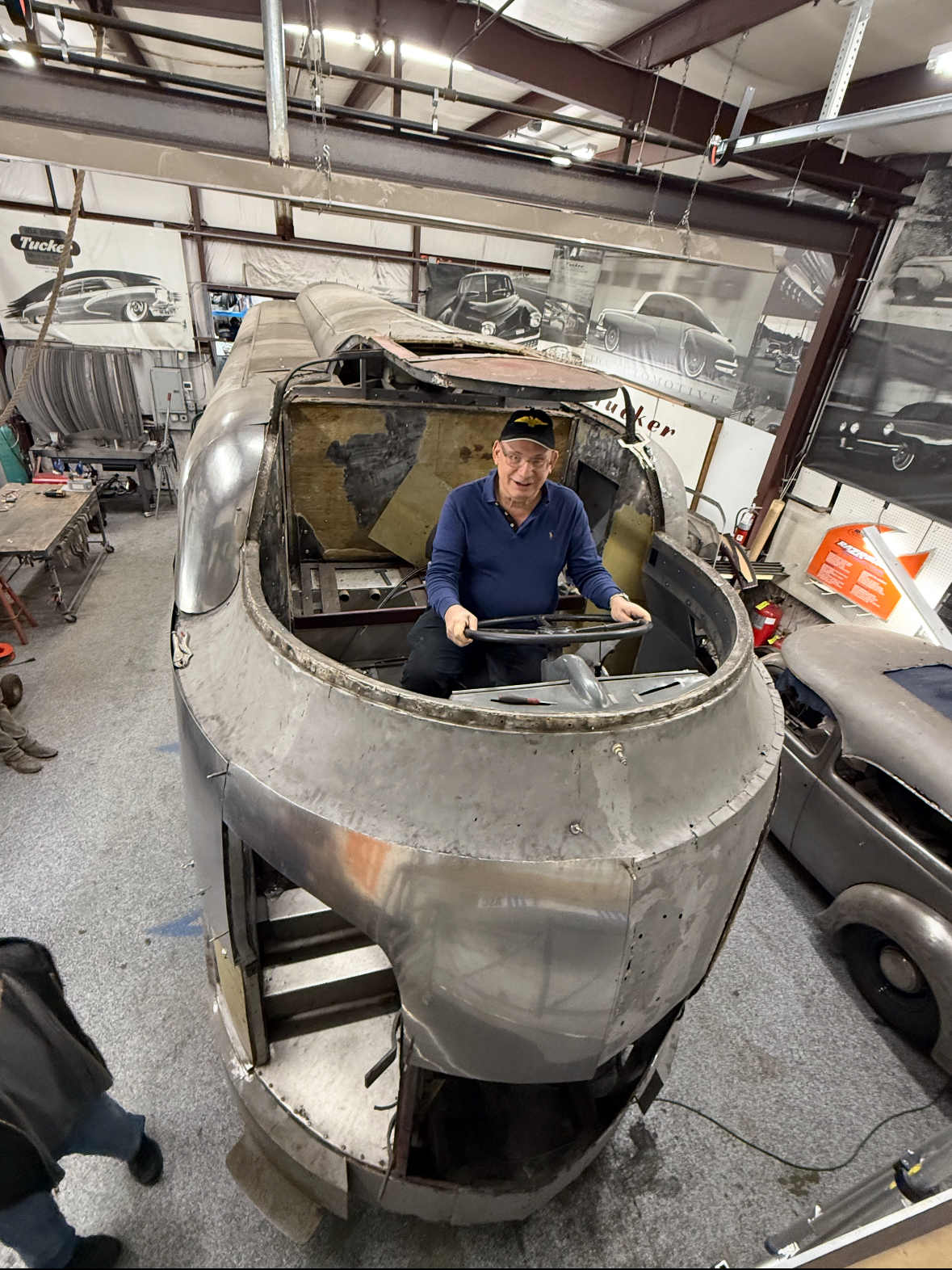
Fast-forward to the 1960s World's Fair, GM modified the Futureliners to better align with the styling trends of the time – meaning removing the bubble tops and other Art Deco elements. Master craftsman Rob Ida is currently backdating a GM Futurliner to its 1939 design. All other surviving Futurliners have maintained their 1960s styling.
When we visited Ida Automotive in January, Howard received the honor of sitting in the captain's chair of the Futureliner’s work in progress.
I hope that you have enjoyed this article, and if you know of any additional 1939 - 1940 New York World’s Fair automotive history, please share it below in the comments.


Comments
Great look at the past, Gram! Excellent research!
Here’s a photo from the Brooklyn Eagle of one car being prepared for the race.
So much here I didn’t know. When there were some proposals for an NYC Grand Prix at the former Fair grounds in the 80s my Dad mentioned there had been a race at the 39 Fair but he couldn’t recall any details. He would have loved your feature!
That photo of the race cars divided by those columns is truly fantastic.
This is an amazing article and some excellent research! I never knew about this race and I was fascinated by this account. Thanks for such an enjoyable article.
My father, James Melton, collector of antique cars and known as “America’s Favorite Tenor,” participated in the 1939 World’s Fair.
While the theme of the Fair was progress and modernity, the American Jubilee pageant, largely sponsored by Studebaker, celebrated what we’d come from—America’s past glories. My father provided ten antique cars to be driven in the pageant four times a day. The cars on display ranged from an 1896 Ofeldt steam car to a 1916 Packard Twin Six, seven-passenger automobile.
The American Jubilee pageant was an extravaganza, with music by Arthur Schwartz and lyrics by Oscar Hammerstein II and a kaleidoscope of American social and political history, from George Washington to “the next president” who would be elected in November 1940. The revolving stage on which the pageant unfolded was 270 feet in diameter, large enough to accommodate horses, buggies, and cars; it was complete with details like real flowers growing in real earth in real gardens.
There were 350 performers in various vignettes about George Washington, Abe Lincoln, Teddy Roosevelt, and “the next president.” Cars from the collection of James Melton were featured in a section called “The Struggle Buggy Days,” which included a tableaux about financier and gourmand “Diamond” Jim Brady and turn-of-the-century singer Lillian Russell. The venue for this exhibit alone held 7,000 people. Admission was 40 cents.
________________________________________________________________________
From Howard Kroplick
Margo, thanks for sharing the wonderful stories about your father James Melton…who was truly ” America’s Favorite Tenor.. and Automobile Collector”. Enjoy, Howard
One more photo. This time a winner!
George Eyston’s Land Speed Record holding car ‘Thunderbolt’ along with a Rolls-Royce Phantom III were on display at the British Pavilion Hall of Metals.
Howard Kroplick has added a note to Margo Nutt’s above Comment.
This is my first encounter of the ‘39 Grand Prix racers. Somehow they remained elusive after years researching both NY Fairs in the park. The transparent ghost car I’ve seen, photo attached. Thanks Gram for the wonderful article!
The temporary subway spur along Meadow Lake, today’s Van Wyck Expwy, attached below