Mystery Foto #55 Likely Solved: A William K. Vanderbilt, Sr. “No Trespassing” Sign located on his Oakdale “Private Park” Property
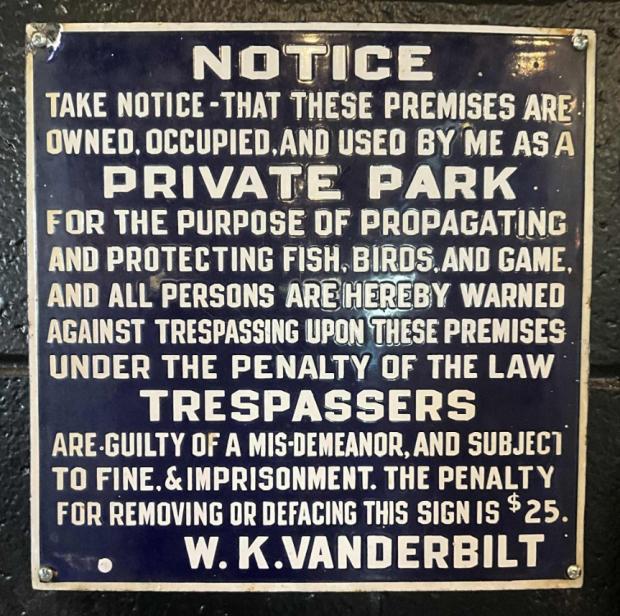
This weekend's Friday Foto did not have a definitive answer. What were your best guesses?
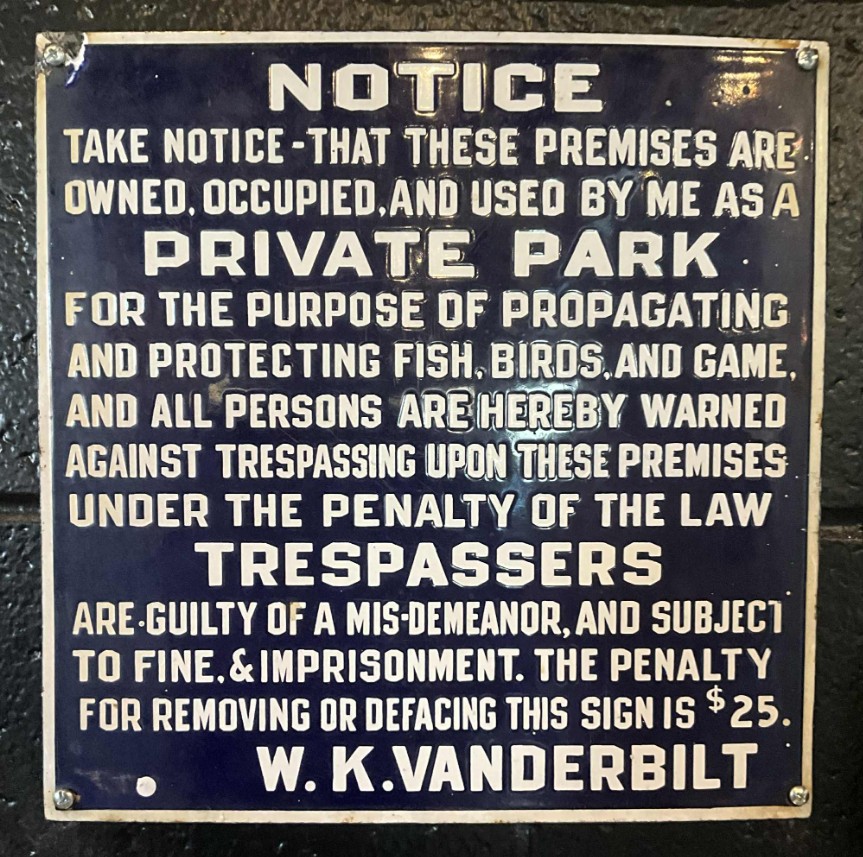
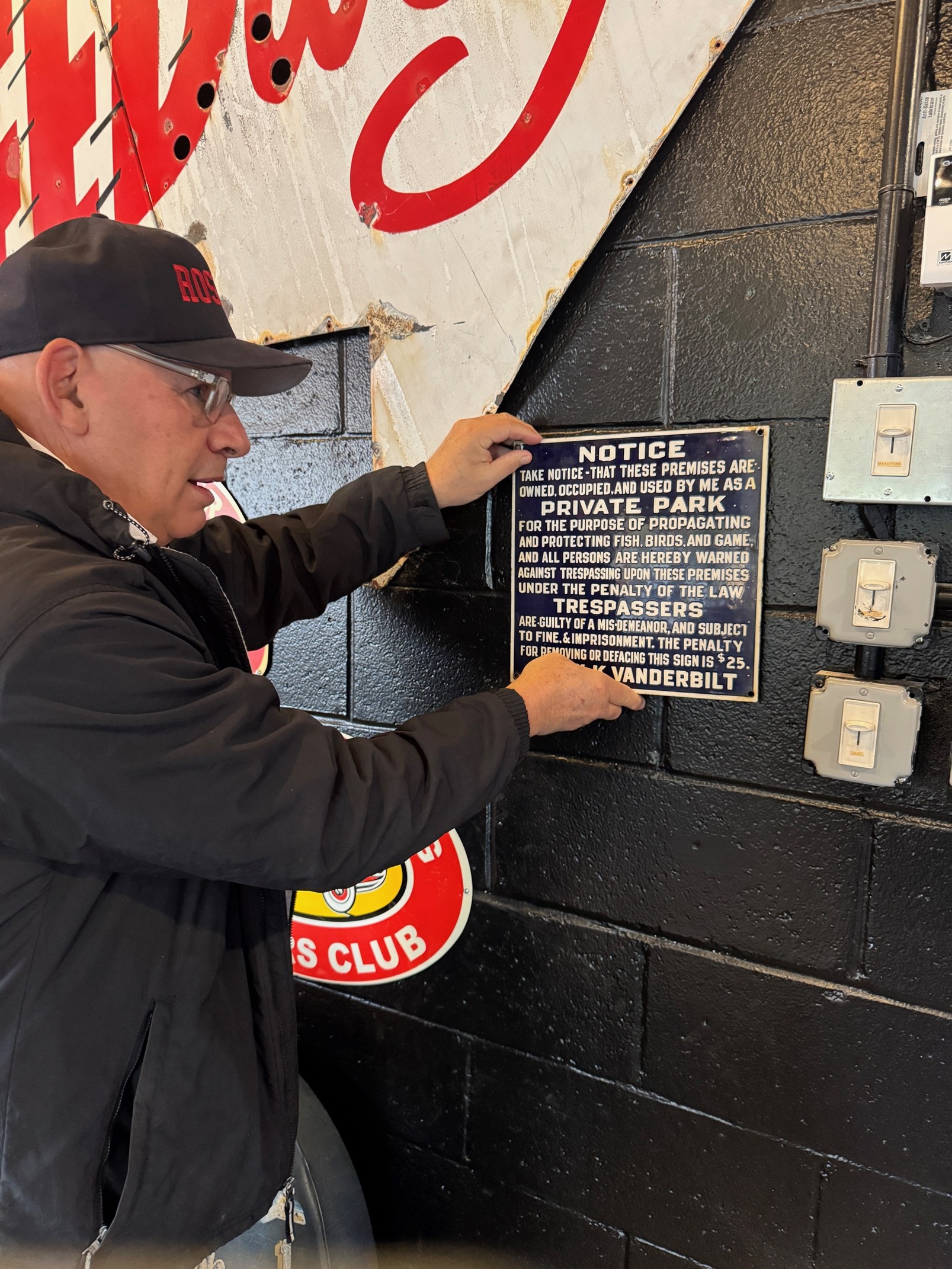
This recently acquired sign has clues, but we are unsure of where it is from, or which Vanderbilt owned it.
What are your best guesses?
Give your best opinions on which Vanderbilt it belonged to, and which property it would have been displayed on. Please provide your rationale.
All comments open immediately.
Greg O.
Howard Kroplick's Analysis
Based on a conversation with my favorite co-author Al Velocci and the below Comments from Brian McCarthy and Mitch Paluszek, here is my analysis of the sign's original owner and its likely location.
Owner: William K. Vanderbilt, Sr.
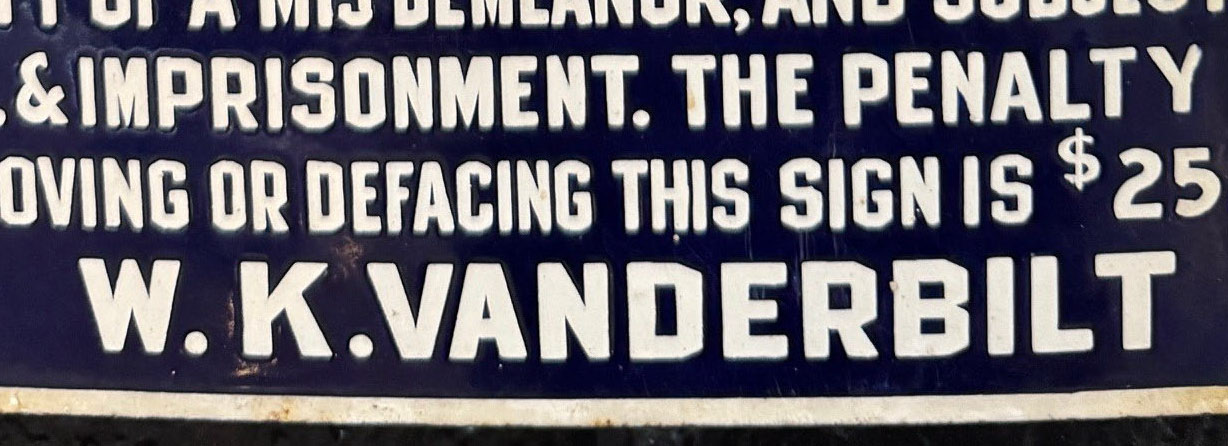
I believe the sign was originally created for William K. Vanderbilt, Sr., Willie K's father, for property he owned in Oakdale, New York. The primary rationale is the sign-off "W.V.Vanderbilt". This sign-off was almost always used by William K. Vanderbilt, Sr. not his son.
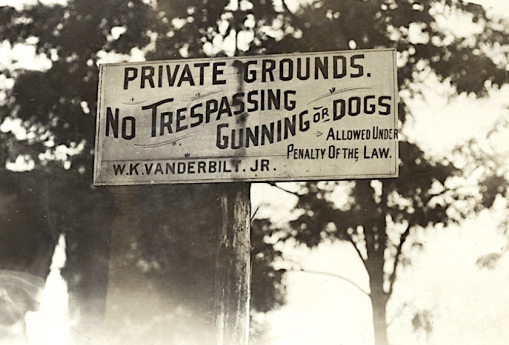
In almost all materials with his name, including this "No Trespassing" sign, Willie K. always tried to distinguish himself from his father and later his son by using William K. (or W.K.) Vanderbilt Jr, or William K. Vanderbilt II (after his father died in 1920).
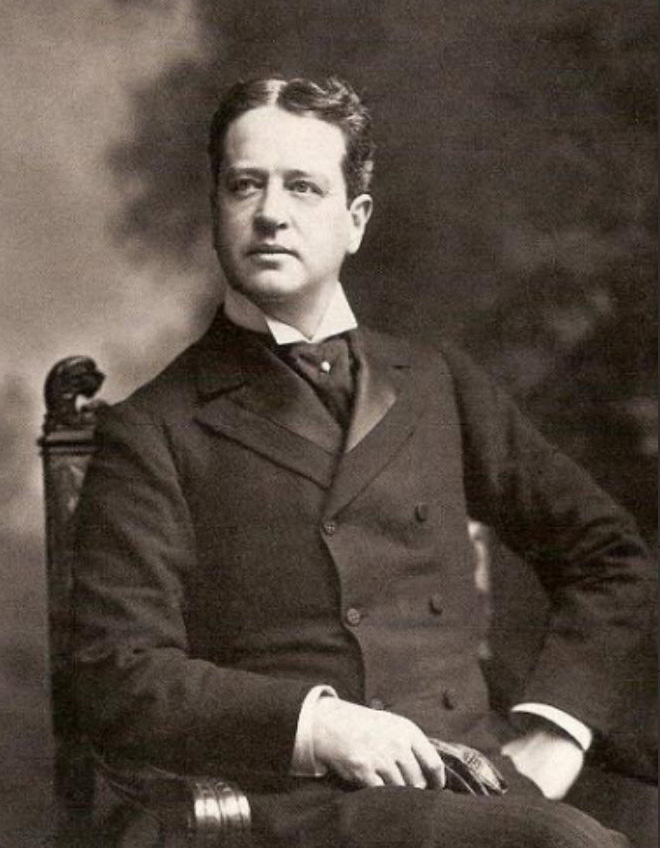
William Kissam Vanderbilt (1849-1920) Reference: American Aristocracy
He was born at New Dorp, Staten Island. Whereas his elder brother, Cornelius II, was put to work at sixteen, Willy enjoyed an extended education in Geneva, Switzerland. On returning to New York aged nineteen (1868), he started his career with the Hudson River Railroad. By 1877, he was Vice-President of the New York Central Railroad. By 1883, he was Chairman of the Lake Shore & Michigan Railroad and President of the New York, Chicago & St. Louis Railroad. He and Cornelius were the chief benefactors of their father's will (each receiving some $70 million) and co-managed the family's investments. He became the head of the family business after his brother's death in 1899. In 1903, he remarried and moved to France, and to rid himself of his business responsibilities he voluntarily allowed the Rockefeller-Morgan/ Pennsylvania Railroad conglomerate to take control of the New York Central System. He was still a majority owner of the New York Central Railroad and maintained considerable stock in the Penn of which he was a director, but otherwise its direction was no longer in his hands. In the years leading up to World War I, Willy allowed the New York Central to be dominated by J.P. Morgan. He died in 1920, during the beginning of the railroad's slow decline.
In 1874, he married the indomitable Alva Erskine Smith who in 1883 outplayed the Mrs Astor to finally win the Vanderbilt family social acceptance among New York's old-moneyed elite. They lived between the Petit Chateau, Idle Hour and Marble House. In 1895, Alva did the unthinkable by divorcing her husband for his infidelity, but then much to her own surprise found herself dropped from society like a hot rock. However, being Alva, she quickly engineered another plan that ensured she would have to be let back in: much to Willy's disapproval, she famously paired off their only daughter, Consuelo, through tears to the equally unhappy 9th Duke of Marlborough. Aside from Consuelo, they also had two sons: William K. Vanderbilt Jr., and Harold Stirling Vanderbilt, both of whom were executives with the New York Central Railroad, but long after the real power had slipped away from the family. Harold was the last Vanderbilt on the board when it finally fell out of their hands in 1954. In 1903, Willy re-married the already twice widowed Anne Harriman and built the Château Vanderbilt in France where they retired to race thoroughbreds. Its stables became legendary and he won several major trophies including the coveted Prix du Jockey Club three times. In 1918, with a personal fortune estimated at $100-million, he came 8th (tied with Henry Ford and Colonel Ned Green) on the first ever Forbes Rich List. When he died in Paris, his fortune was revealed to be just $54-million.
Location of Sign: On William K. Vanderbilt, Sr.'s Property in Oakdale, New York.
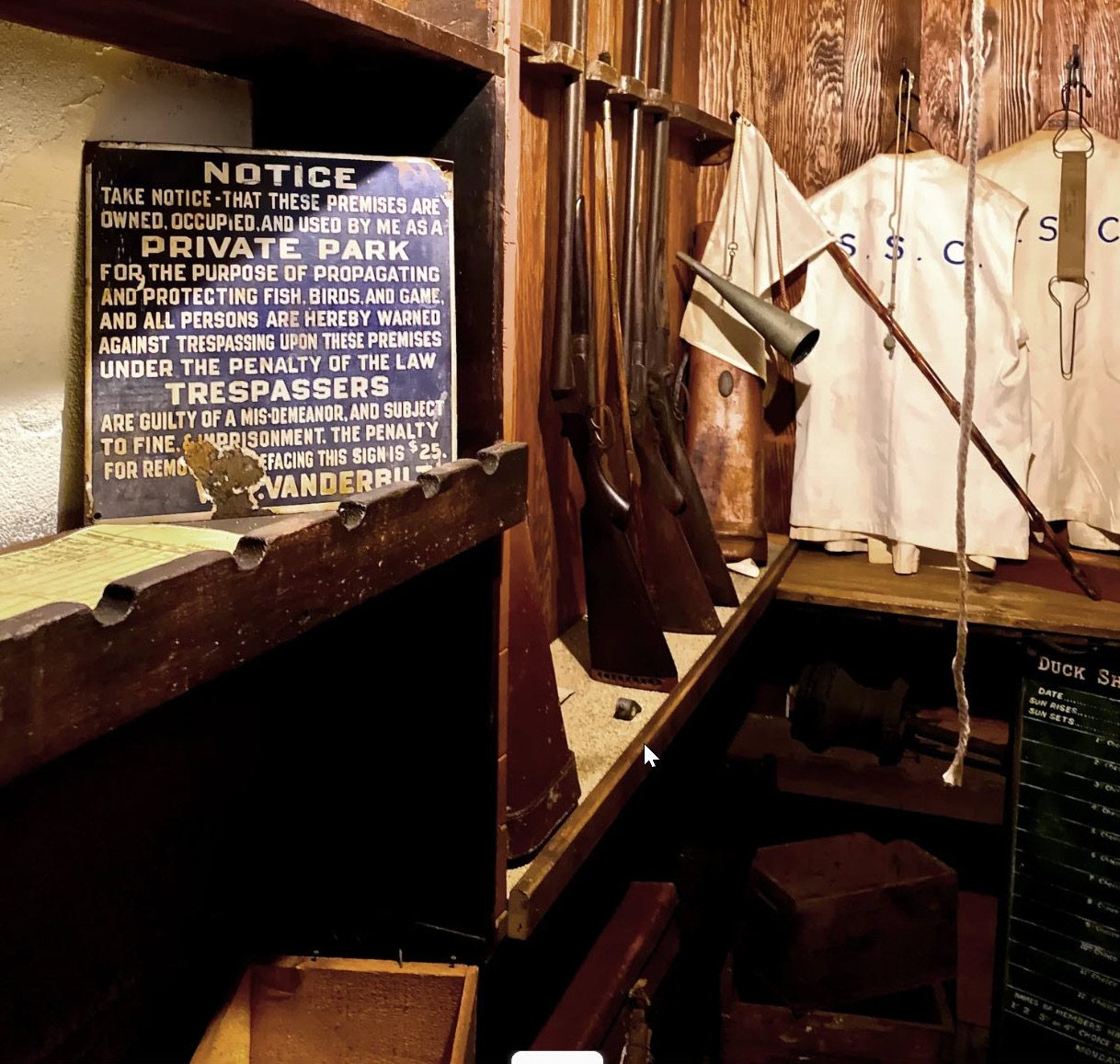
Brian MCarthy and Mitch Paluszek did great detective work in finding this sign on a webpage dedicated to the South Side Sportsman's Club In Oakdale, New York. This 3,000-acre property was located just north of William K. Vanderbilt, Sr's Idlehour estate and, later, Idle Hour estate.
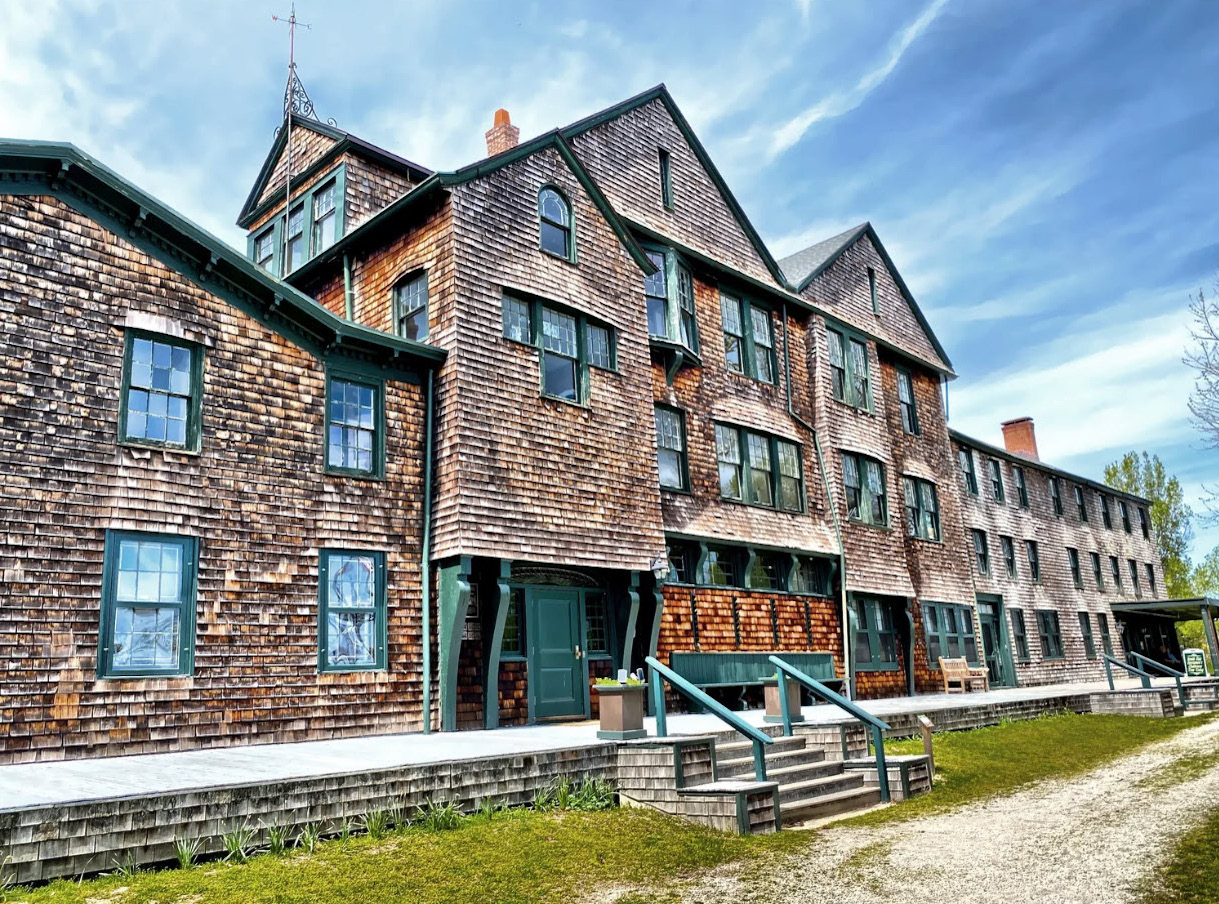
Its' a match! So, the location for the sign was logically the South Side Sportsman's Club. Nope, I don't believe so. Again, the rationale is the copy on the sign.
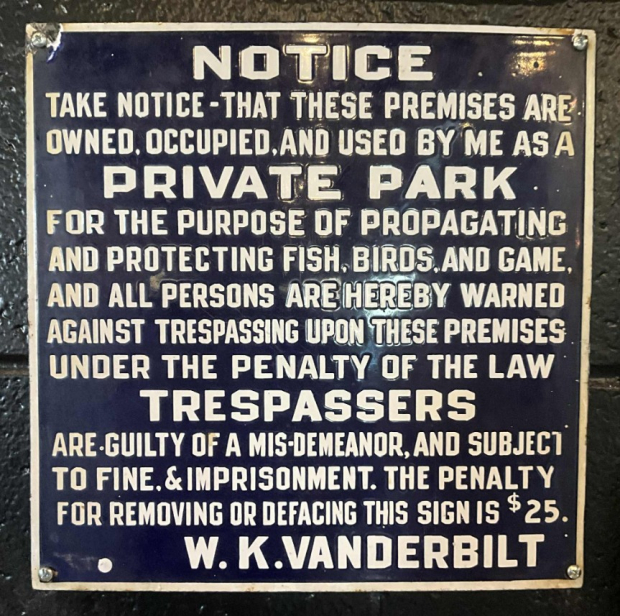
"Take notice- That these premised are owned, occupied and used by me as a PRIVATE Park". The sign clearly was placed on W.K. Vanderbilt's property. Although he was a member of the Club, Vanderbilt did not own the property. Let's look at the 1915 Belcher & Hyde map of the area.
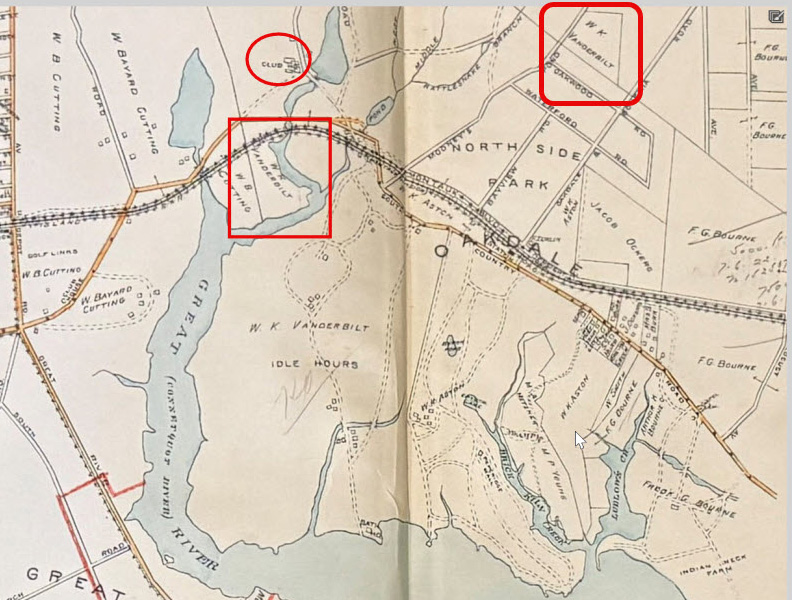
The Club was located just north of the Vanderbilt property. Moreover, Vanderbilt owned two parcels separate from the primary estate that were located directly adjacent to the Club. The parcel may have been Vanderbilt's "Private Parks".
Accordingly, I believe the sign were placed on these two Vanderbilt Oakdale properties to discourage his Club members from hunting on land that he "owned, occupied and used".
Your Comments on this analysis is encouraged!


Comments
My first thought without sleuthing is that these sign may’ve been posted in or near Idle Hour in Oakdale NY, owned originally by William Kissam Vanderbilt 1. He was also a member of The Southside Sportsman’s Club nearby in today’s Connetquot State Park.
South Side Sportsmen’s Club in Great River/Oakdale (now Connetquot State Park), where Willie K (among others) was a member. (My own pic attached.)
I originally thought the sign might be referring to William K. Vanderbilt I and his Idlehour estate but I think Mitch has sealed the deal by providing a second sign. I’m sure W.K.V.(I) thought of himself as one of the owners of the Southside Sportsmen Club in fact (if not legally) with rights to post signs.
Steve, You & I didn’t have access to another sign; but we were on the right track. Sportmens Club is just north of Idle Hour.
Yea, but Billy K. (as he was known by, did not “own and occupy ” nor was it a private park. More to this story ?
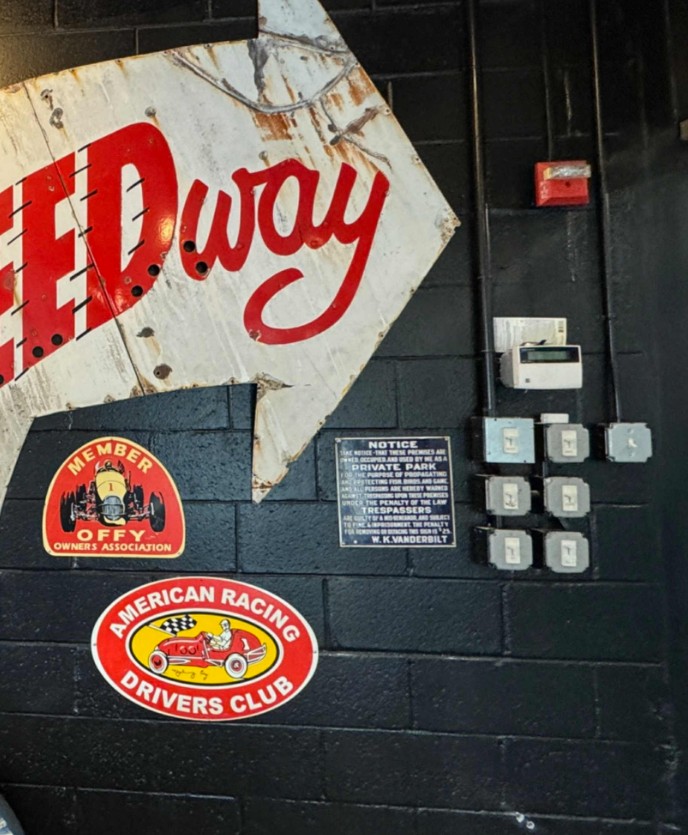
I’m attaching another image of the same sign that Mitch Paluszek provided a few days ago. I downloaded this from the Southside Sportsman’s Club site that shows the sign on a shelf in the Guide’s Closet in the clubhouse at Connetquot River State Park.
The origin seems convincing to me.
Howard, Good find on locating the properties owned by Vanderbilt in the vicinity. The sign now makes some sense. I would like to think that a bridge maybe just a footbridge, was built connecting the westerly parcel to Idle Hour.
I have a sign about like it from the Brinks Detective Company as in Brinks Armored trucks. I think it is on the wall in my shop building.
Hugh, Do you know where your sign came from? Please forward a Jpeg. Howard