Mystery Friday Foto #29 Solved: A Rare Buick Racer and Louis Chevrolet
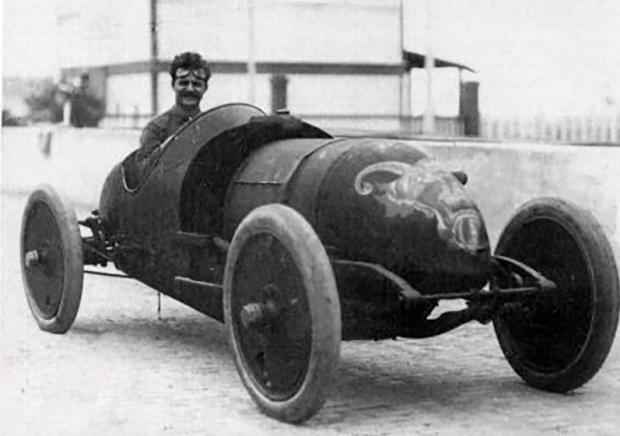
Did you identify the Buick 'Bug' and Louis Chevrolet?
Identify;
- The driver. Does he have any links to the Vanderbilt Cup Races?
Louis Chevrolet, who drove in the 1905, 1908, 1909, and 1910 Vanderbilt Cup Races.
- The one-of-only-two race car and the well-known company that still exists today who had built it
1910 Buick 60 Special - also known as the “Buick Bug.”
- The approximate year
1910
- Does this vehicle still exist today?
Yes, at the Sloan Auto Museum in Flint, Michigan.
Congrats to Steve Lucas, Marshall Buck, Kenneth Parrotte and Randy Reed for identifying Louis Chevrolet.
Greg O.
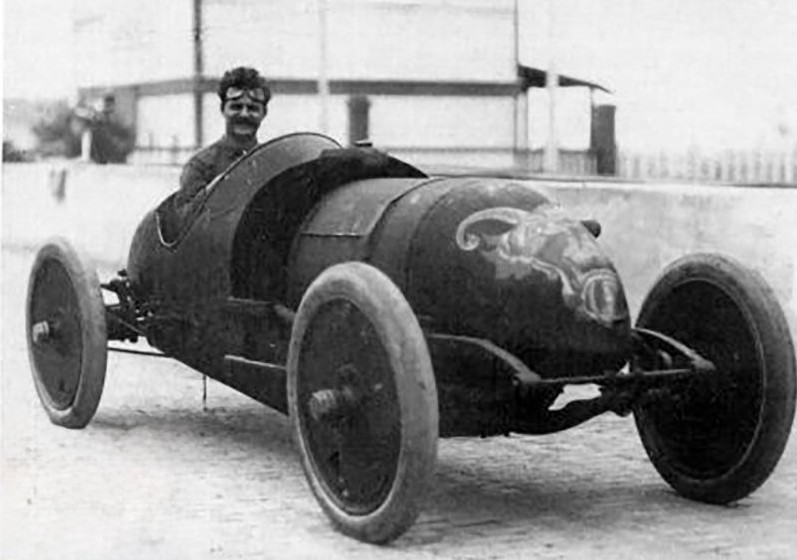
The Buick Bug
An important early racing car lost, found, donated to a museum, lost again, and found again in a different museum.
I saw a used electric Smart car for sale in my neighborhood for $10,000 (or best offer). I gave it a lip-purse, as I am having to drive around town more for work
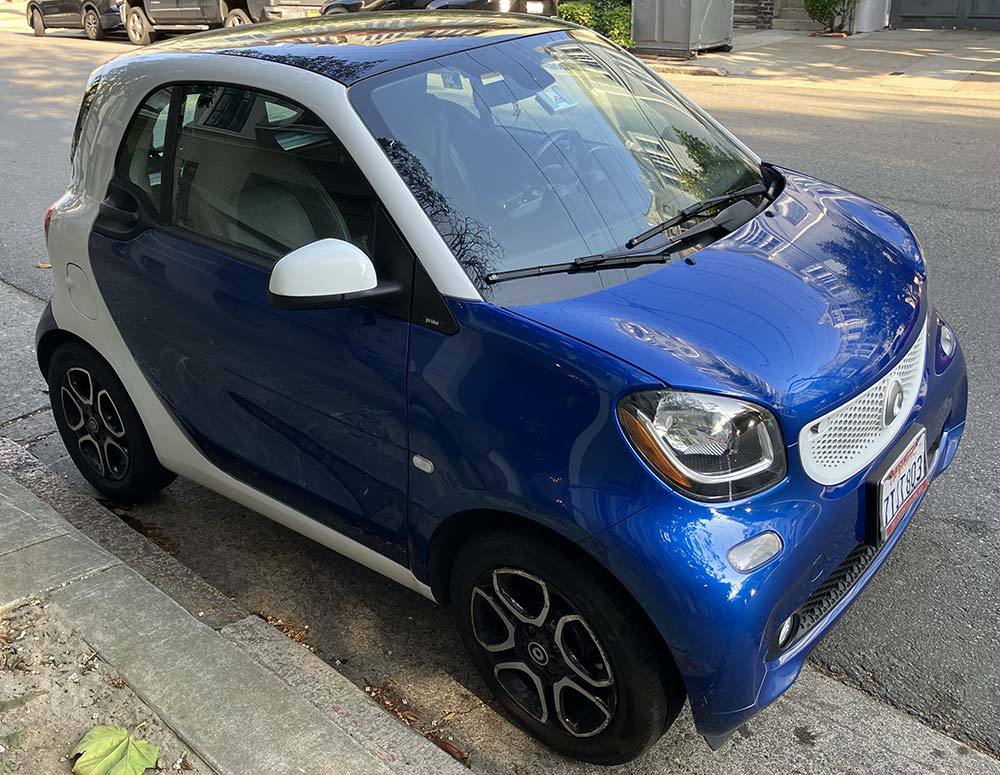
But I’m not sure a 6'5" Woody LaBounty can fit in that capsule, and if I had to fold myself into a little car, I’d prefer something more stylish. Here are three great (if unobtainable) candidates:
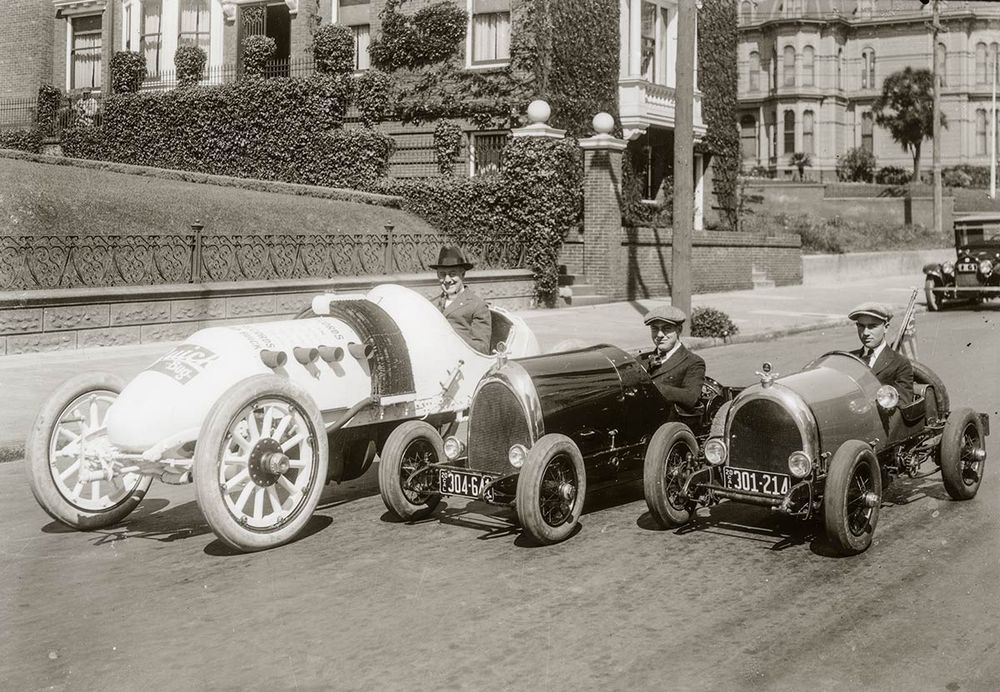
This trio of mighty mites is lined up on Franklin Street in 1920, back before the road became a three-lane, one-way expressway to the Marina District. In the background is the red brick Bransten house at 1735 Franklin Street, now City of San Francisco landmark #126. That side yard and those gate pillars are still intact today.
A strange, intriguing photograph, those three little cars. It seems that there has to be a story here, a bit more explanation needed. And, as it turns out, there is.
The larger vehicle on the left, a fraction of the size of most automobiles on the road today, is a Buick 60 Special, an aerodynamic bullet-nosed record-setter from the early days of motoring and one of only two built.
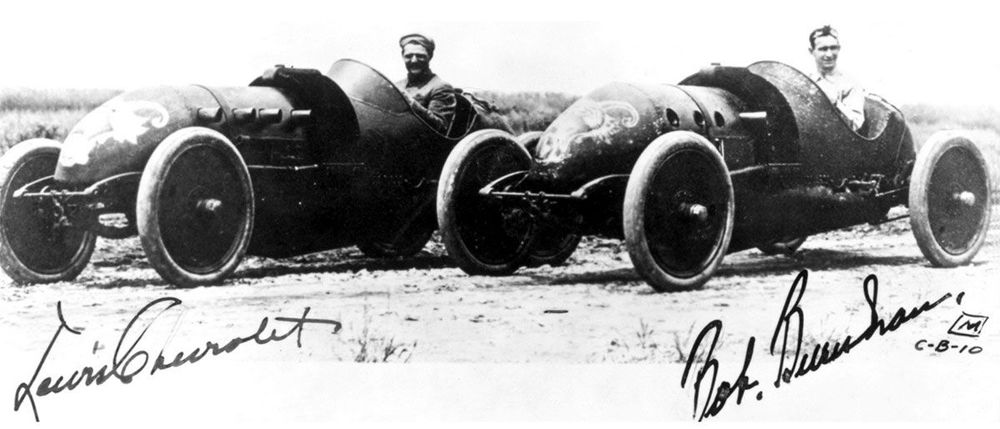
Nicknamed the “Buick Bug,” the racer was able to reach speeds of 100 mph and only about a decade old at the time of the Franklin Street photograph. The Los Angeles Herald remembered it as the “go-fast sensation to the world.”
In 1920, the Age of the Automobile had arrived, but barely. Just a few years before all drivers fell into three categories: rich men looking for toys, hobbyist inventors, and daredevils. When the Buick Bug made history with its unique design in 1909-11, Louis Chevrolet was one of its drivers. Yes, that Chevrolet.
Louis Chevrolet in his Buick Bug, 1910. The ram's head painted on the front was supposedly tied to a story about the custom built car having to butt its way into qualifying races.
Charles S. Howard, the man at the wheel of our photo on Franklin Street, bought the old racer as a collectible out of a warehouse in Kansas City. At the time, he owned the largest automobile distribution company in the world, a Buick dealership on the corner of Van Ness Avenue and California Street.
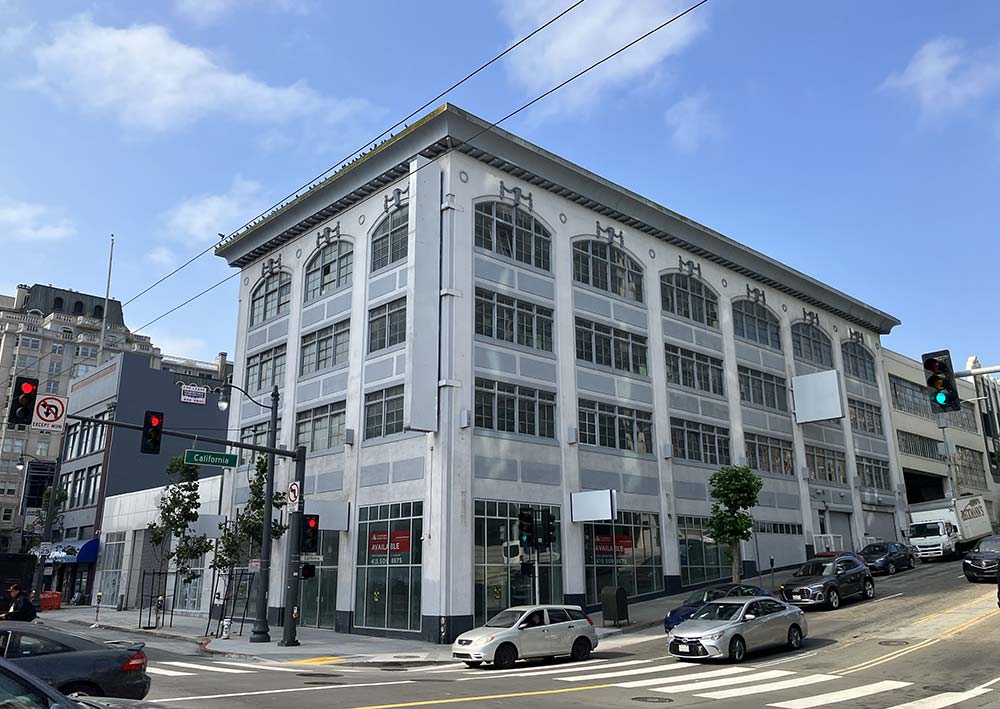
The old Howard Automobile Company building at 1595 Van Ness Avenue.
Howard’s sons sit in the other two vehicles called “Howard Specials,” custom-made especially for them to raise hell. The San Francisco Chronicle noted the minuscule machines, driven by the young men, “have shown a speed of 80 miles an hour.”
In 1924, Howard gave his Buick Bug to San Francisco’s de Young Museum. This was back when the museum in the park took just about anything, from spoons to a Rembrandt to a World War I tank. As a permanent addition to the collection, the auto was to be given a prominent place in the museum and predicted to “come before the eyes of countless thousands of visitors during the years to come.”
It didn’t quite work out that way. Soon after, Howard borrowed it back from the museum to show off at his dealership, at local car conventions, and in a display at the 1939 Golden Gate International Exposition on Treasure Island.
In 1984, a San Francisco Examiner reporter, investigating mismanagement of the city’s museum collections, found that the car was still on the de Young’s books as an active long-term loan. The Bug was estimated at the time to be worth $300,000-$400,000 ($880k-$1.17m in modern dollars), and the Examiner noted “Museum officials simply lost track of it.”
The reporter tracked it down at the Sloan Auto Museum in Flint, Michigan. The director there said they had gotten it from the chief engineer of Buick in 1958. Whether the de Young ever received compensation for the loss of the Bug is unknown, but the old racer, now with a cherry-red paint job is still on display in Michigan.
The Bug gets pulled out and shown off fairly frequently.
1910 Buick Bug - Jay Leno's Garage



Comments
That’s Louis Chevrolet, who drove in the 1905, 1908, 1909, and 1910 Vanderbilt Cup Races. He is sitting in a Buick “60 Special” or Buick Bug as it was called. It was built for him in 1910 along with an identical racer for Bob Burman. The car that Chevrolet is in no longer exists, but Burman’s identical twin can be seen at the Flint, MI Cultural Center in the Buick Gallery.
1910 Buick 60 Special - also known as the “Buick Bug.” Designed by Louis Chevrolet and Buick engineers- said to have been built for the Buick Racing Team. Two cars built, only one still survives today. Driver appears to be Louis Chevrolet.
Louis Chevrolet is shown in this July 1910 Indianapolis Speedway photo in a Marquette-Buick. Louis drove in three Vanderbilt Cup Races; 1908, 1909, 1910. The car in the photo was built by Marquette Motor Company which was a General Motors Co. company as was Buick. Buick (David Buick built his first car in 1899) was one of the first car companies that the new General Motors Co. purchased. Buick is the oldest automobile in production today. The Marquette-Buick was built in 1910 and raced at the July 1910 races as the newly brick paved Indianapolis Motor Speedway. On day one of the three day race meet Louis Chevrolet set fast time in the time trials and won a race. Bob Burman won three races that day. On day two of the July meet Louis Chevrolet won three races and Burman set fast time in the time trials and won the 100 Mile Remy Grand Brassard Trophy race. The final day of the three day July meet Louis Chevrolet won one race. A few weeks later the A.A.A. disqualified the Marquette-Buick race cars, “were not stock cars, not offered for sale in a bona fide manner”. Louis Chevrolet was employed by Buick and with William Durant formed the Chevrolet Motor Co. in 1911 under the General Motors Co. banner. I have seen a Marquette-Buick shown above outside the Indianapolis Motor Speedway Museum during 500 race week. It is the only Marquette-Buick remaining and is said to be the Bob Burman racer.
Louis Chevrolet raced at Vanderbilt in 1909/1910.
One of two Buick race cars built in 1910.
This one called the “Buick Bug” for a nickname.
Timed at 105.87 mph at Indianapolis Raceway.
This car still exists in a museum today/
I love my 1998 super charged Buick GS Regal.
I’m working on an article about these wonderful cars.
I’d be very pleased to have any additional information.
Many thanks!