Restoration Update #2: 1930 Duesenberg J Murphy Convertible Sedan Berline #2448 J-399 (1/17/2025)
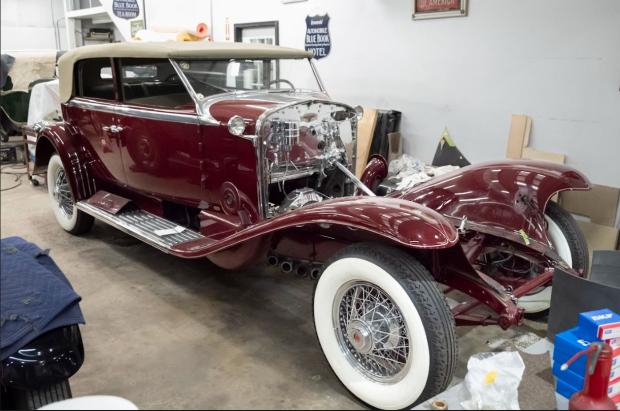
The mighty 420ci Duesenberg powerplant and transmission under restoration.
On January 17, 2025, a visit was paid to Stephen Babinsky’s Automotive Restorations In New Jersey to see the progress of the 1930 Duesenberg Model J Convertible Sedan Berline #2448. While the newly acquired Duesy looked incredible, it has been strictly a static display for over four years and never driven in that time before the Kroplick acquisition.
Duesenbergs are meant to driven, always have, and when Duesenbergs, (or any car for that matter), are not driven they can deteriorate faster than even driving them. Add to that the busy upcoming 2025 concours season, it was imperative that this Duesy get into driving and concours fighting shape.
Most of the winter's restoration revolves around the massive 420 cubic inch, straight 8-cylinder race engine that resides under the Duesenberg's long bonnet, and this Duesy #2448 needed a lot of time-consuming assistance. However, Steve Babinsky has been exemplary in executing the work in an incredibly fast fashion without sacrificing detail and authenticity.
At a typical concours event, authenticity is what makes a qualified contender. Duesy #2448, while absolutely brilliant and beautiful since it's 1970's full restoration, some cosmetic work was also necessary along with the drivetrain to bring it back to full authentic and concours condition.
Here's the January 2025 update.
Greg O.
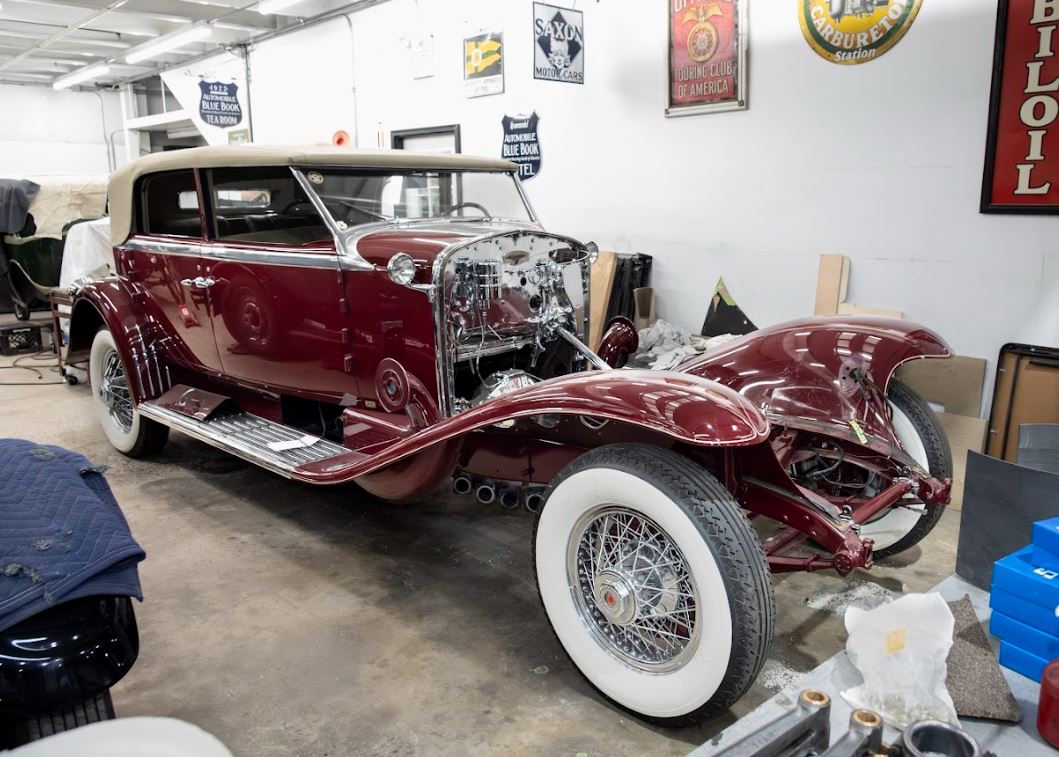
The stripped-down Duesy in the thick of the restoration. Complete engine block, head and transmission completely removed.
All photos Gram Spina
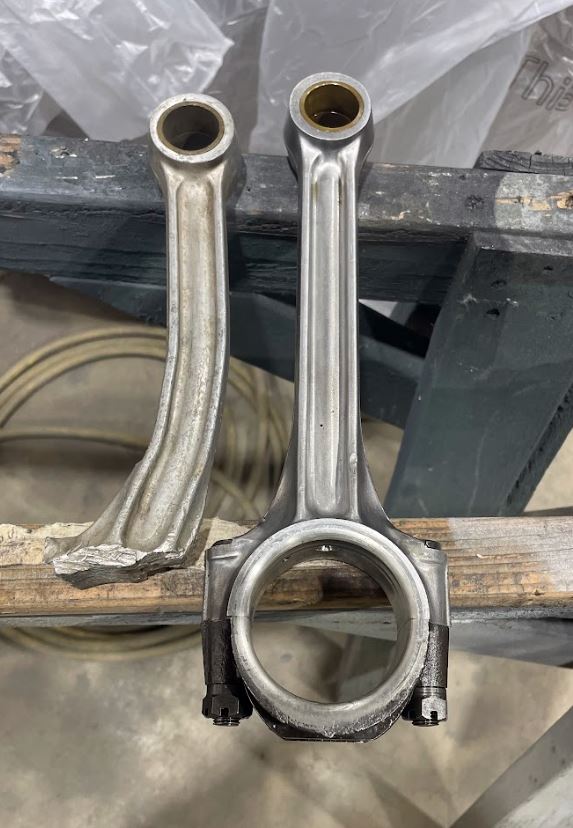
Known for their immense power in 1928, the Duesenberg connecting rods bear most of the brunt of that power. To keep the engine's rotating mass to a minimum, Fred and Augie Duesenberg opted for aluminum connecting rods for their weight. However, despite the strength of the aluminum, they still were not an ideal match for the output of the Duesenberg monster.
Catastrophic failure of the aluminum connecting rods is a fairly common event even in the normally aspirated Duesenberg engines. As seen in this photo, one of the 8 97-year-old aluminum connecting rods pulled from #2448's 265hp #J-399 engine is in near perfect shape (right). But a heavy right foot can easily turn that connecting rod into a mangled mess as seen in another rod from another Duesy engine that failed (left). This is why most modern Duesenberg restorations take the preventative route of replacing the aluminum rods with Carillo forged steel rods to completely avoid any further catastrophe. Despite the slight extra weight of the steel, the engine still performs as intended.
The rod issue was something the Duesenberg brothers did notice. In 1932, when Duesenberg wanted a more powerful engine with the addition of supercharging, they then started installing forged steel rods in the new 320hp, supercharged engine. This solved the connecting rod failure issue. The new steel rods were even strong enough for the two 400hp SSJ engines Duesenberg built in 1935.
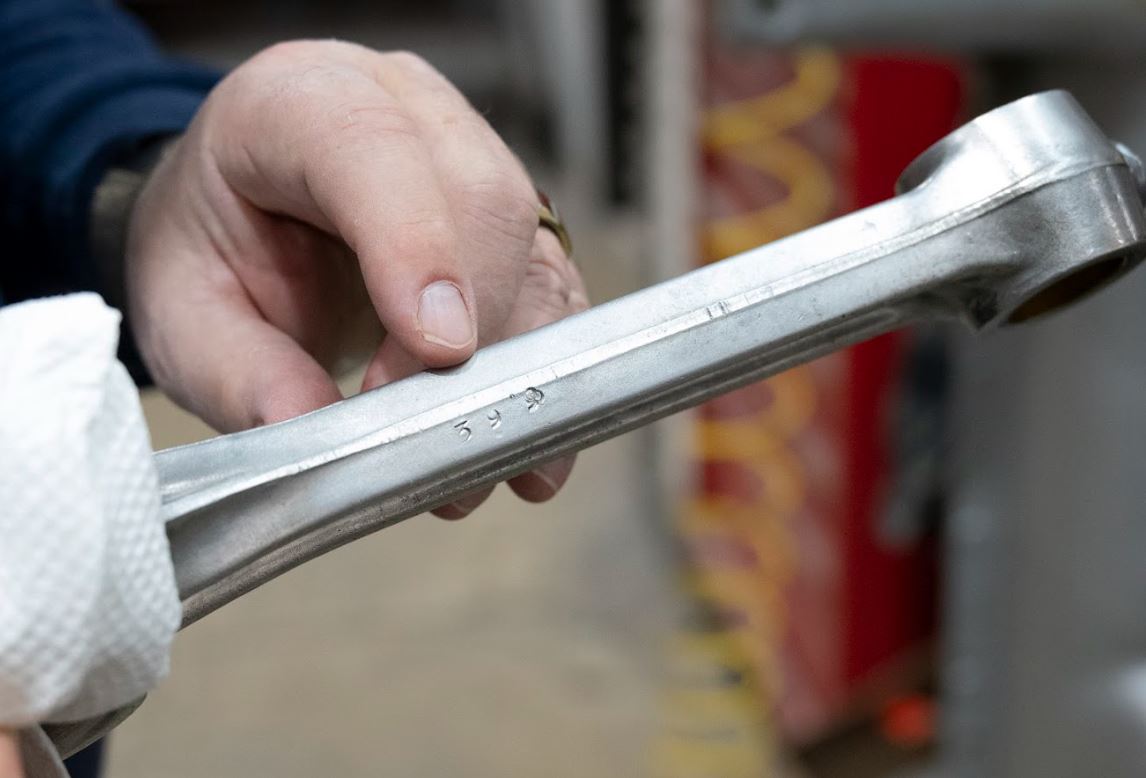
We know the rods to be original since they also received an engine number stamp on the rod itself. Here, the small '399' can be seen in the center of the rod.

Howard seen with his new piece of Duesenberg wall art as these will not be returning to the car.
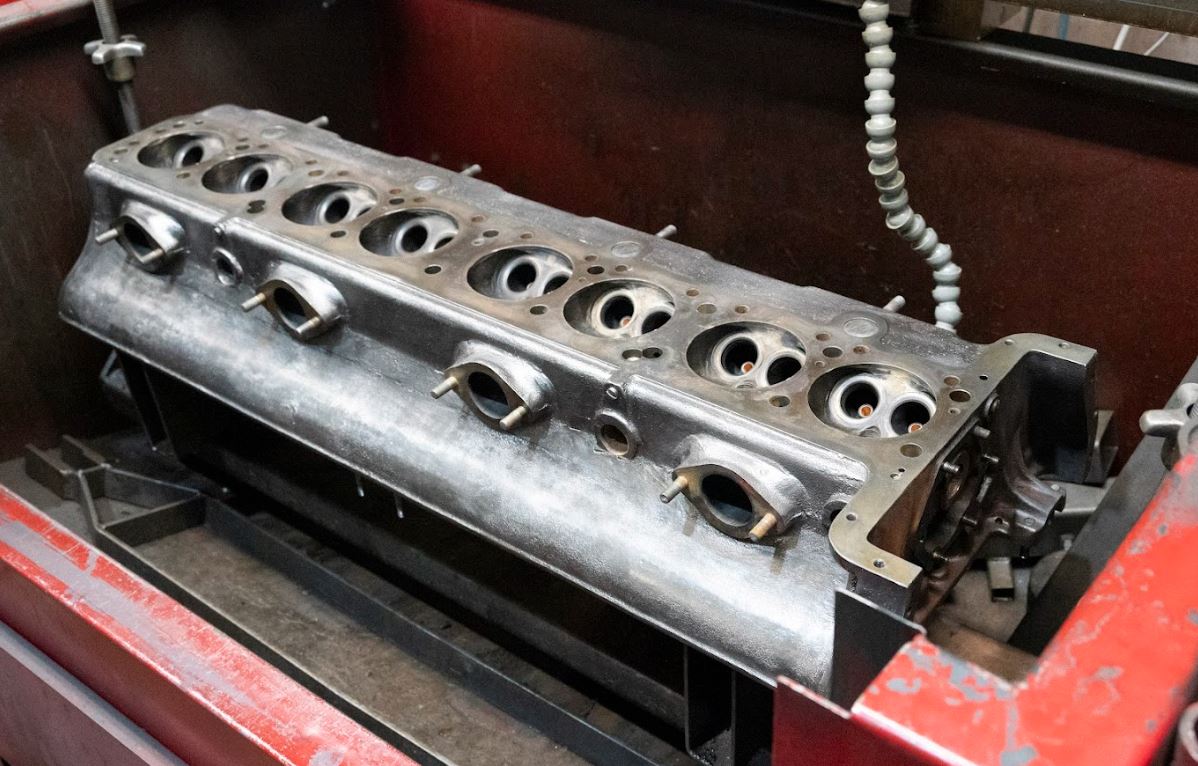
The engine's head removed, stripped of the cams, valves and paint undergoing cleaning and machining. these will eventually also be painted to match the engine block.
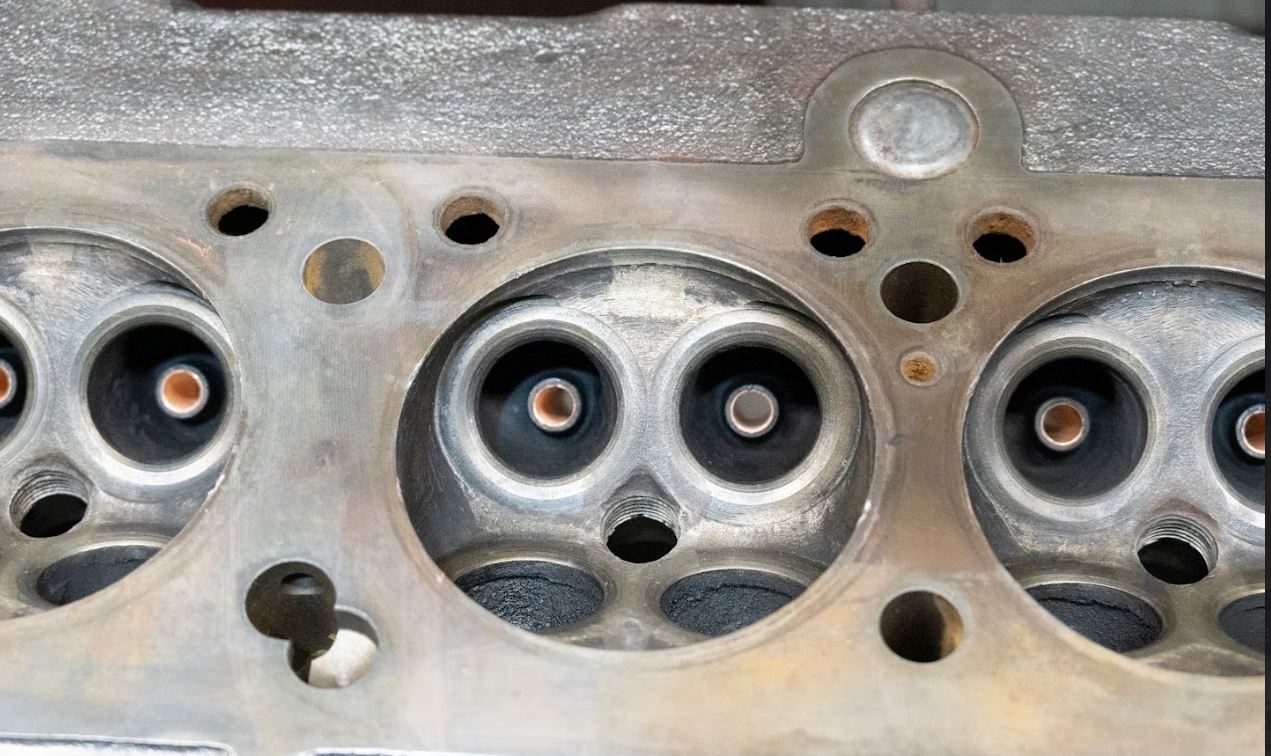
A closeup of the head's combustion chamber reveals that they had a very advanced hemispherical design 27 years prior to Chrysler introducing the Hemi V8 in 1955 when finally, modern engine horsepower matched the Duesenberg output.
It is also very notable that Duesenberg was light years ahead of all other manufacturers by designing a robust, twin overhead cam design with 4 valves per cylinder.
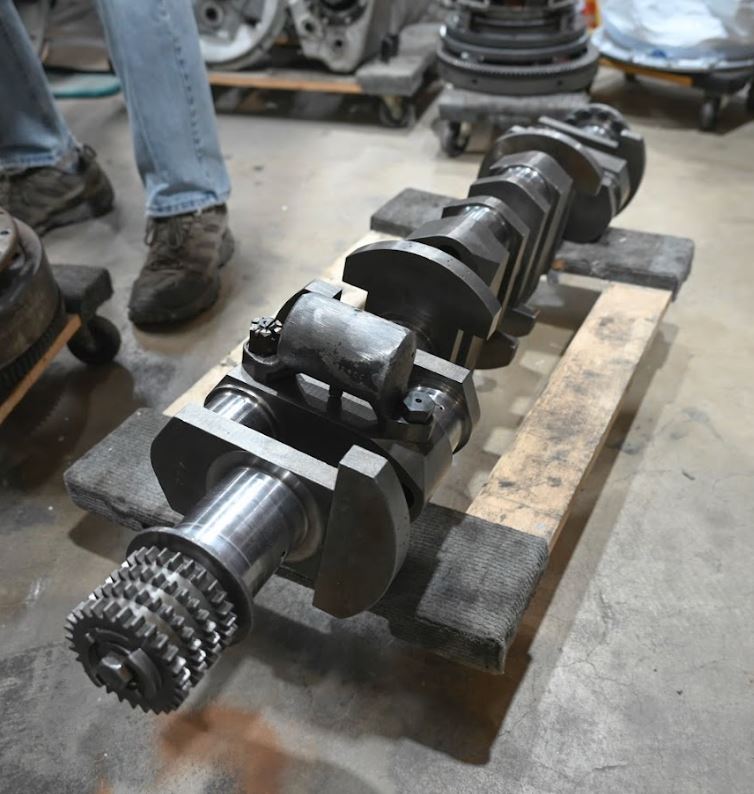
The massive, 150 lb crankshaft is pure Duesenberg artwork.
Counterbalanced and polished, the crank is another crucial part of the drivetrain's ability to output its incredible horsepower numbers.
Another unique Duesenberg addition is the two cylindrical objects mounted opposite each other on the crankshaft. One can be seen here closer to the sprocket end of the crank (the other opposite cylinder cannot be seen in the photo).
These were not for counterweight purposes as one might surmise. These 'pellets' were actually hollow and filled with mercury to help absorb any unwanted vibrations within the rotating mass of the engine.
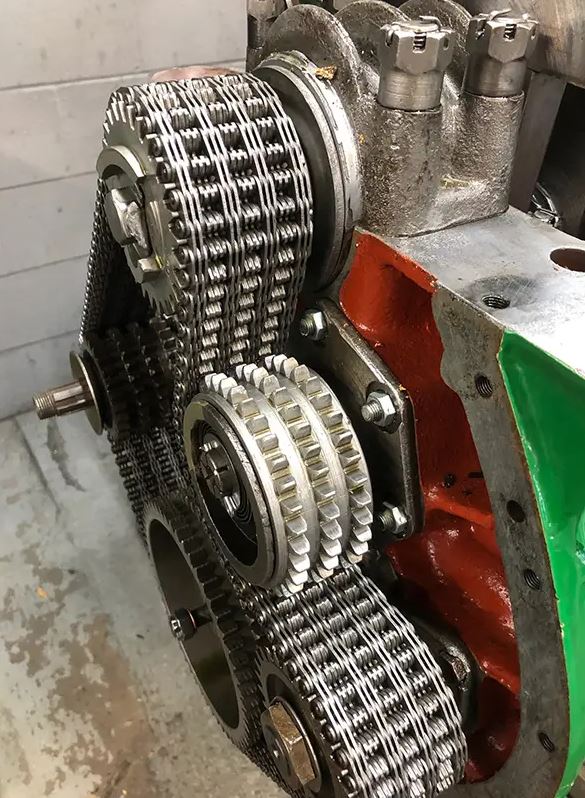
The sprocket on the end of the crankshaft was part of the incredibly over engineered valvetrain. Two 3-inch-wide chains connected the crank to the overhead cams and valves.
The following two photos, (not from this restoration) show the chains in place. Again, another testament to the engineering involved with the Duesenberg engine design. No belts here!
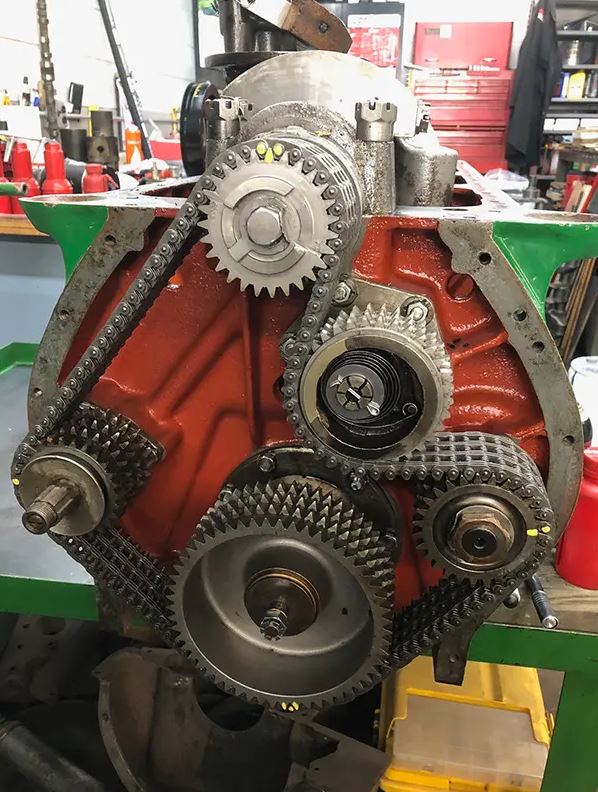
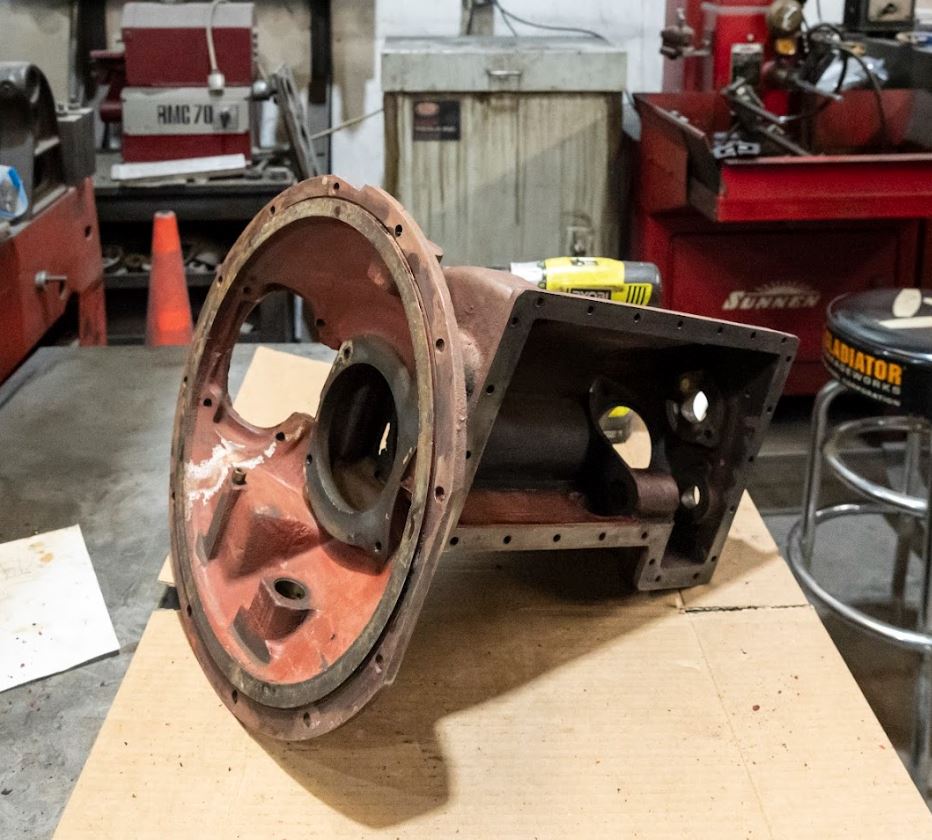
It is at this time; the transmission also undergoes a restoration. Here the transmission case is seen just after disassembly awaiting cleaning and machining.
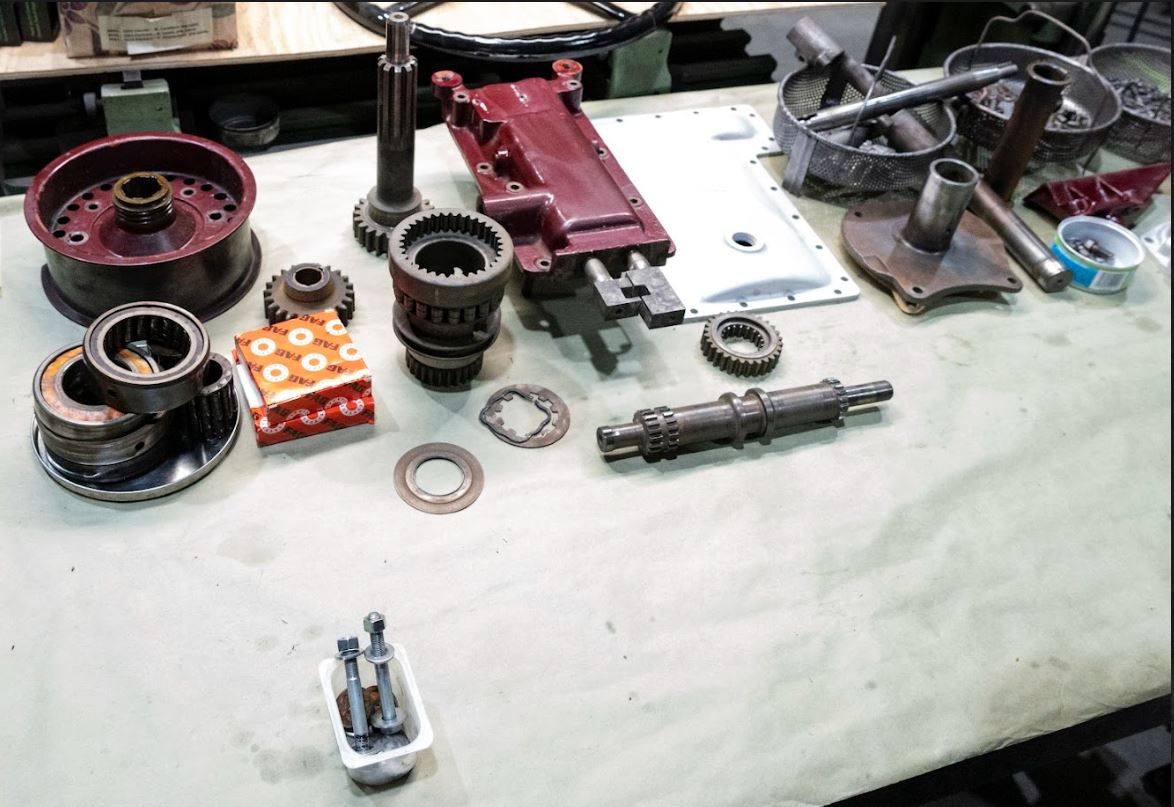
Gears, bearings and various parts of the Duesenberg 3-speed transmission.
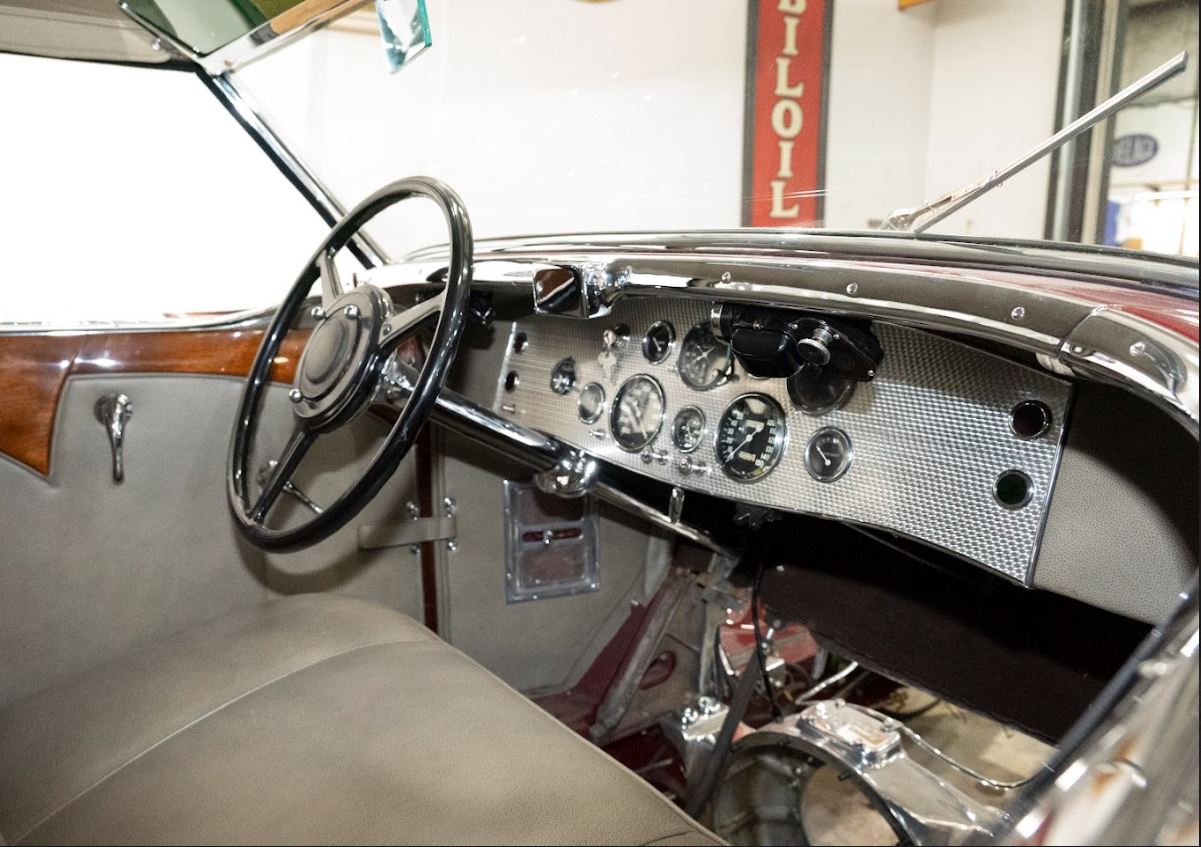
To help facilitate the engine and trans removal, pedals, emergency brake and even the floor itself needed to be removed from the vehicle.
Fred Flintstone would feel right at home in the Duesy at the moment!

The cast iron engine block, cleaned, machined and painted in Glasurit 22 Duesenberg Green ready for reassembly and installation.
It is no easy task lifting or moving this block around!
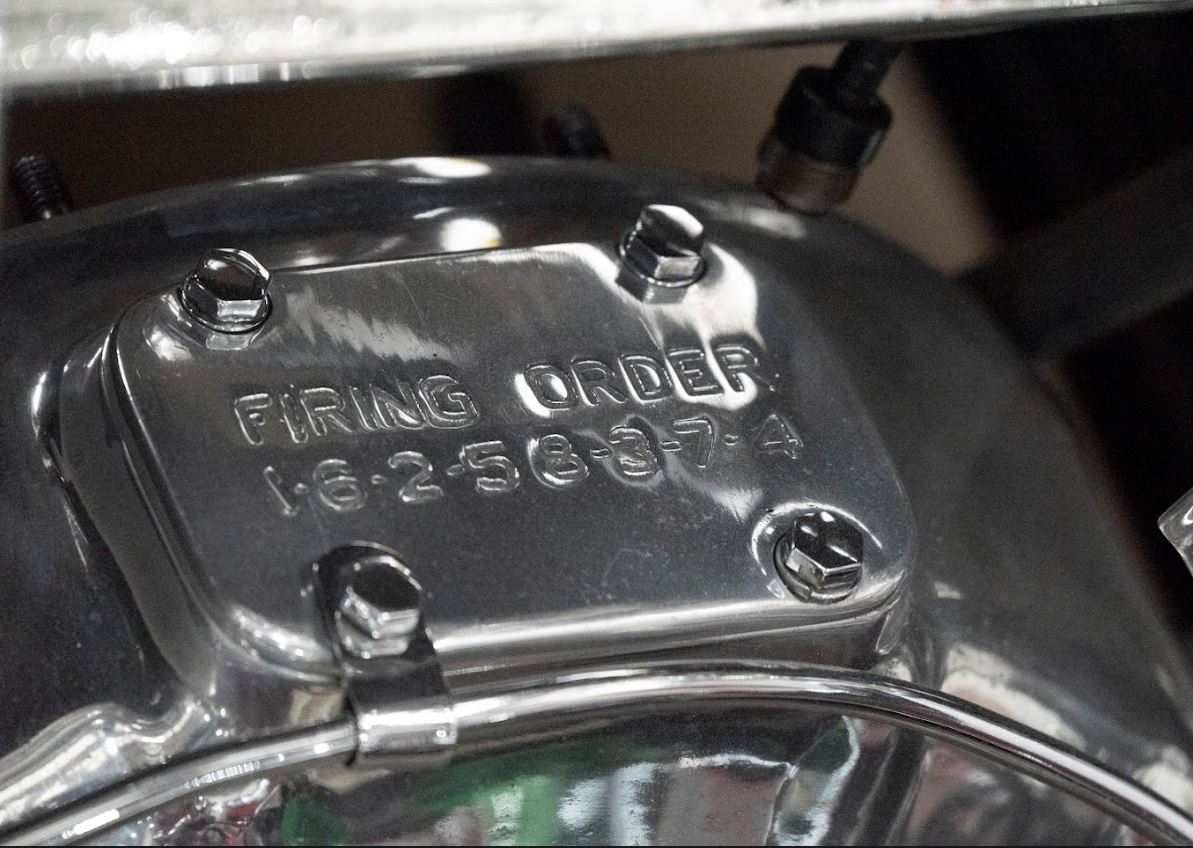
The cylinder firing order stamped into the freshly polished bell housing.
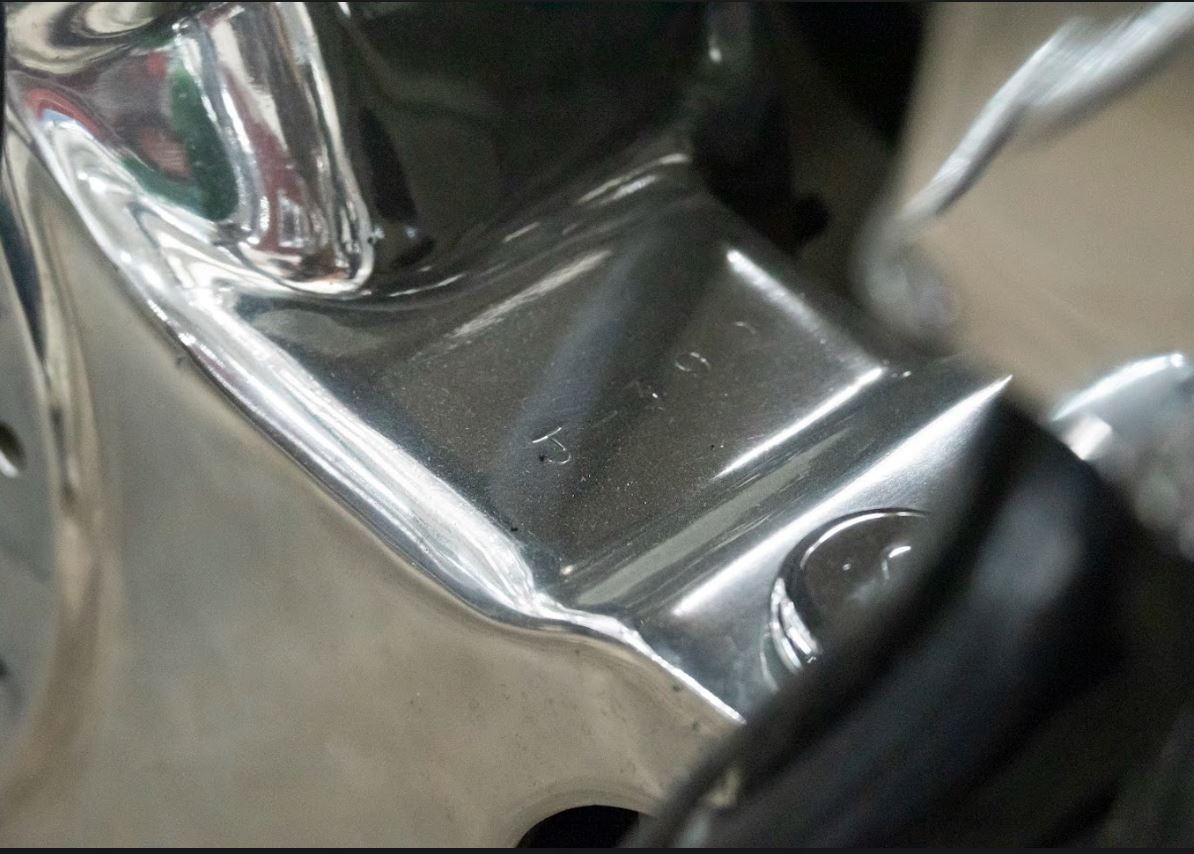
The engine identifying 'J-399' as stamped in the bell housing.
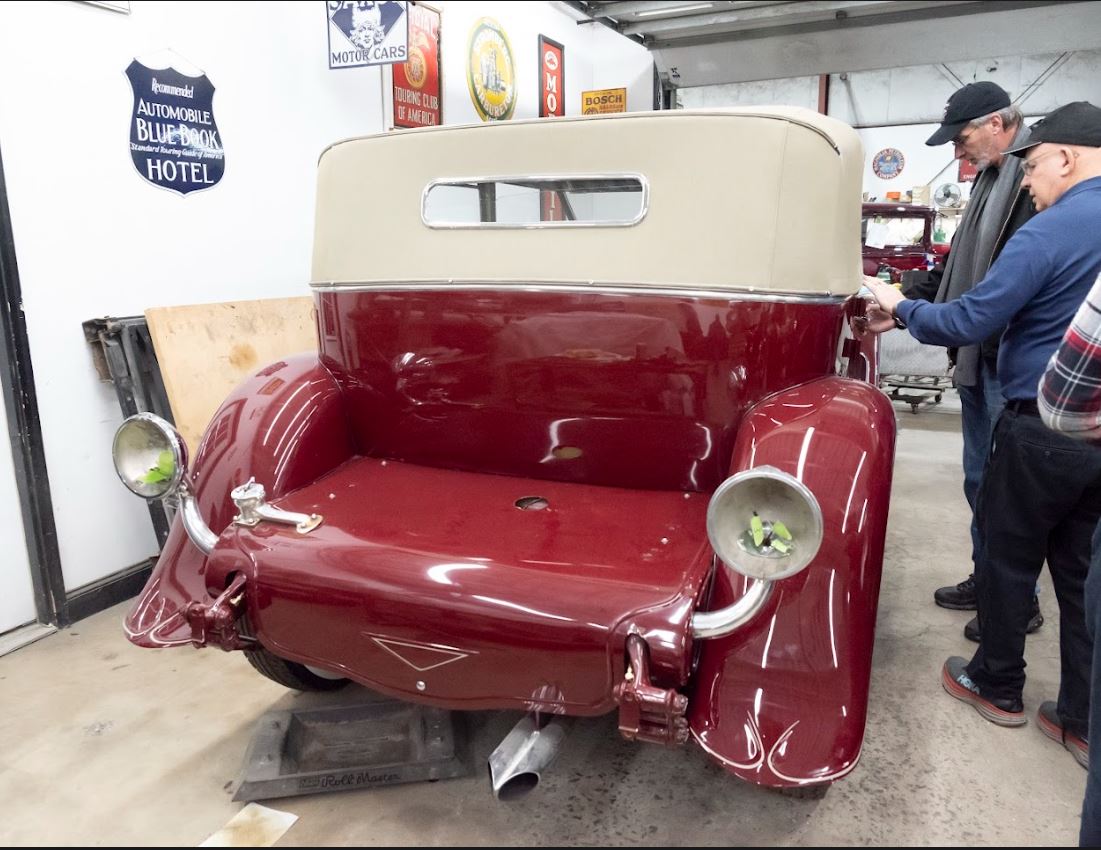
As previously mentioned, some minor cosmetic work needed performing to bring the automobile to concours standards.
Here, the trunk was removed for some upholstery work and taillights removed for matching reflectors.
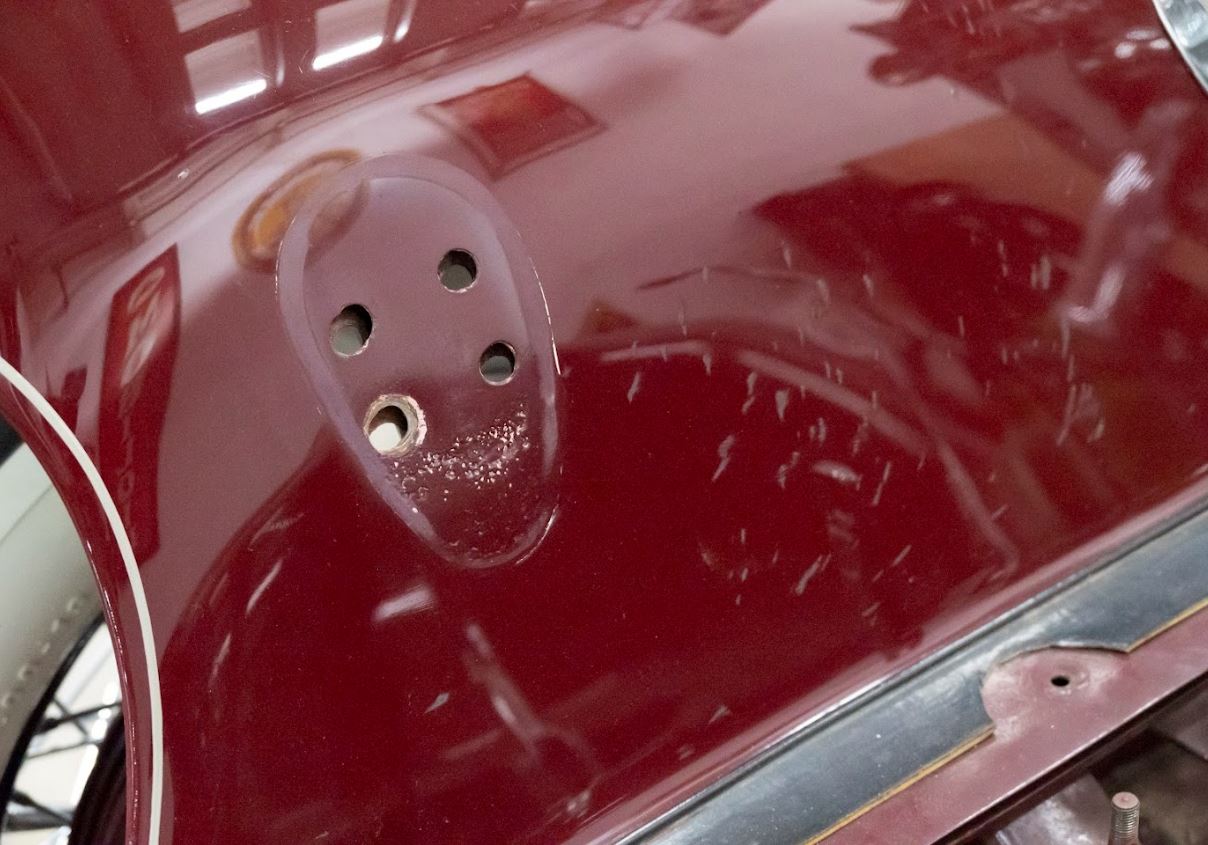
It was during the cosmetic refresh that some original paint was discovered under a headlight mount.
In 1930, #2448 was painted in a light tan and how it rolled off the showroom floor. During previous owner Gene Perkins' 1970's restoration, the decision was made to change the color to the beautiful shade of maroon as it is today.
Stay tuned for further updates as the Duesenberg's springtime reveal gets closer!


Comments
Incredible car Howard. Good luck with the restoration. It’s gonna look fantastic.
Looks like great work Howard. Looking forward to seeing it drive again.
Incredible process for recommissioning the Deusy!
Can’t wait to hear it roar again !!!!! Thanks for all you do for Long Island’s car culture
By far the most beautiful car in your collection (IMHO).
Perhaps it will be ready for the Audrain Concours in October! Looking forward to seeing the finished product.
Awesomely beautiful, Howard and, as usual, you’re going-about the engine restoration, etc. in all-the-right way!
Can’t wait to see and “hear” the result.
Beautiful work. I always enjoy seeing restoration photos.
It’s an engineering marvel, and a mechanics dream or nightmare depending on who is working on it. But a known and proven engine with smooth power. Keep it going Howard. Looks great. Artie Finnegan