(Update 12/24/24) A Close Look at the Duesenberg J Instrumentation
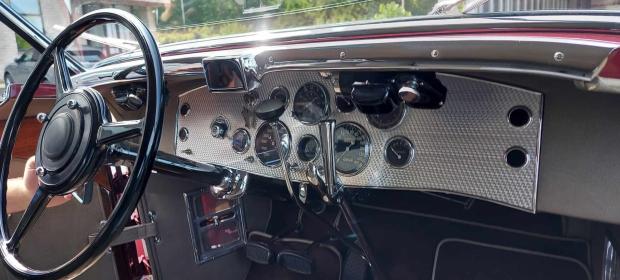
For a car as advanced when it was introduced in December 1928, the Duesenberg Model J had an equally advanced dashboard with all the instrumentation one would expect of an automobile so ahead of its time.
We'll take a look at all the controls and information given to the driver while cruising around in their state-of-the-art motor car.
Greg O.
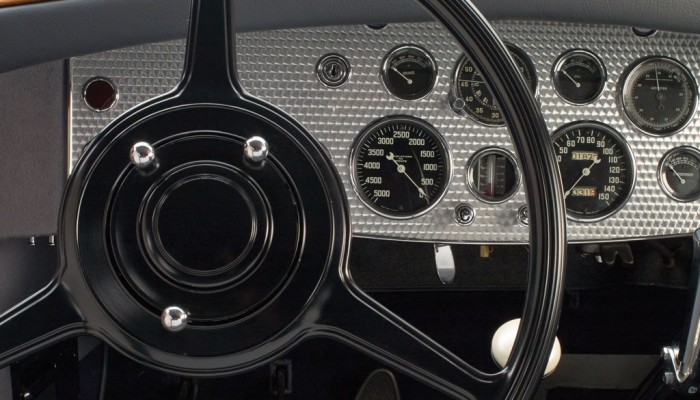
This was the impressive driver's point-of-view from the driver's seat. All your car's vital information was at your fingertips.
Hard to imagine in the modern era with touchscreens, Bluetooth and every imaginable gadget and gizmo that cars of 2024 include in the creature comforts, but slipping into the Duesenberg driver's seat in 1928 was like stepping into an airplane cockpit of the day. And as we'll see in a minute, the Duesy and an airplane even shared an aviation feature on the dashboard.
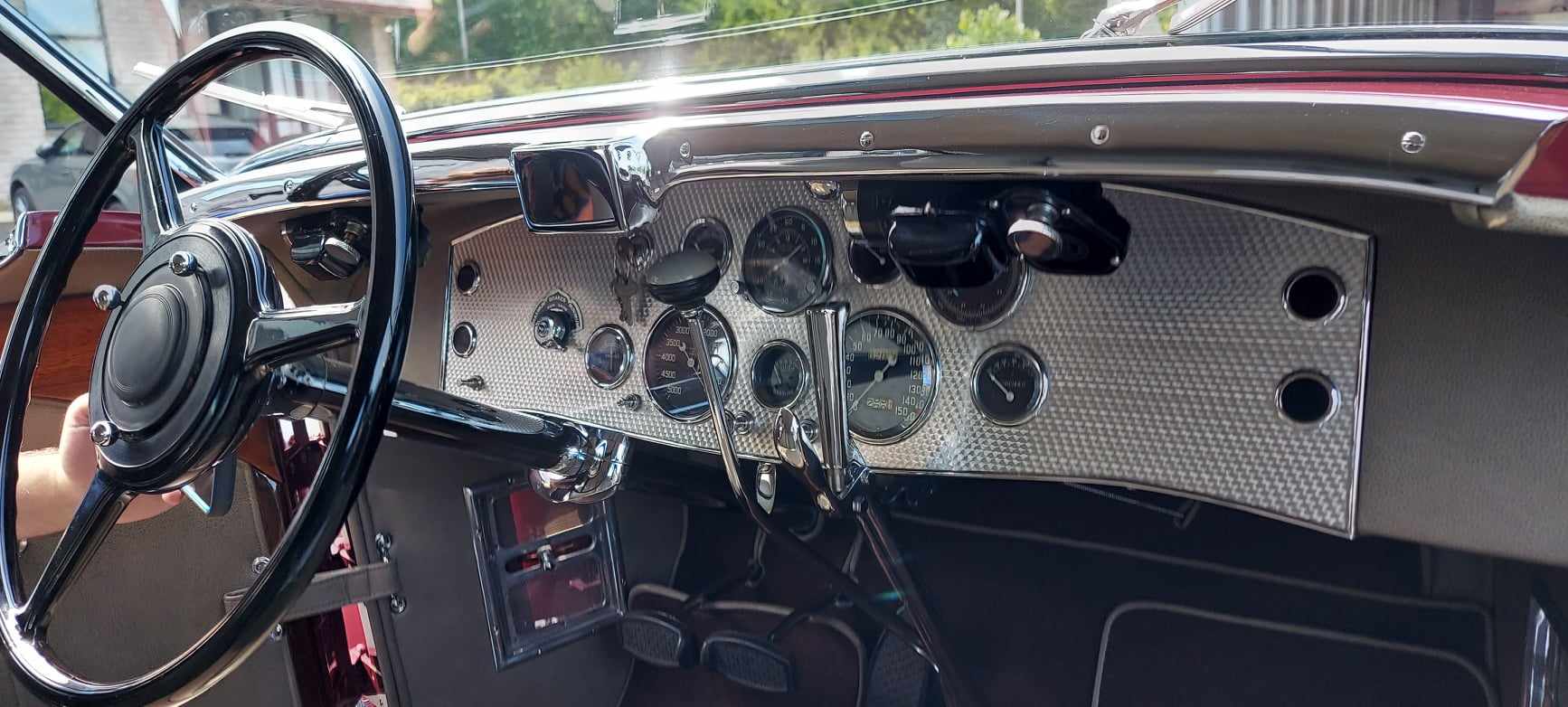
Howard and Roz's Duesy J Murphy Sedan Convertible Berline #2448 is no different and even has the more desirable 'dial swept' style of gauges instead of the 'barrel-style' offered in some other Duesenbergs.
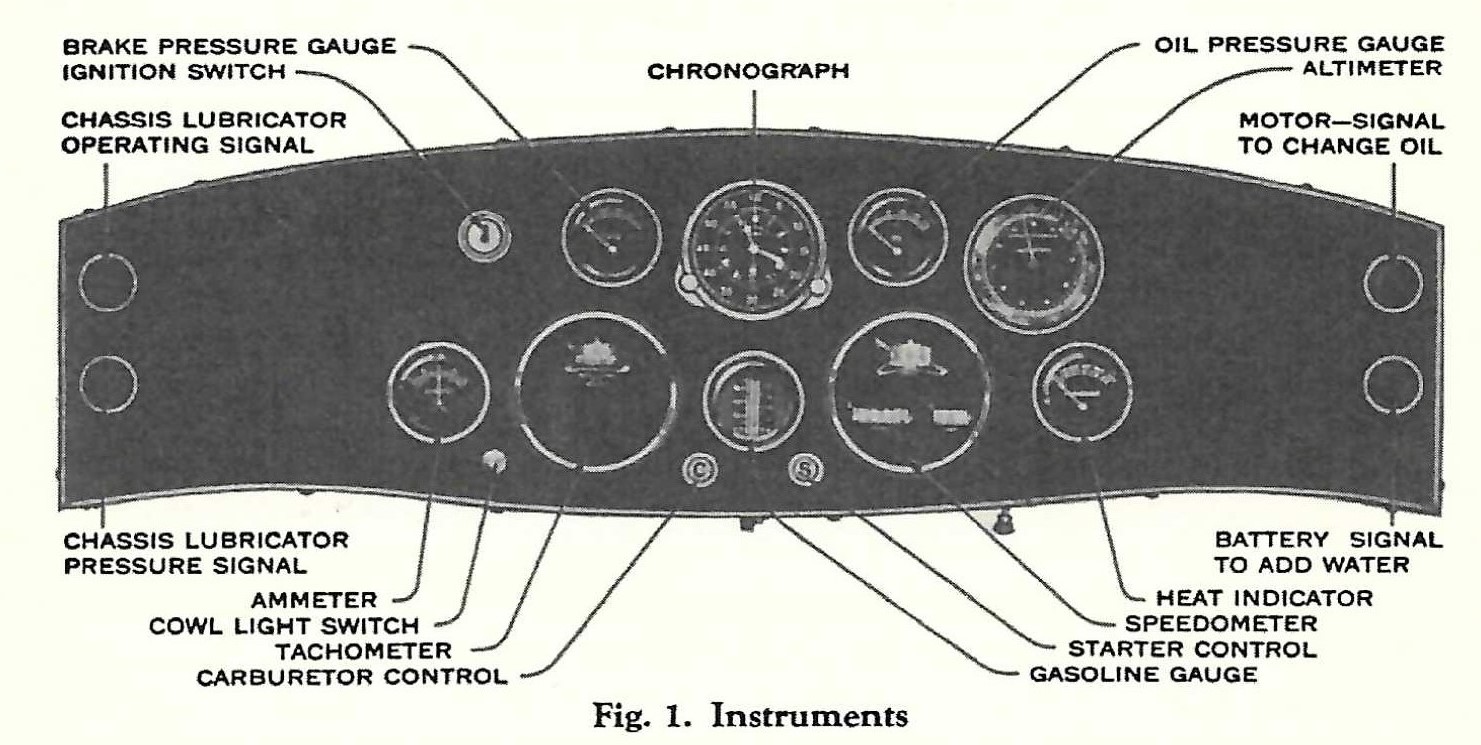
Image from the Duesenberg Owner's Manual.
While the owner's manual displays the 'barrel-style' gauges within cluster, the locations, dimensions, all controls and signal indicators are all the same for every Duesenberg. The dashboard cluster was a part of the chassis sold to the purchaser from Duesenberg before going to your coachbuilder of choice. This is why the Model J dashboards are all the same despite body differences.
Speedometer
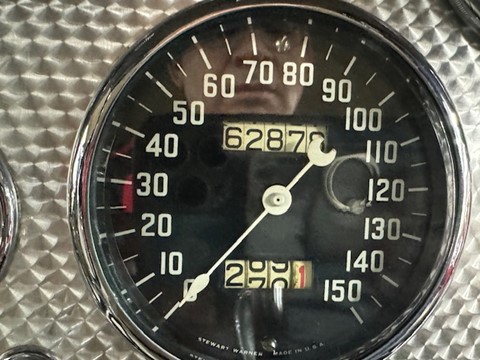
The 150 mph speedometer found in Duesy #2448. It is the more desirable sweep style gauge. This being the most common font and pointer as I have found many variations of both. All speedo styles did include an odometer as well as a trip meter.
While 150 mph might not have been attainable even for a Duesenberg, normally aspirated Duesies can still hit 90 mph in second gear. Note the total mileage is 68,878 miles.
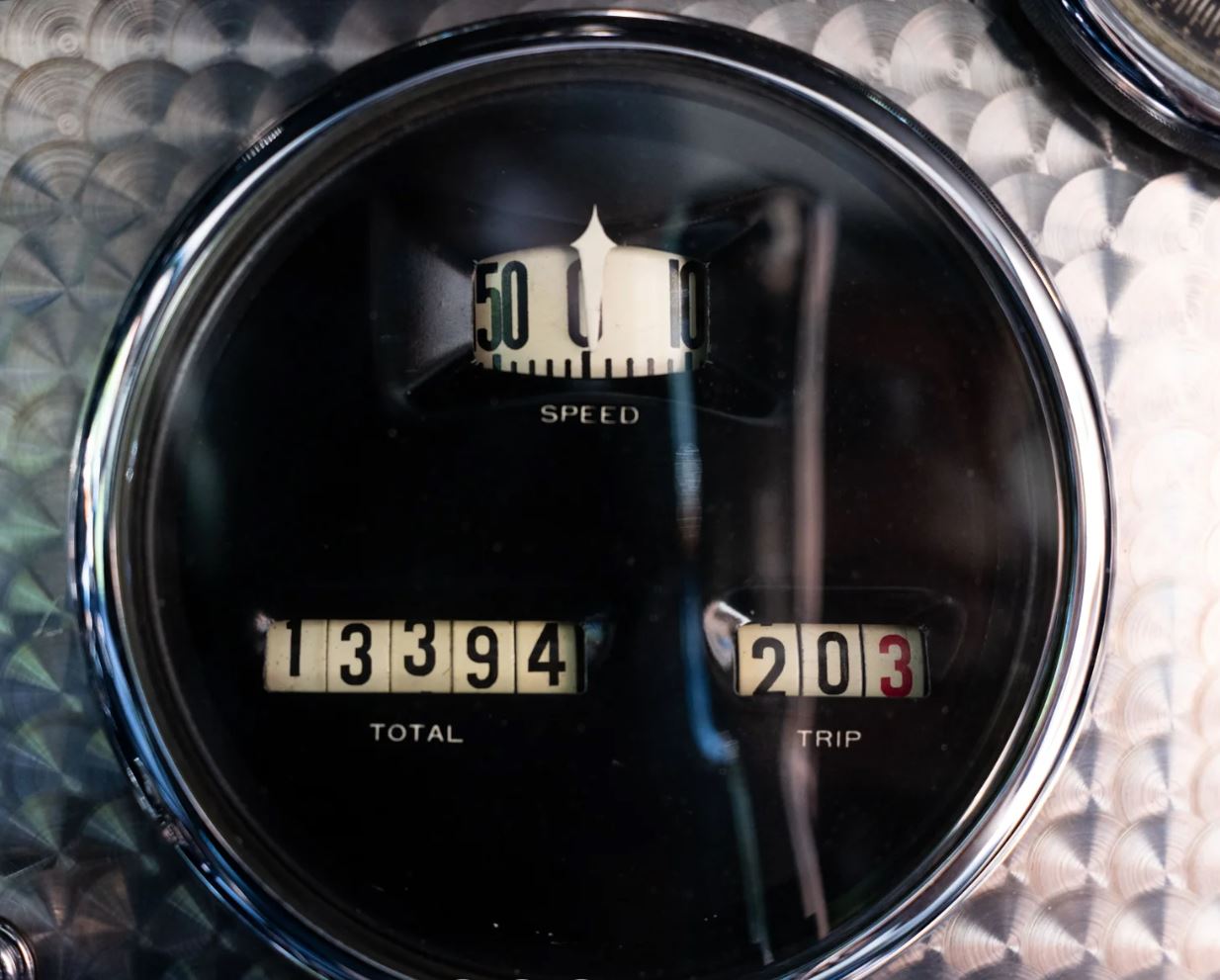
This is the alternate: 'Barrel style' 150 mph speedometer.
There are two differing stories as to why the two styles of gauges. The first being that it was an option, the other being that the barrel style was an early gauge, with swept dial being a later improvement. However, there barrel style gauges are in all years of Duesenbergs and doesn't seem to be any correlation of early cars having one and later cars having another, so it's impossible at the moment to decide which, if either, are factual.
Either way, the swept dial is much easier to read at a glance than the barrel style and maybe why they were more desirable.
Tachometer
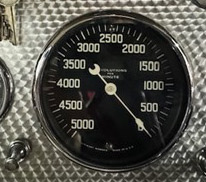
The tach from Duesy #2448.
The tachometer is the revolution counter attached to the rear of one camshaft giving direct revolutions per minute of motor speed.
Also, like the rest, a swept dial gauge with a maximum RPM of 5000.
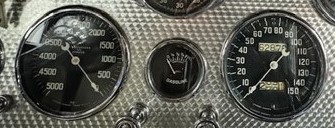
Interesting note on the swept gauges. The tach sweeps counterclockwise and speedo sweeps clockwise. When seen together, the gauges sweep in opposite directions unlike today where most gauges sweep clockwise.
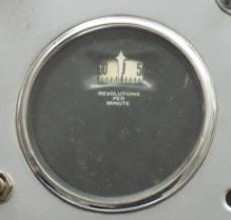
After researching for this post, I found the barrel style tachometer to rarely be seen in many cars, even those with barrel speedos. Most cars with the barrel speedo actually came with a swept tach, but some did come with double barrel gauges.
Brake Pressure
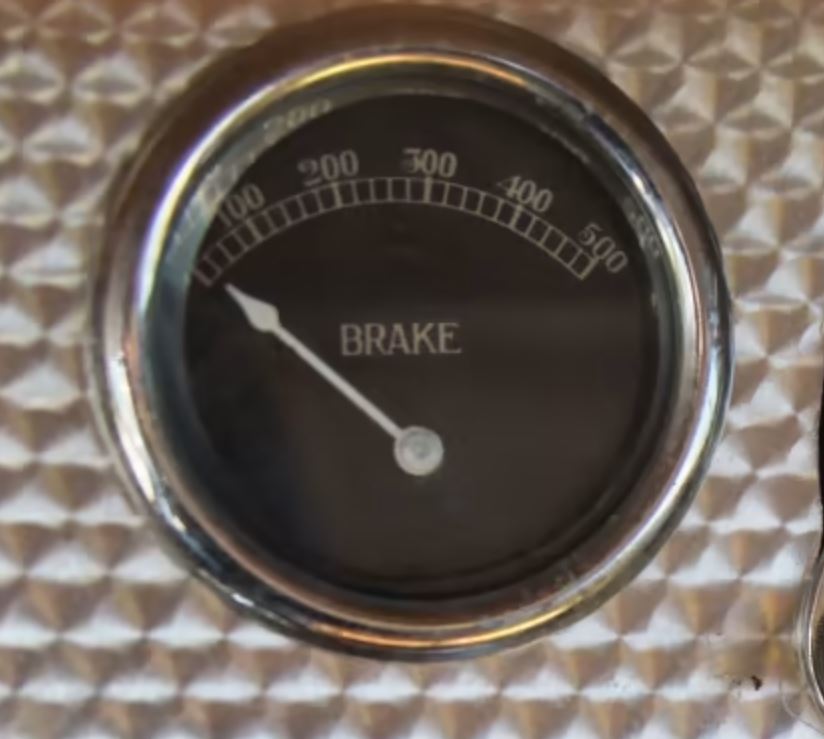
A brake pressure gauge is not something you see in modern cars. This brake gauge above the tach indicates the hydraulic pressure developed upon application of the brakes, or in other words the working condition of the system.
Most modern cars now have anti-lock brakes which employ a computer to vary amounts of vacuum pressure and well as pulses to eliminate most of the tendency for wheels to lock up in slippery conditions. The computer monitors the brake pressure, and a modern driver does not need that information.
A Duesenberg definitely does not have a computer. It's 1928! So why the gauge? It doesn't have anti-lock brakes...or wait, does it??
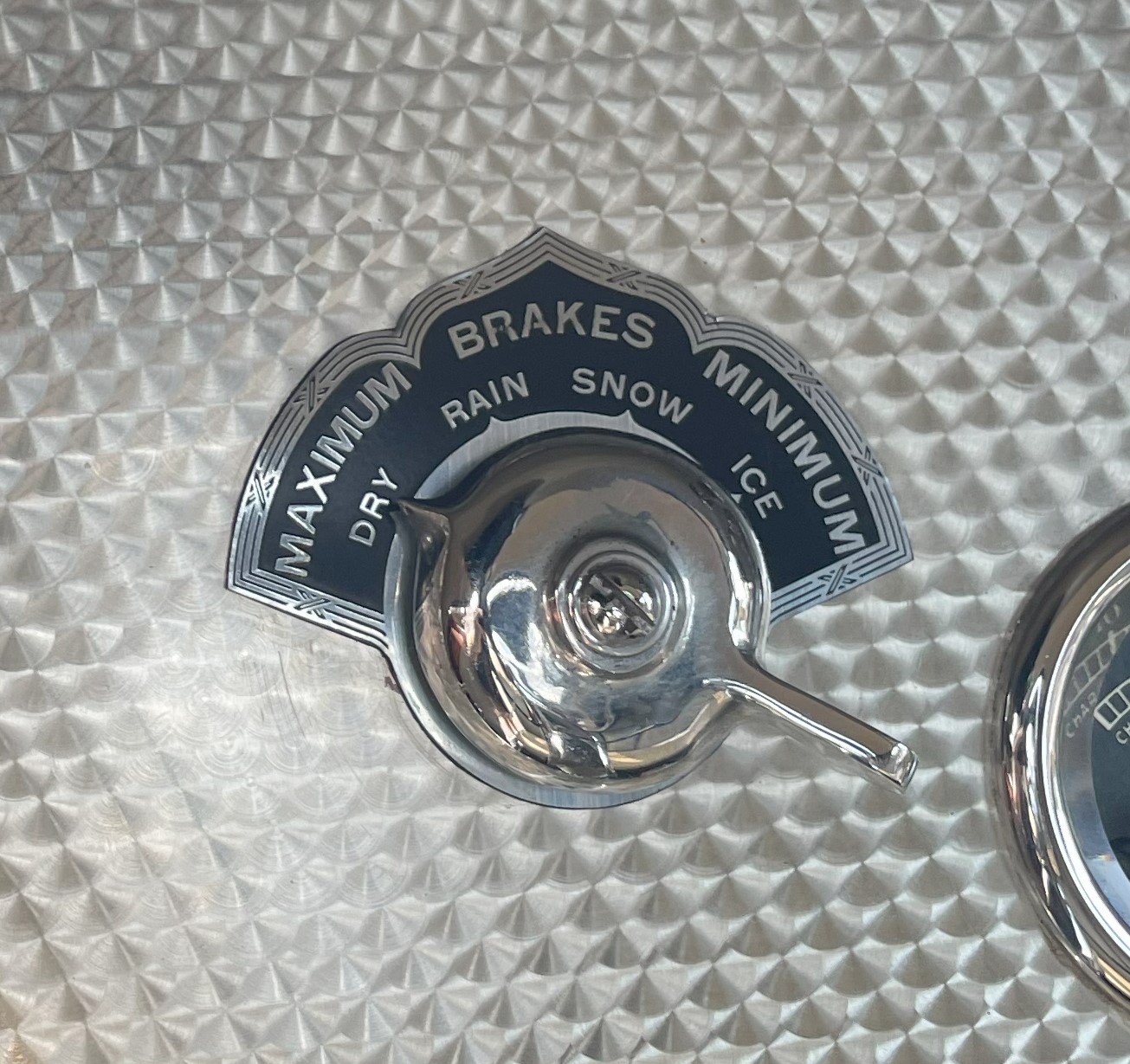
In a way, yes, they did! A dial on the dash allowed the driver to vary the brake pressure depending on conditions. The brakes ordinarily require approximately 200 pounds pressure for operation, but the system is capable of developing 500 pounds pressure in emergencies; thus, a high factor of safety is maintained for braking effect in controlling the car.
This is considered like an anti-lock brake of sorts. It is basically a manual, analog version of a computerized anti-lock brake system. What an innovation for 1928. Even more so when you consider Duesenberg was one of the first manufacturers of hydraulic, vacuum assist, brakes.
Fuel Gauge
Gasoline Gauge: Indicates in gallons the amount of gasoline in the tank as in any car then and now.
Some faces had 'Gasoline' while others were 'Fuel'.
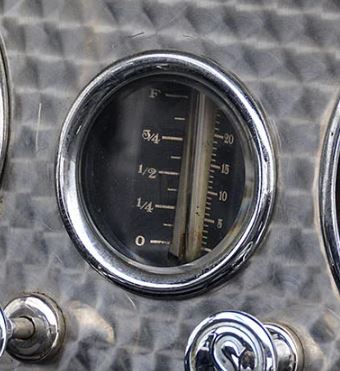
Another fuel gauge was not a swept style, but a thermometer style where fluid in the gauge denoted the fuel level. It had the appearance of an old mercury thermometer.
These are not seen as often as the swept gauges.
Chronograph
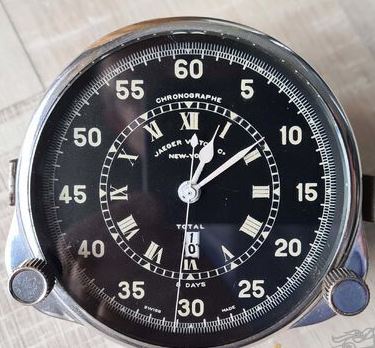
Not just a clock, but a fine chronograph time piece.
These were rare, prewar Jaeger 8-day Chronographs with 60 seconds hand and 30 minutes indicator.
Its movement is a split-second watch by the use of which actual developed speed can be figured from the specific time and distance covered.
Good thing there's a speedometer as well for those of us drivers who are math challenged.
Ammeter
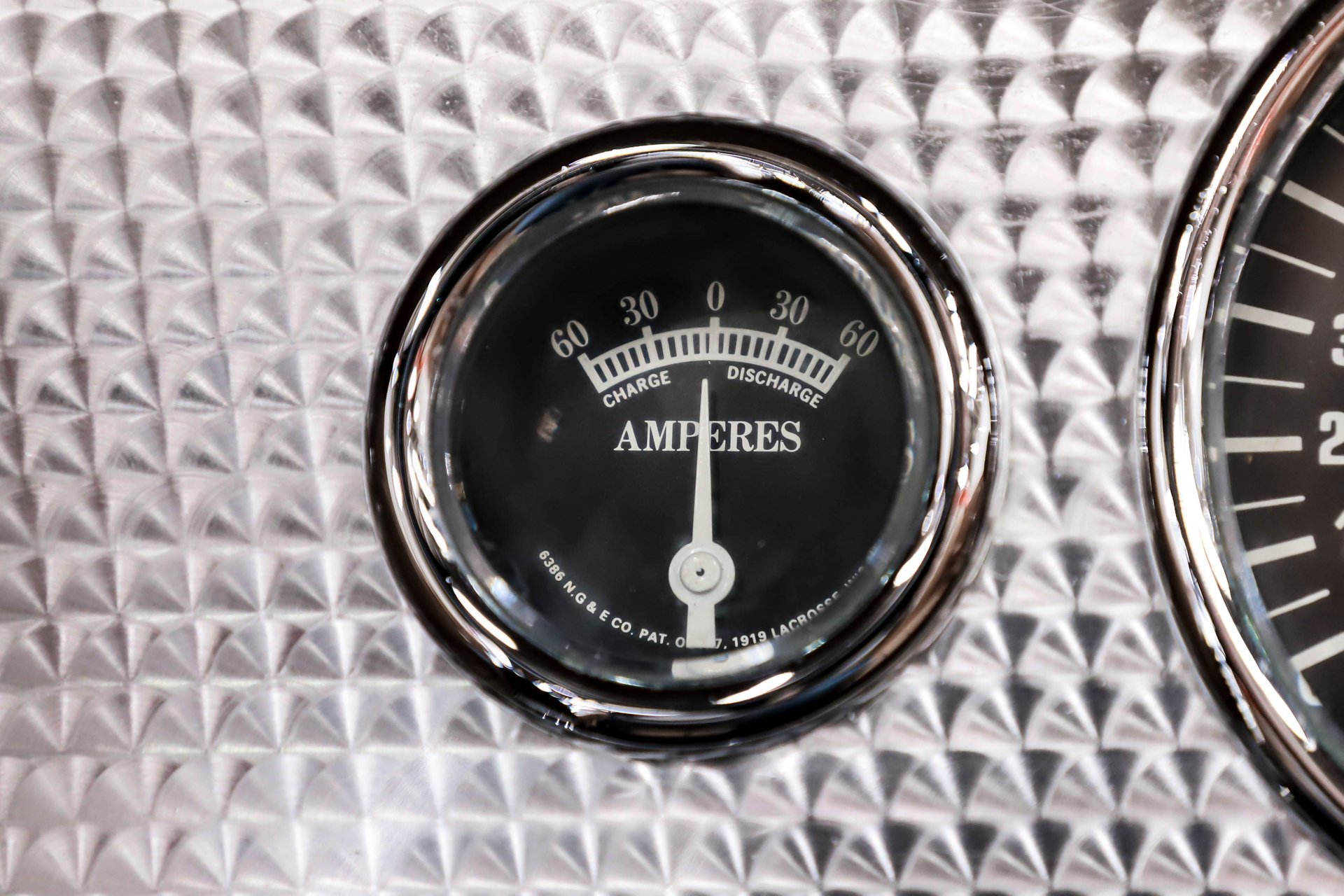
Indicates working condition of the electrical systems or in other words the rate of charge or discharge of the battery
Oil Pressure
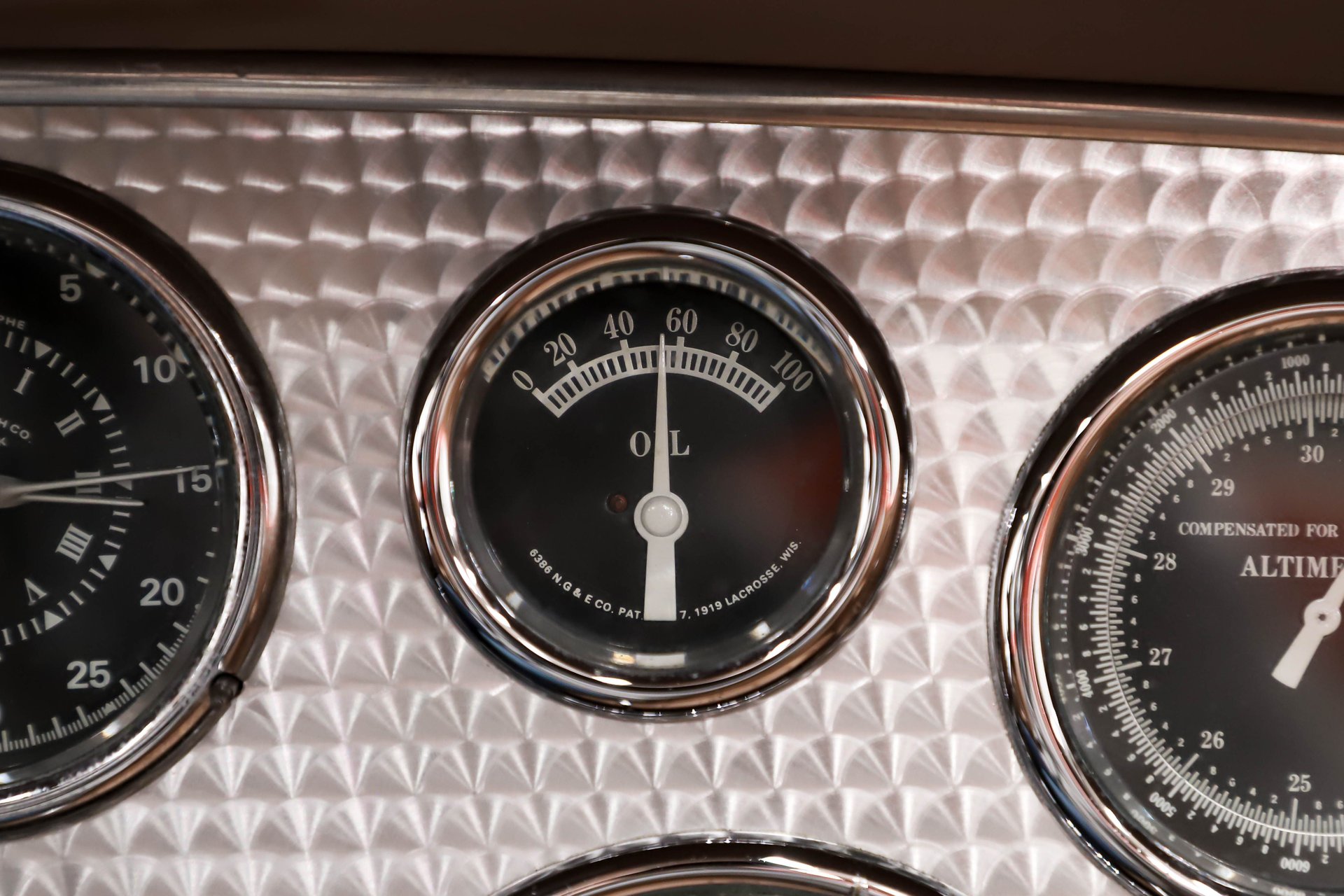
Indicates the condition of the oil pressure system for the motors and gives the pressure reading in pounds per square inch.
Water Temperature
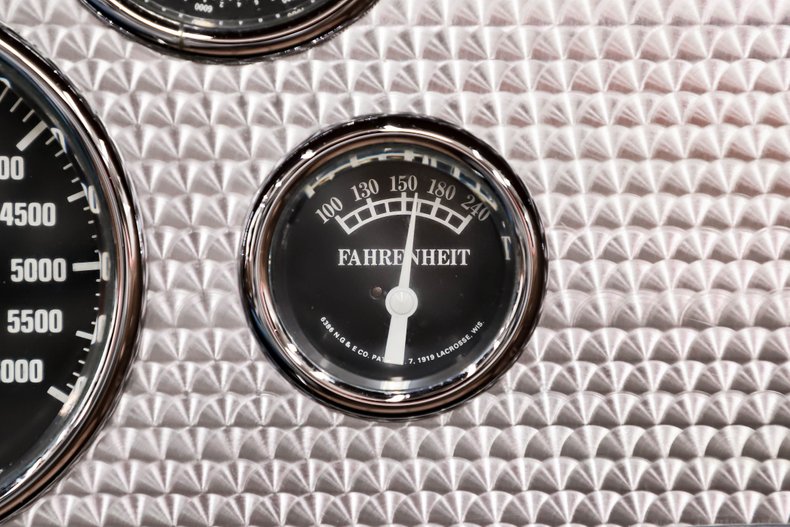
Gives the temperature of the water cooling system in degrees of Fahrenheit. The most efficient operating temperature is from 160-200 degrees although in extremely warm or cold climates the temperature may run slightly higher of lower.
Altimeter
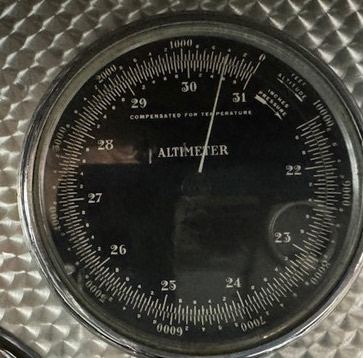
The most interesting gauge in a Duesenberg is also the most 'gimmicky'.
In 1927, Charles Lindbergh made his famous trans-Atlantic flight. Aviation was at a fever pitch with people even dancing a new dance called the 'Lindy' It seemed natural at that time Duesenberg would jump on the bandwagon and include an Altimeter.
An Altimeter records barometric pressure in inches of mercury together with altitude measured in feet. Duesenbergs really did fly!
Indicator Lights
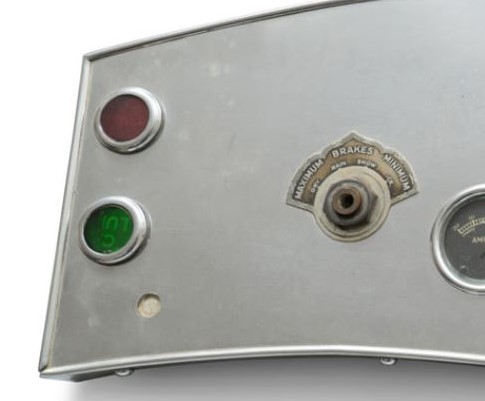
Four indicator lights on the dash gave the following information.
On the left side, near the brake pressure switch was a red light on top and a green below it.
Duesenbergs had a mechanical timer on the engine that would illuminate one of the four indicator lights. The two left side lights were for chassis lubrication. A Duesenberg had a self-lubrication system that had grease lines run to various chassis points that would push lubricant through the lines from a reservoir in the engine bay.
When the system was full and ready to lubricate, the green light illuminated. When the system was in actual operation, the red light above lit up.
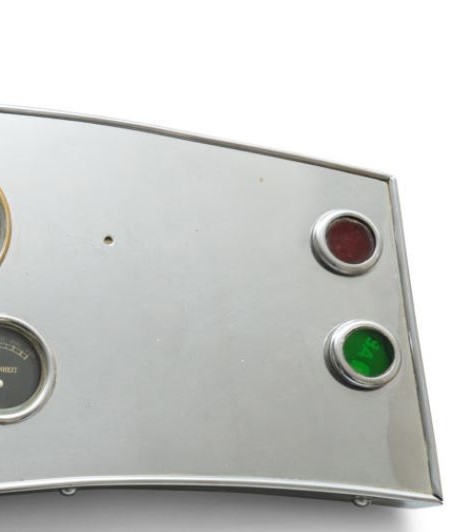
Far off on the right side of the dash were lights that illuminated as reminders at various mileage.
The top red light was an oil change reminder. The lower green light was to remind the driver to add distilled water to the 6 volt battery.
(Update: 12/24/24) Gauges in the rear
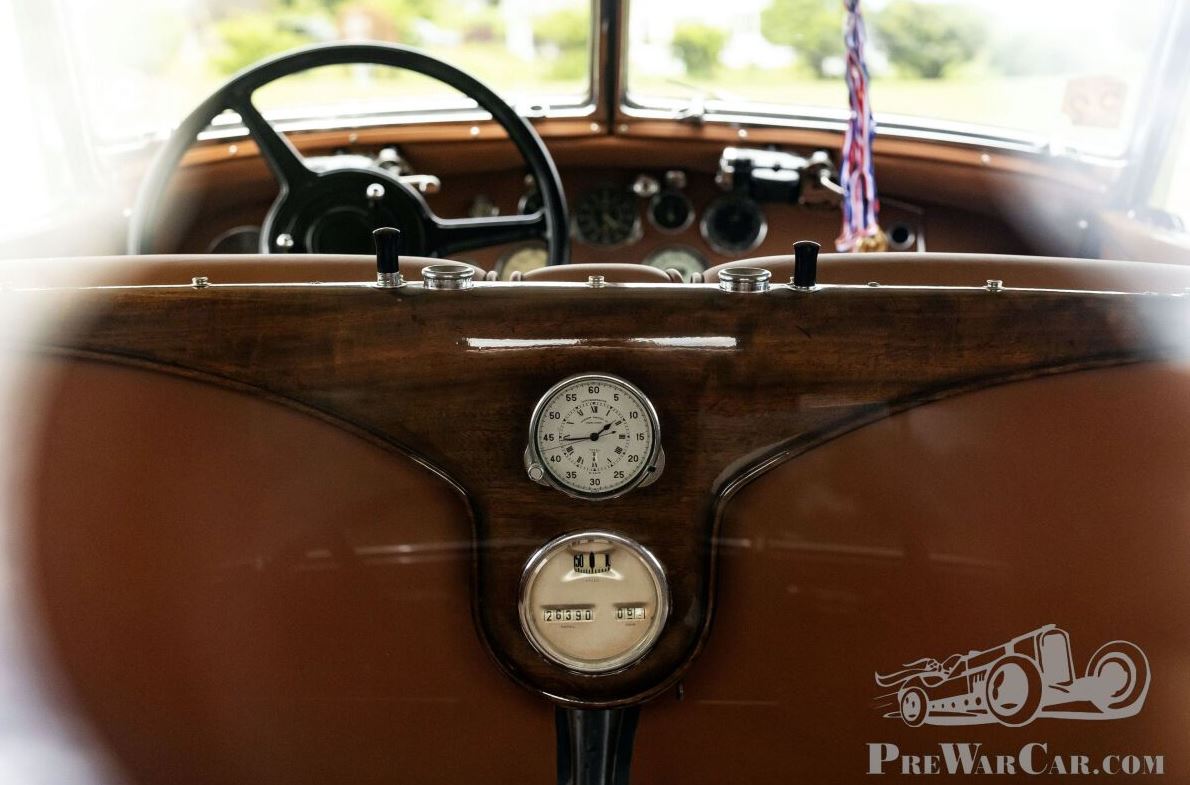
The driver often wasn't the only one who had a gauge cluster in front of them. In many Town Cars and/or limos, passengers in the rear also had the auto's vital info in front of them as well.
In this example, the back seat had its own barrel-style speedometer and Jaeger chronograph, both duplicates of the front gauges.
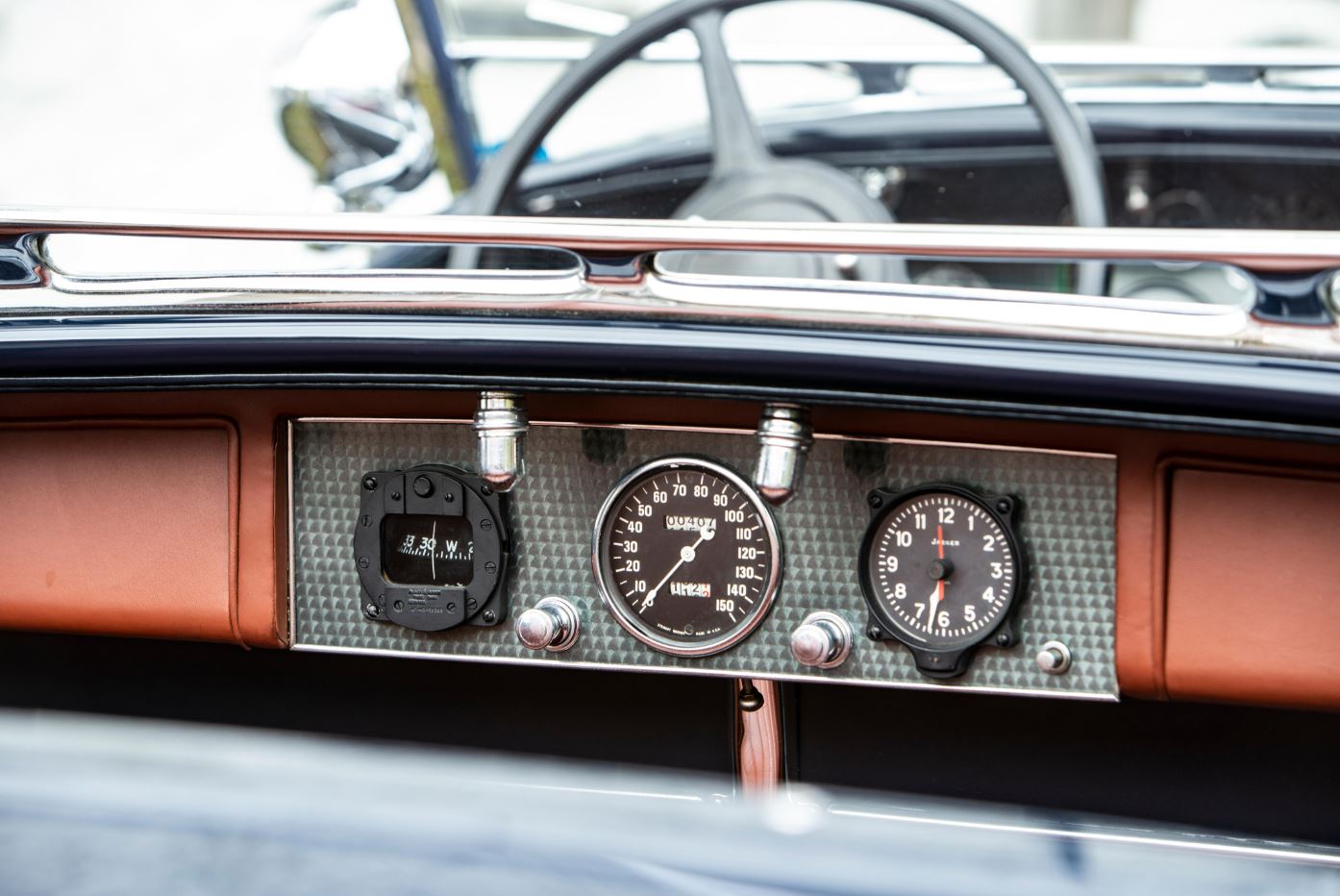
A dual-cowl Phaeton with a standard sweep-gauge speedometer, a standard Jaeger clock without a stopwatch, and a compass with what appears to be cigarette lighters on an engine-turned backing plate similar to the dash.
Dash for sale
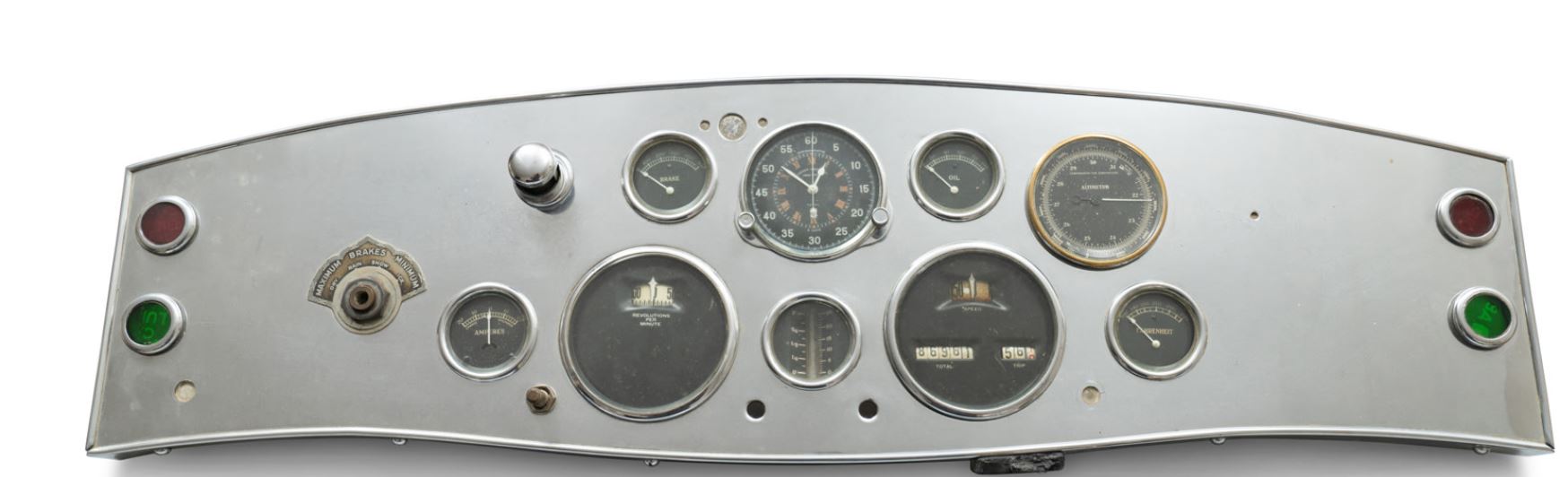
Duesenberg dashboards are rare and difficult to come across.
In 2022, at the Pebble Beach Gooding & Co. auction, an unrestored panel and gauge cluster sold for an eye-watering $42,500.
A hefty sum for just an old car part!


Comments
Maybe after restoration, we could see this again, but with better lighting, angles and the ability to enlarge all photos, not just a few? Other than that, nice piece.
Ahead of its time. Newly implemented chrome plating (1924) on the gauge’s bezels. Appears the altimeter was added after the initial dashboard design. Interesting to see what these early indicator light incandescent bulbs look like and how difficult to obtain them today. Thanks Greg for posting and congrats Howard on this beauty’s acquisition.
I forgot to mention a trip-set odometer as well, among other features of the future!
Congratulations on this Most Awesome acquisition, Howard.
A well deserved addition to your unique collection of automobiles.
All the Best, and a most Happy and Healthy New Year!
Frank, In the words of Steve Babinsky, those indicator bulbs are made of the elusive material called ‘Unobtanium’.
Thanks Howard. It’s becoming clearer how difficult to restore any older automobile. Please post a pic of the original bulb that had to be replaced.