Mystery Friday Foto #34 Solved: The Incredible and Historic ‘First’ North American Transcontinental Flight
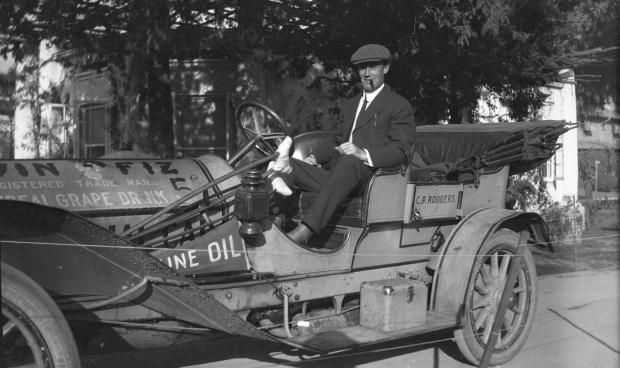
A fun one to research this past weekend! The Cradle of Aviation had challenged you to identify this weekend's mystery photo of Cal Rodgers and the incredible 'first' Transcontinental flight.
Identify;
- Year and model of automobile
1909 Palmer-Singer model LXII 6 cyl. toy tonneau
- What is the historic 'first' event this car is associated with? Hint: The car is NOT the star of the event, but rather, simply a support vehicle. However, there are several clues on the car.
The 'first' was a US transcontinental flight in 1911 in a Wright Flyer and was sponsored by J. Ogden Armour, producer of a soft drink called Vin Fiz (“the ideal grape drink”). Three pilots attempted the trip. Two from east to west, and one from west to east, for a $50,000 prize publisher William Randolph Hearst had offered for a coast-to-coast transcontinental flight in 30 days or less. Story Below.
- Who is the gentleman sitting in the vehicle? Why are there crutches in the car?
Calbraith Perry Rodgers. Cal Rodgers had broken an ankle in one of the many crashes that occurred during the trip. The car was a support vehicle that followed the flight by train when the plane landed to far from the train.
Comments (7)
Congrats to Steve Lucas, Dave King, Art Kleiner, Ariejan Bos, and Anthony Guardino for identifying Rodgers. Kudos to Art and Dave for their documentation!
Greg O.
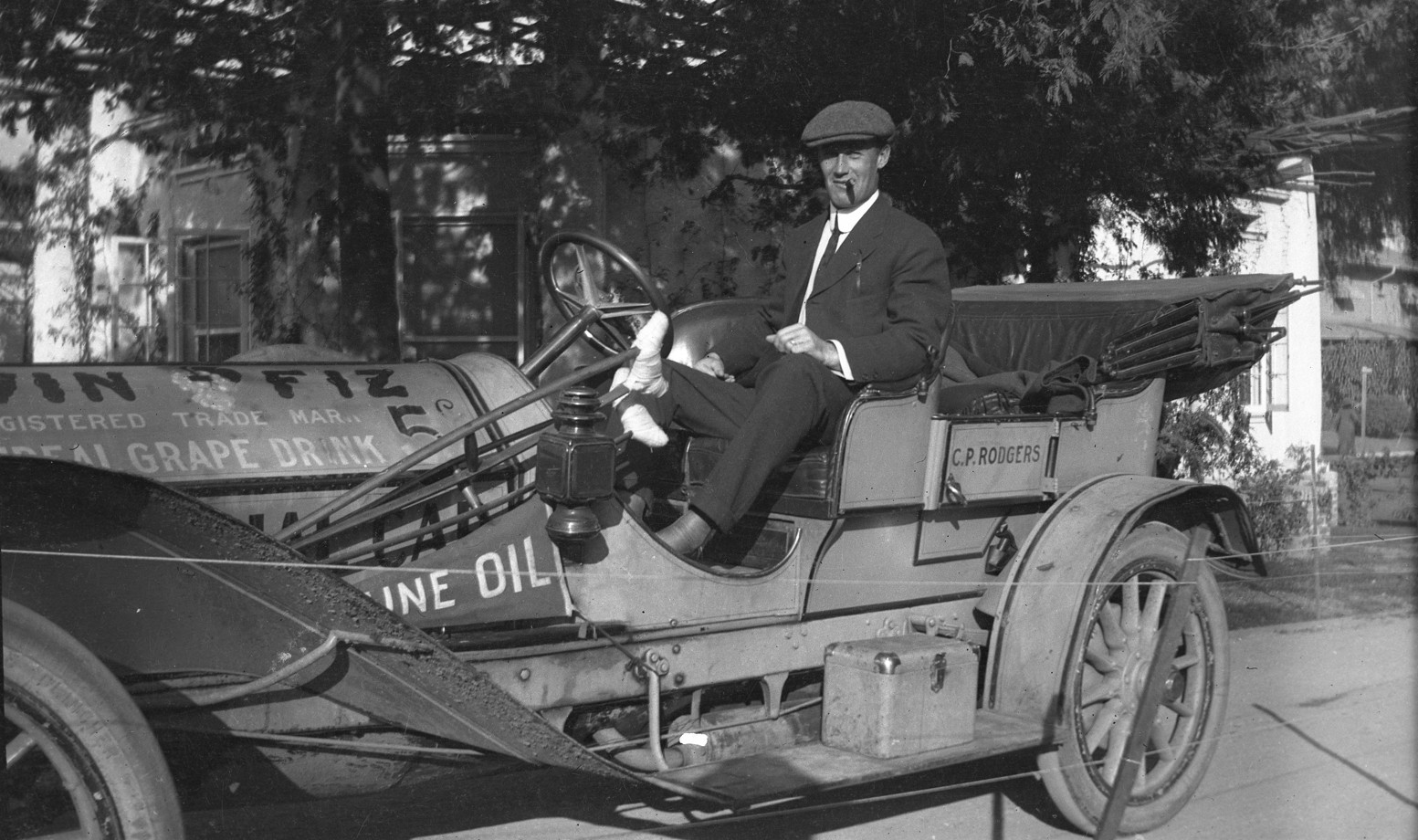
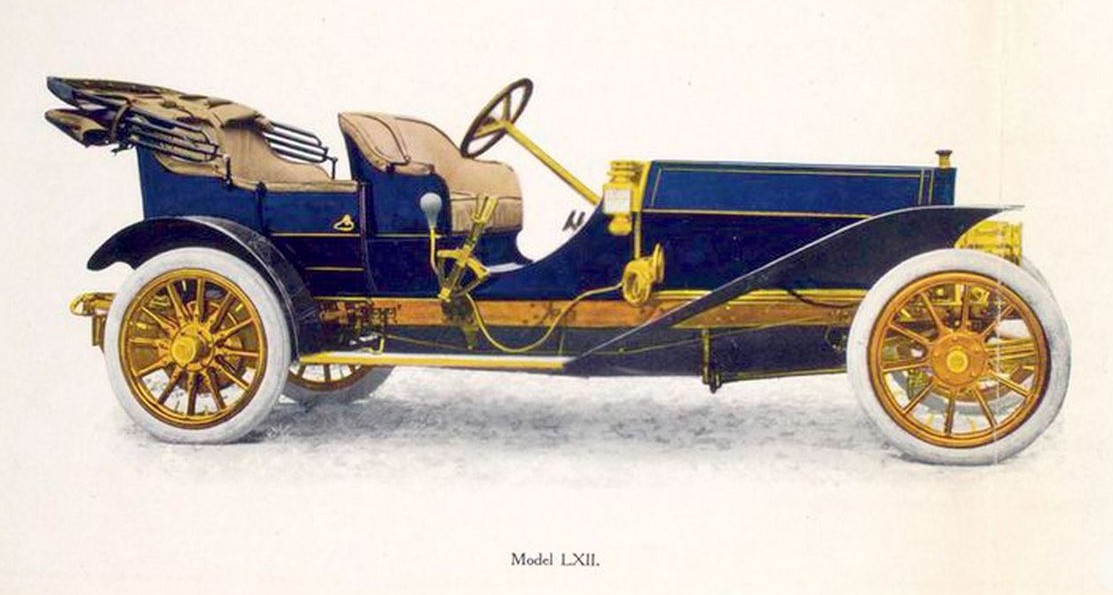
1909 Palmer-Singer model LXII 6 cyl. toy tonneau
The Tale of the Vin Fiz
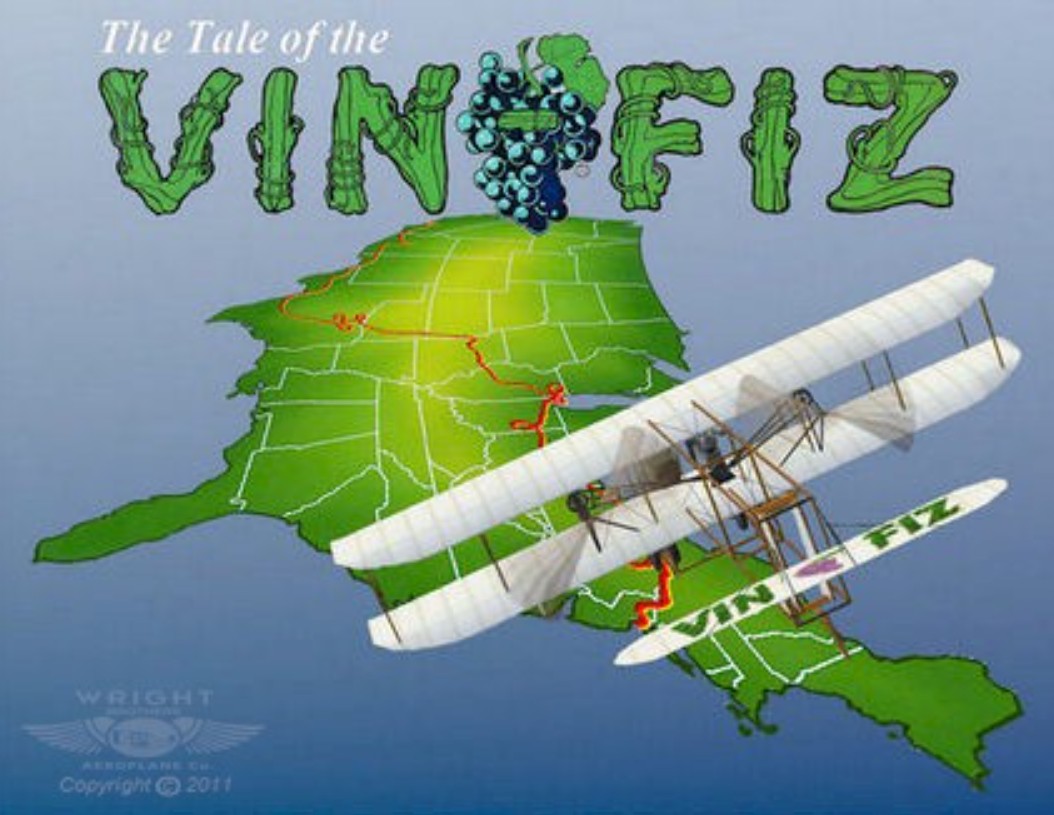
The Tale of the Vin Fiz
I endure. I conquer.
— Inscription on the gravestone of Cal Rodgers.
 mongst the gifts that the invention of flight has given us, perhaps the most inspiring are its heroes. The very first flight on 17 December 1903 was a tale of courage and tenacity, and that has set the tone for much of the history of aviation. The National Aviation Hall of Fame in Dayton, Ohio has enshrined dozens of these heroes since its inception, and among the first was Calbraith Perry Rodgers, the first pilot to fly across the United States.
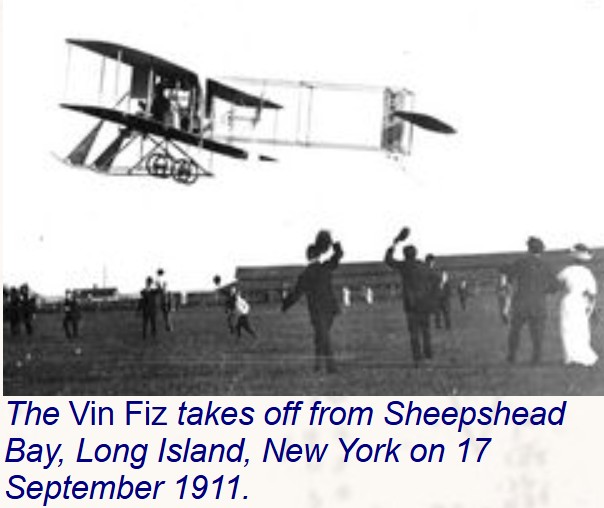
Cal Rodgers was born in 1879 to a prestigious family of naval heroes. A childhood disease resulted in a profound hearing loss. This prevented him from joining the Navy, so he took to the air. Despite his deafness, he was among the first aviators to learn to fly at the Wright Flying School at old Huffman Prairie near Dayton, Ohio. Almost as soon as he had learned to fly, he set out to capture the coveted Hearst Prize. Publisher William Randolph Hearst had offered a $50,000 purse to the first aviator to fly coast to coast in 30 days or less. Rodgers enlisted the Armour Meat-Packing Company as a sponsor, promising to promote their new soft drink, "Vin Fiz." He purchased a Wright Model EX biplane, christened it the Vin Fiz, and on 17 September 1911, he took off from Sheepshead Bay on Long Island, New York.
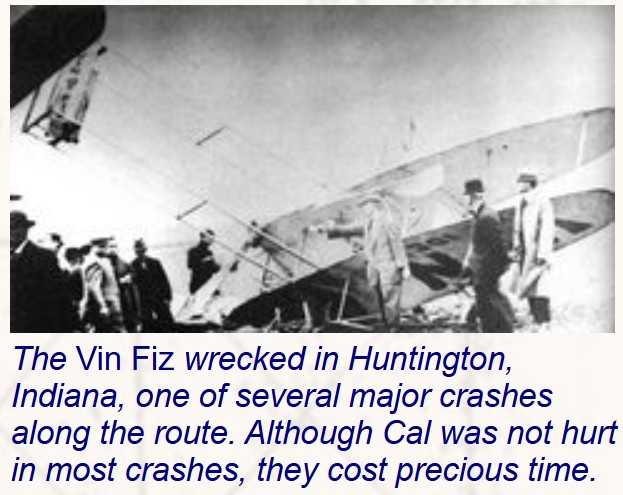
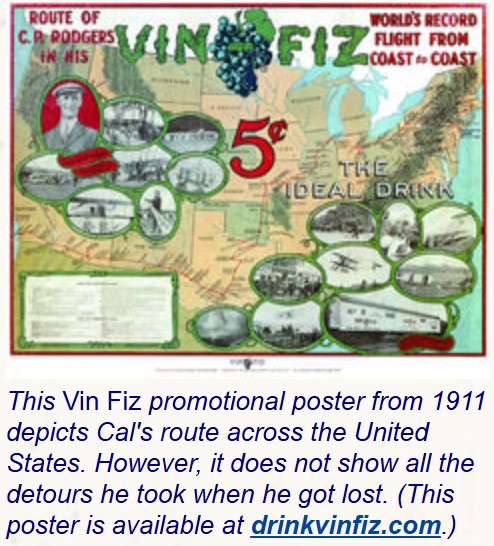
Cal Rodgers did not win the Hearst Prize. Almost from the first take-off, he was beset by problems, many of which should have ended his journey. Less than a day out from Sheepshead, he wrecked his aircraft and had to completely rebuild it — a delay that cost him several days. And this was only the first of five major crashes, two engine explosions, and dozens of minor incidents. In addition to his mechanical problems, he was plagued with navigational errors. The Vin Fiz carried no directional instruments, not even a compass. Cal Rodgers was forced to "follow the line," navigating from town to town by following railroad tracks. Occasionally he picked the wrong track and traced it for miles before he landed and found he wasn't where he expected to be. Finally, he was handicapped by his hearing loss. According to Henry Kisor, a deaf pilot who has himself flown the route of the Vin Fiz, "On quite a few occasions Rodgers made judgmental errors very likely because he could not hear."
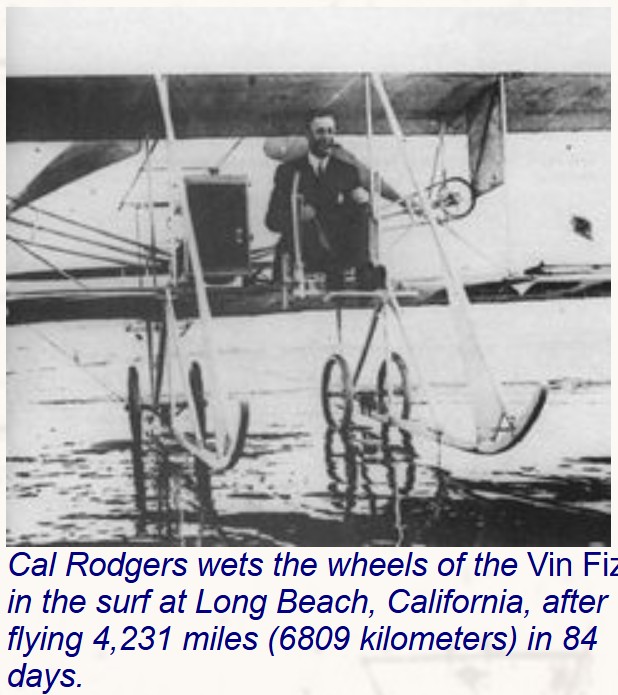
Nonetheless, he kept flying. Even when he had spent over 30 days crossing the continent, the hope of winning the Hearst Prize had evaporated, and everyone connected with the endeavor expected him to quit, he kept flying. His refusal to give in endeared him to the American public, and the crowds that met each landing grew larger and more enthusiastic after the prize was lost. When he finally landed at Long Beach, California, on 10 December 1911 — 84 days after he had left Sheepshead — 50,000 cheered him as he wet the wheels of the Vin Fiz in the Pacific surf. Several months later, when he died in a flying accident near the spot where he had complete his transcontinental flight, a whole nation mourned the loss of one of aviation's first heroes.
Cal Rodgers was enshrined in the National Aviation Hall of Fame on 17 December 1964, along with Orville and Wilbur Wright and several other aviation pioneers. The inscription on his posthumous award reads, "To Calbraith Perry Rodgers, for outstanding contributions to aviation by demonstrating the feasibility of transcontinental flight, this award is most solemnly and respectfully dedicated."
Click here to replicate the route taken by Rodgers
Link: He was the first to Fly across America but crashed along the way.
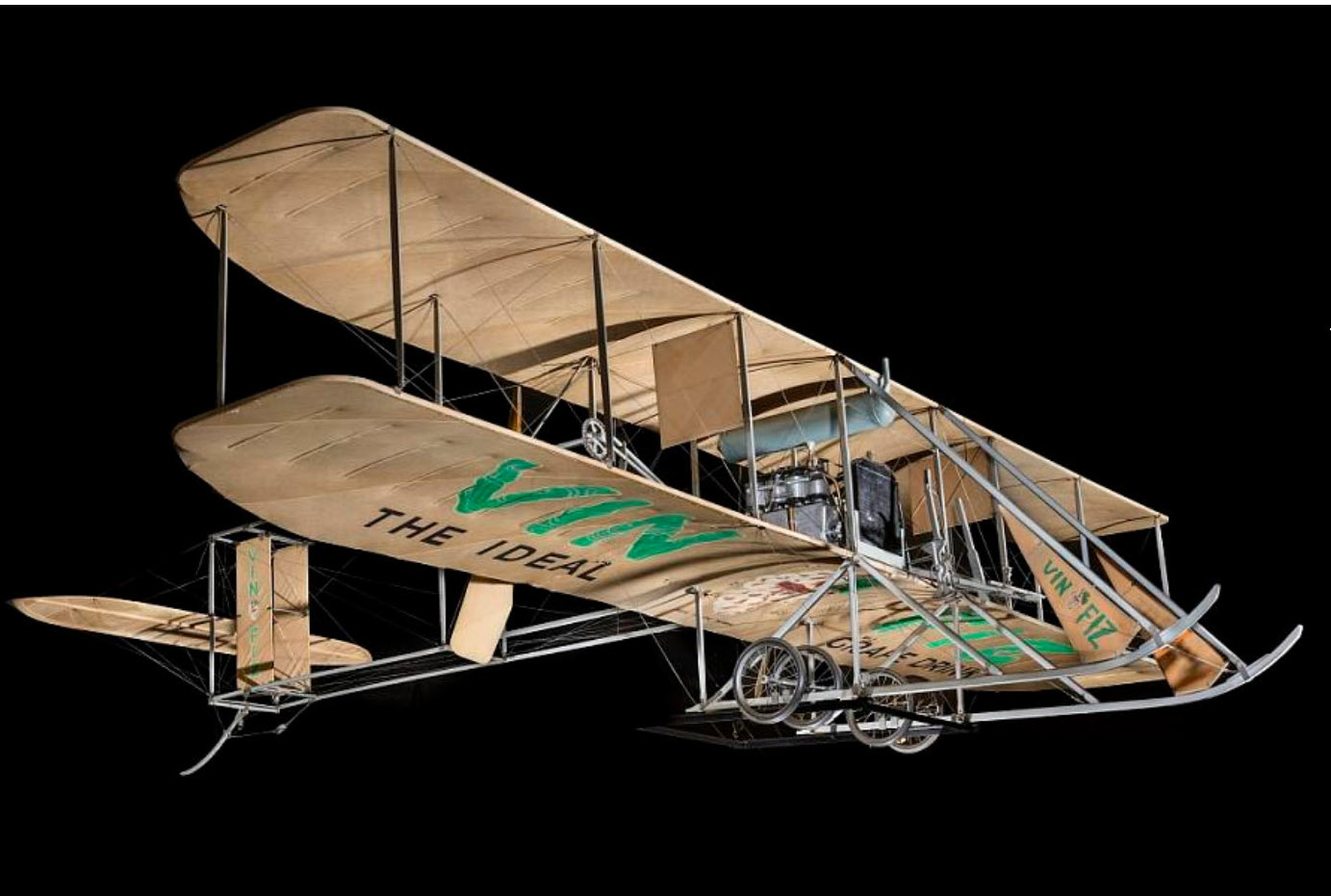
The restored Wright EX Vin Fiz is on display at the National Air and Space Museum.


Comments
That’s a 1911 Palmer-Singer with aviation pioneer Calbraith Perry Rodgers sitting in the passenger seat. Rodgers was the first person to fly an airplane from coast to coast. The historic event took place from September 17, 1911 to November 5, 1911 with many stops (and crashes) along the way. The car was part of the support staff the followed along the route by train from New York to California and was used to retrieve Rodgers whenever he landed or crashed if he came down too far away from the train. Vin Fiz was the name of his plane and was actually a new grape drink that being introduced by The Armour Company that sponsored Rodgers during his historic flight. The crutches had been used by Rodgers as walking aids for injuries he sustained during his many crashes. (There were at least 15 crashes). Tragically, Rodgers was killed on April 3, 1912 when he became the victim of the first recorded fatal bird strike by an aircraft.
The first airplane flight across th US was by Cal Rodgers in his Wright Type EX biplane called the Vin Fiz after his grape drink soda sponsor. He left Sheepshead Bay on September 17th, 1911 and after 70 stops made it to Pasadena, CA on November 12th. The car in the photo which was probably taken in California is a (1911?) Palmer-Singer. A week after the flight Rodgers crash landed in Compton and wound up on the crutches seen in the photo. Attached is another photo of the car (Google Images) with his mechanician at the wheel, a piece of fabric from the Vin Fiz and a photo of a few books about this trip.
1911 Palmer-Singer
1st Transcontinental flight (between Sheapshead Bay, NY and Long Beach CA).
Calbraith Perry Rodgers, pilot. The car was used during stops to locate the plane and Rodgers.
Rodgers broke an ankle while making an emergency landing before getting to his final stop, Long Beach, CA.
Additional information. Second attachment is a personal account from Rodgers as he made his way to Phoenix.
The car is the 1909 Palmer-Singer model LXII 6 cyl. toy tonneau belonging to Calbraith Perry Rodgers. He made the first US transcontinental flight in 1911 in a Wright Flyer and was sponsored by J. Ogden Armour, producer of a soft drink called Vin Fiz (“the ideal grape drink”). Rodgers broke both legs during an attempt to dip the landing gear in the Pacific Ocean. During the take off the engine stopped and the plane nose-dived in a ploughed field, resulting in two broken legs, a broken collar bone and a brain concussion. Hence undoubtedly the wooden crutches. The oil flag on the car is probably promoting Havoline, a well known brand in the US.
During an exhibition flight on April 3, 1912 Rodgers would crash his Wright Flyer into the sea and died of a broken neck and back.
1911 Palmer-Singer Model 4-50
First transcontinental flight
Calbraith P. Rodgers. Crutches were needed after he broke his leg in a crash near Compton, California.
Late submission, hopefully will get in. A detailed map showing the stops and landing of Rodgers across the country.