InstaGRAM Report: The Racing History of Freeport Stadium
Freeport Stadium boasts a rich racing history spanning more than six decades. Although the race track no longer exists, its legacy lives on through cherished memories and rare photographs of its thrilling events. Established in 1931 as Freeport Municipal Stadium, the venue was envisioned as a hub for multiple sports, including boxing, football, baseball, and of course, racing. The original dirt track circled the football field, quickly becoming the stadium's main attraction. In 1939, the track was paved with asphalt, and in 1971, it was expanded to a quarter-mile oval to accommodate growing crowds and interest.
The track was popular with Long Island racing fans and drivers over the decades. During the peak years of the 1950s and 1960s, Freeport Speedway hosted races on Thursdays, Saturdays, and Sunday nights during the warm-weather seasons, a practice that continued until 1983 when the track closed. The property was redeveloped into retail space; today it is a BJ’s warehouse store. The history of this race track reveals what it meant to be a racing fan on Long Island, so let's jump right in at the beginning.
By Gram Spina
The early years, 1931-1949
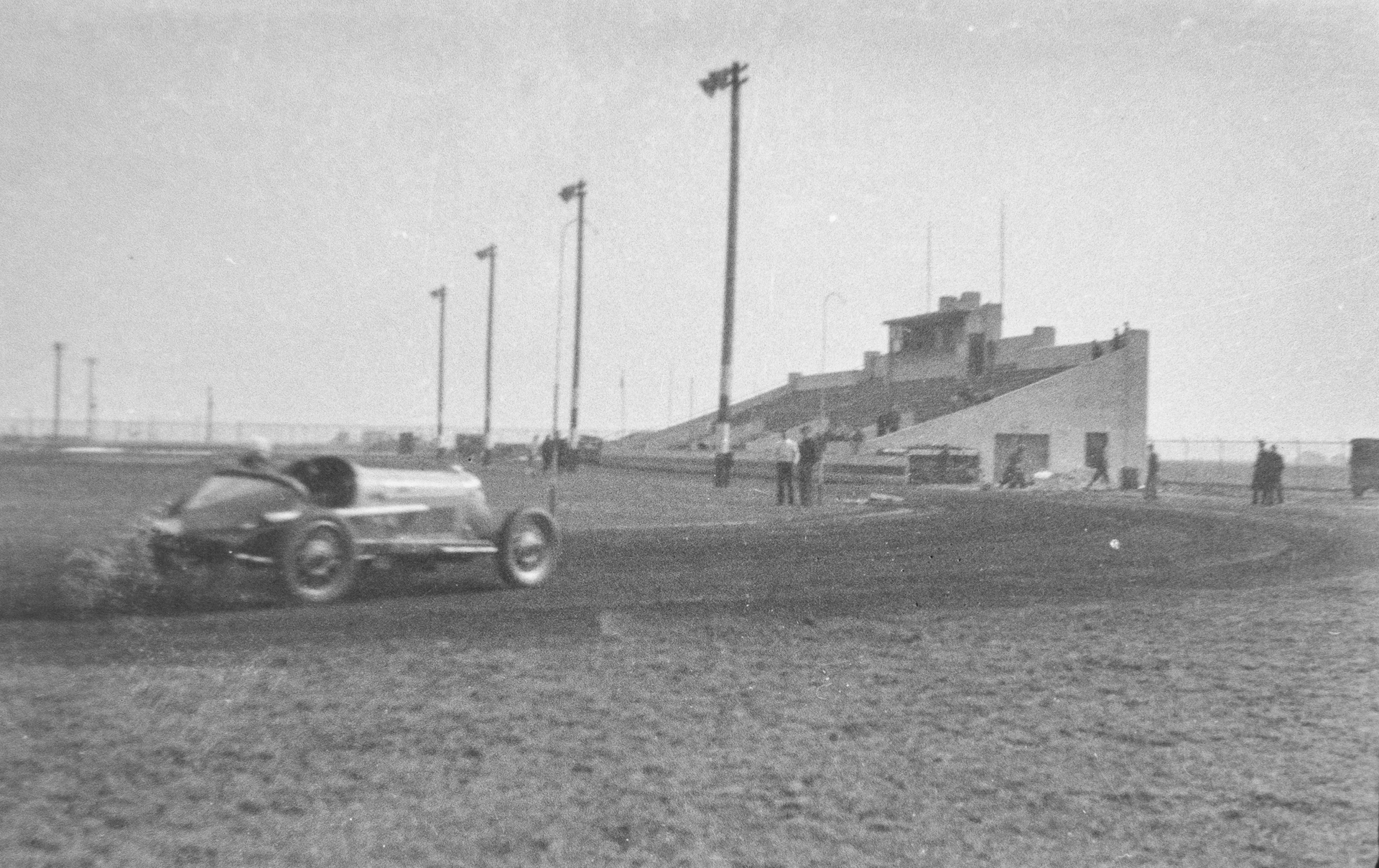
Here is a rare image of Freeport Stadium in 1934. Some overhead lights are visible on the property. However, all automotive races took place during the day during the pre-WWII years. The lights at this point were used only for long-running football games.
Given the empty grandstands in the distance, I assume this image was taken during a qualifying session or ‘test and tune’ before a main event race.
Image provided by the Himes family.
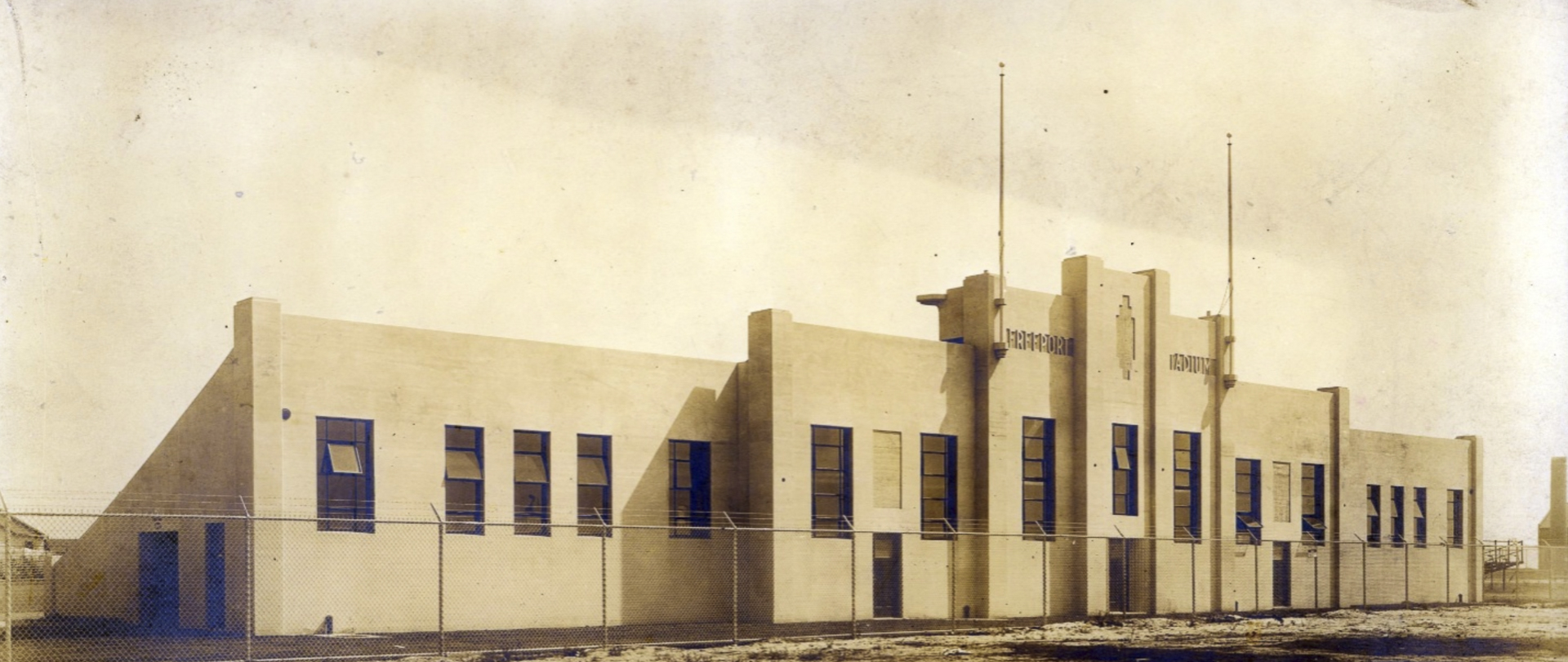
Here is a detailed photo of the Freeport Stadium grandstand seen from the spectator entrance. The building's structure features a subtle Art Deco design.
Image sourced from Freeport Historical Society
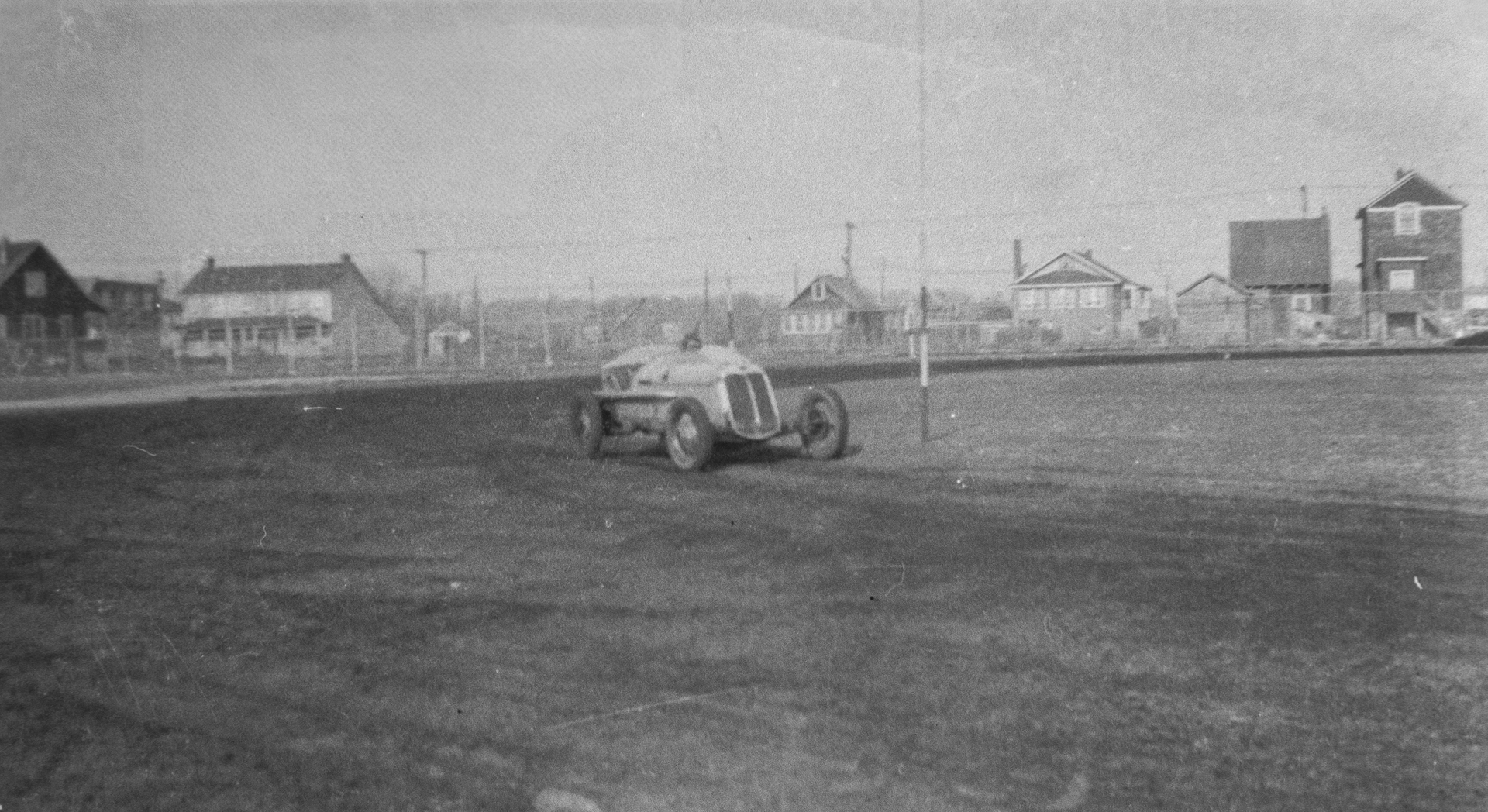
Another 1934 ‘test and tune’ image shows the homes adjacent to the track property.
Image provided by the Himes family
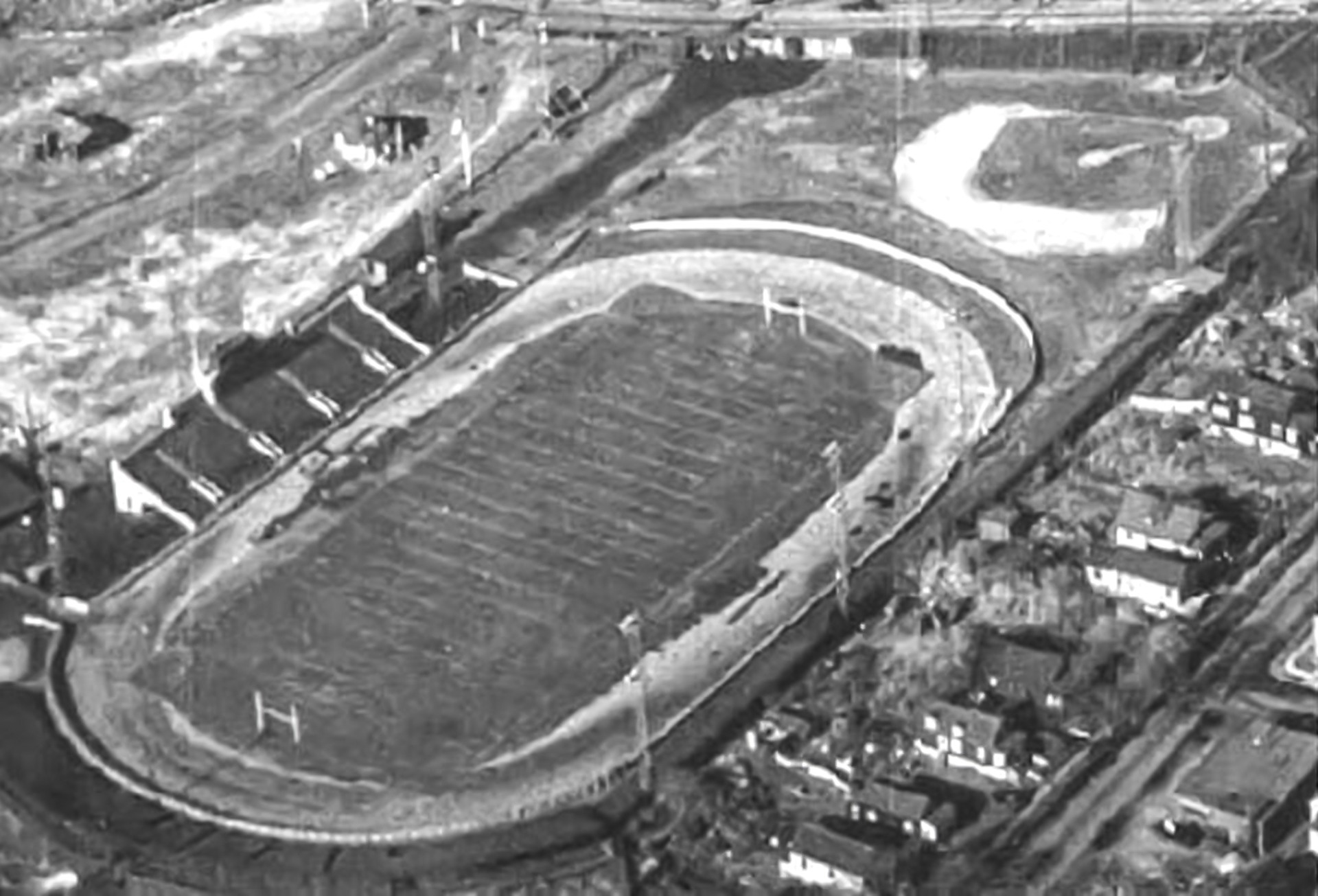
Here's a pre-WWII aerial photo of the Freeport Stadium property before the track was lengthened. Note the baseball field in the upper edge of the image. It was erased from existence after the track was lengthened in 1971.
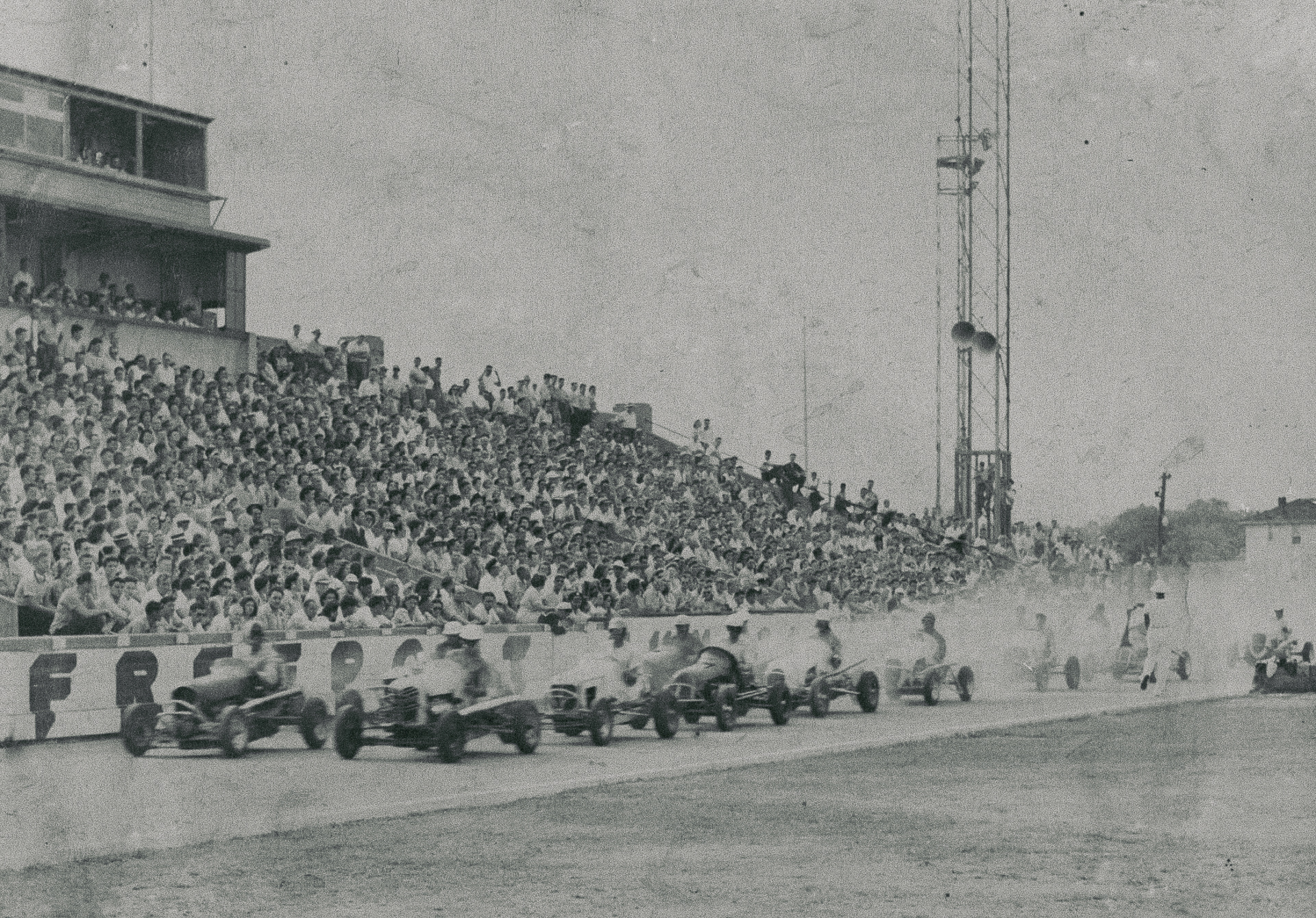
This image dates sometime between 1939 and 1941, after the track was paved with asphalt.
The Freeport Stadium was temporarily closed after the United States entered WWII. In 1946, however, racing resumed and Freeport Stadium began hosting multiple races every week with jam-packed grandstands.
Image provided by the Himes family
Peek years 1950s-1960s
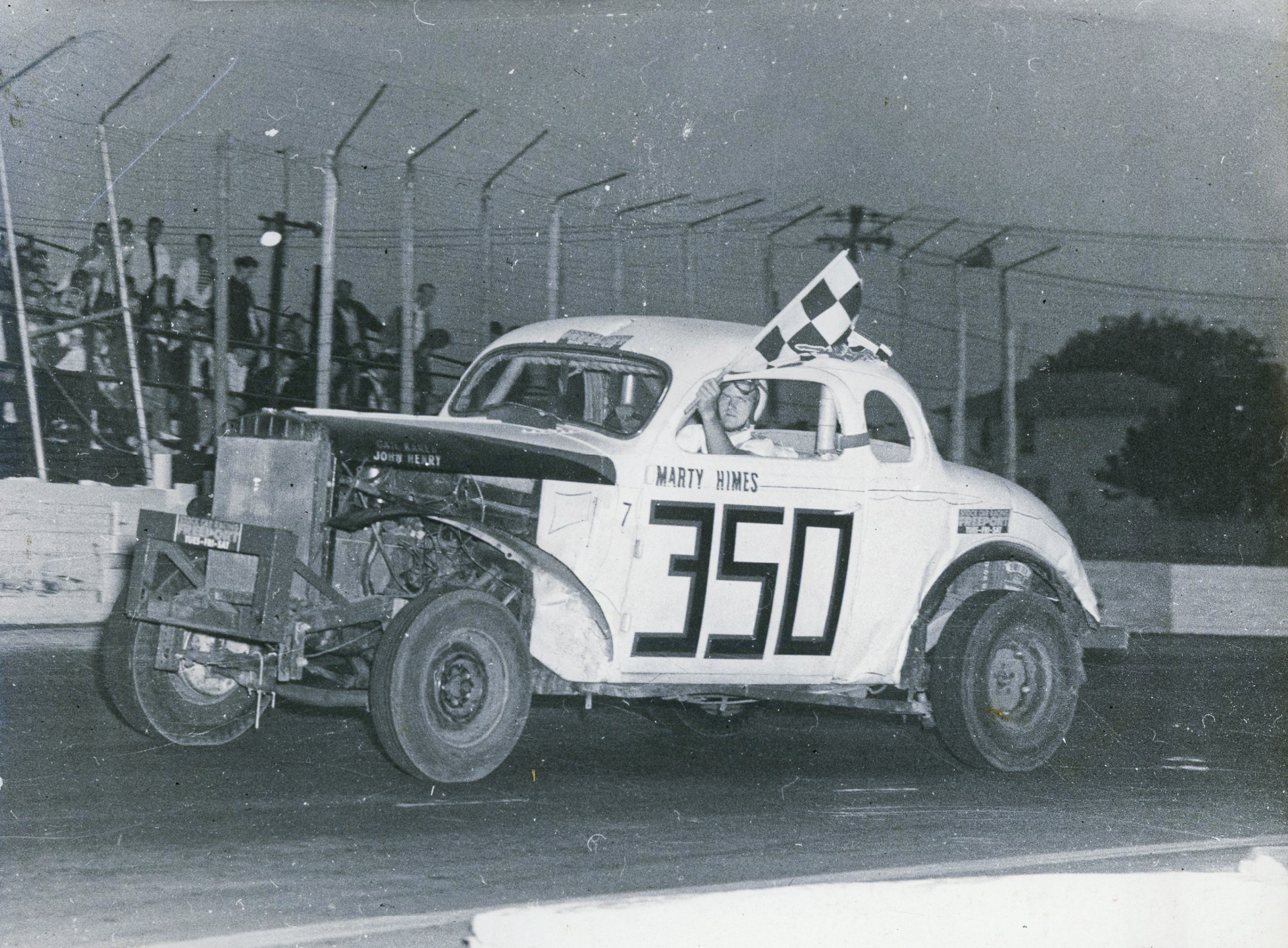
Racing frenzy had taken over Long Island by this time and Freeport Stadium was a favorite of racing fans. For five hours, three nights a week, the track hosted racing events, many featuring local Long Island and New York State racing heroes, including Bill Schindler, Marty Himes, Richie Evans, and others. They all kept the crowds interested and entertained each night.
Pictured here is Marty Himes in his Plymouth race car in 1963.
Image provided by the Himes family
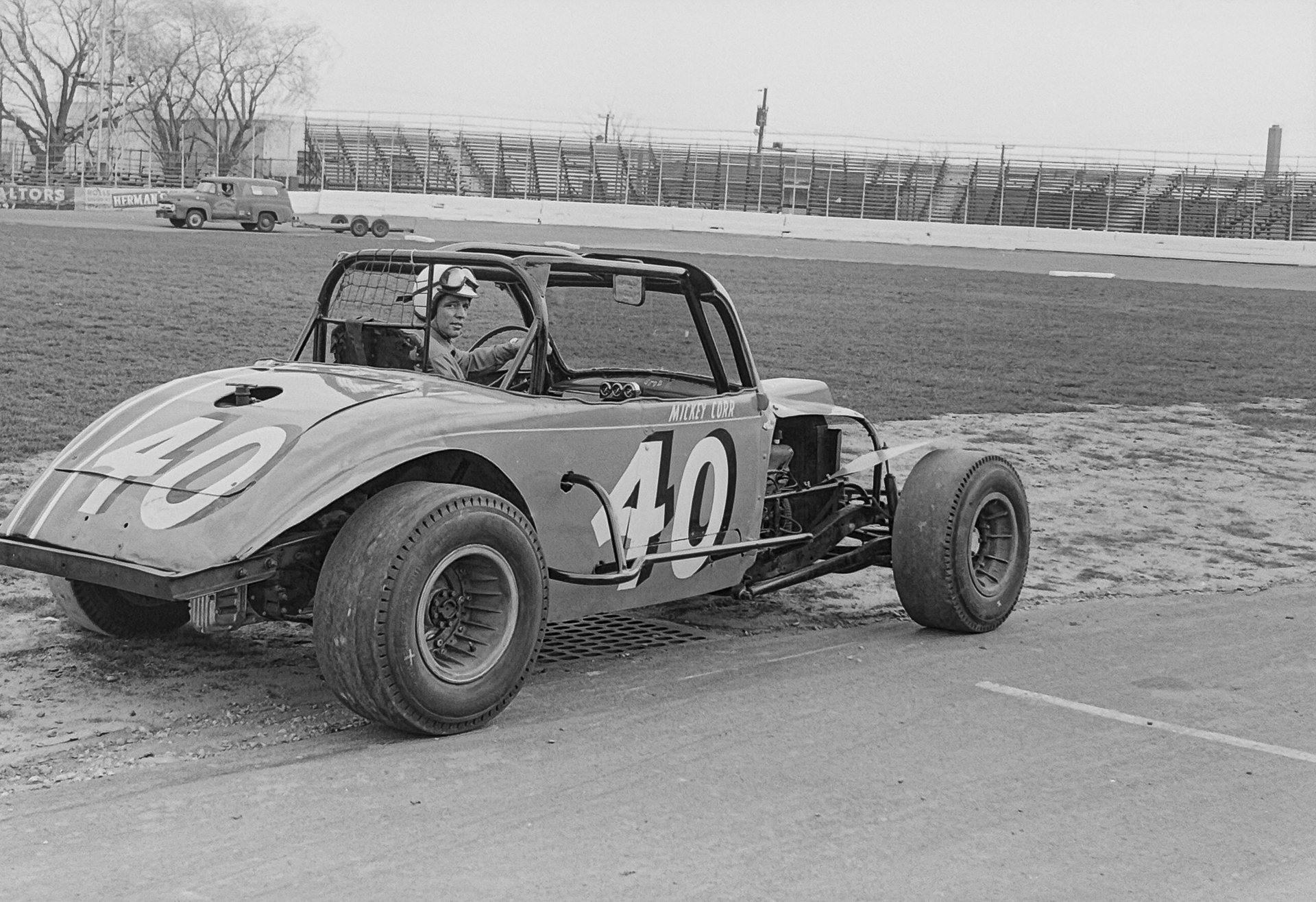
Sometime after the re-opening of Freeport Stadium, grandstand seating was expanded beyond the original main entrance. This ‘Drivers Profile’ photo of Mickey Corr in his modified roadster shows some of those new bleacher grandstands in the background.
Photographed by Ed Appoidt
Image provided by the Himes family
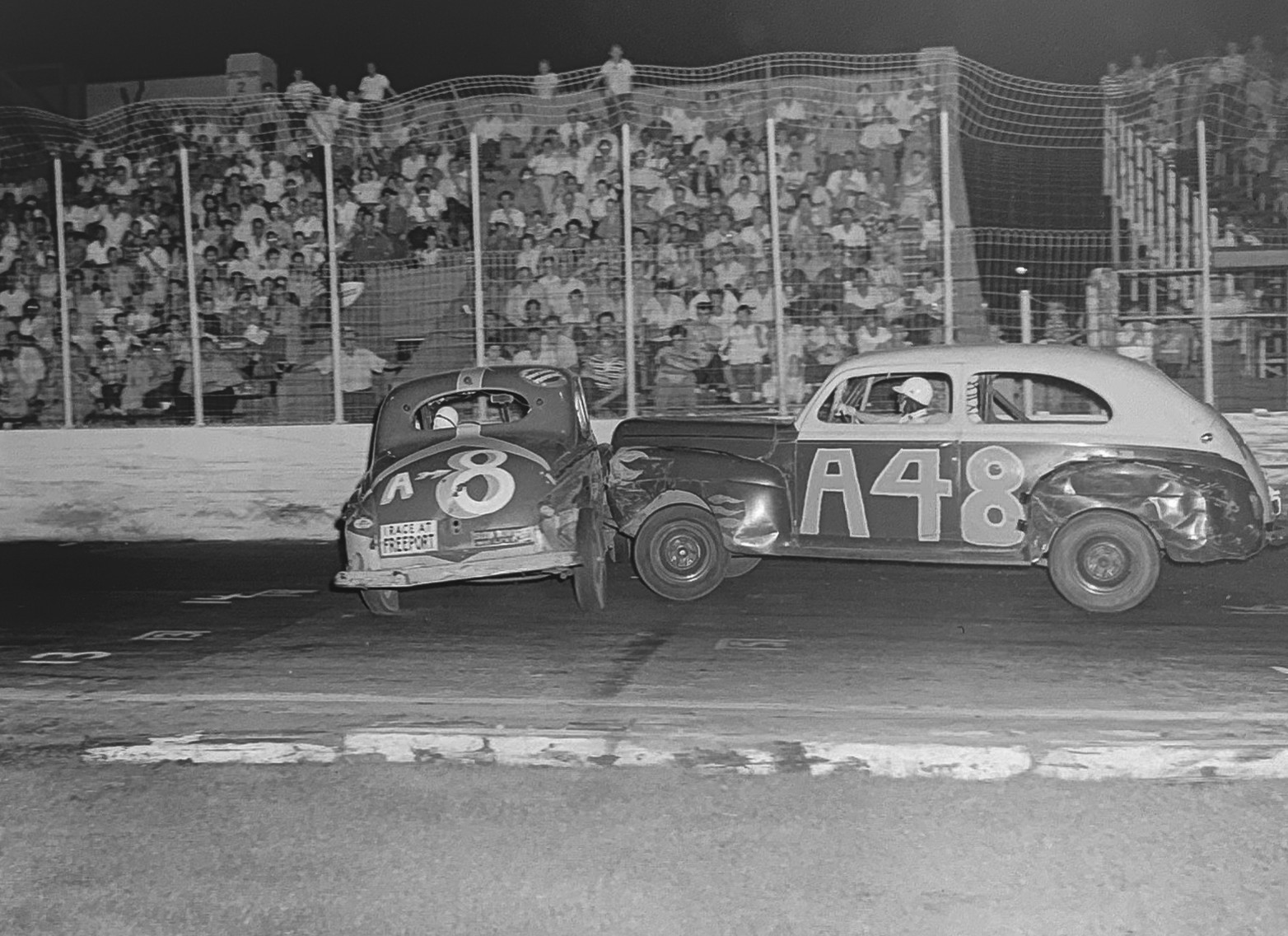
One of the most popular racing class was the “Stock Car” division. There were a variety of bracket classes in this division, such as “Non-Ford” and “Crasheroo.”
In this image, a bumper sticker reading “I Race At Freeport” is seen on the number 8 Ford.
Photographed by Ed Appoidt in 1958
Image provided by the Himes family
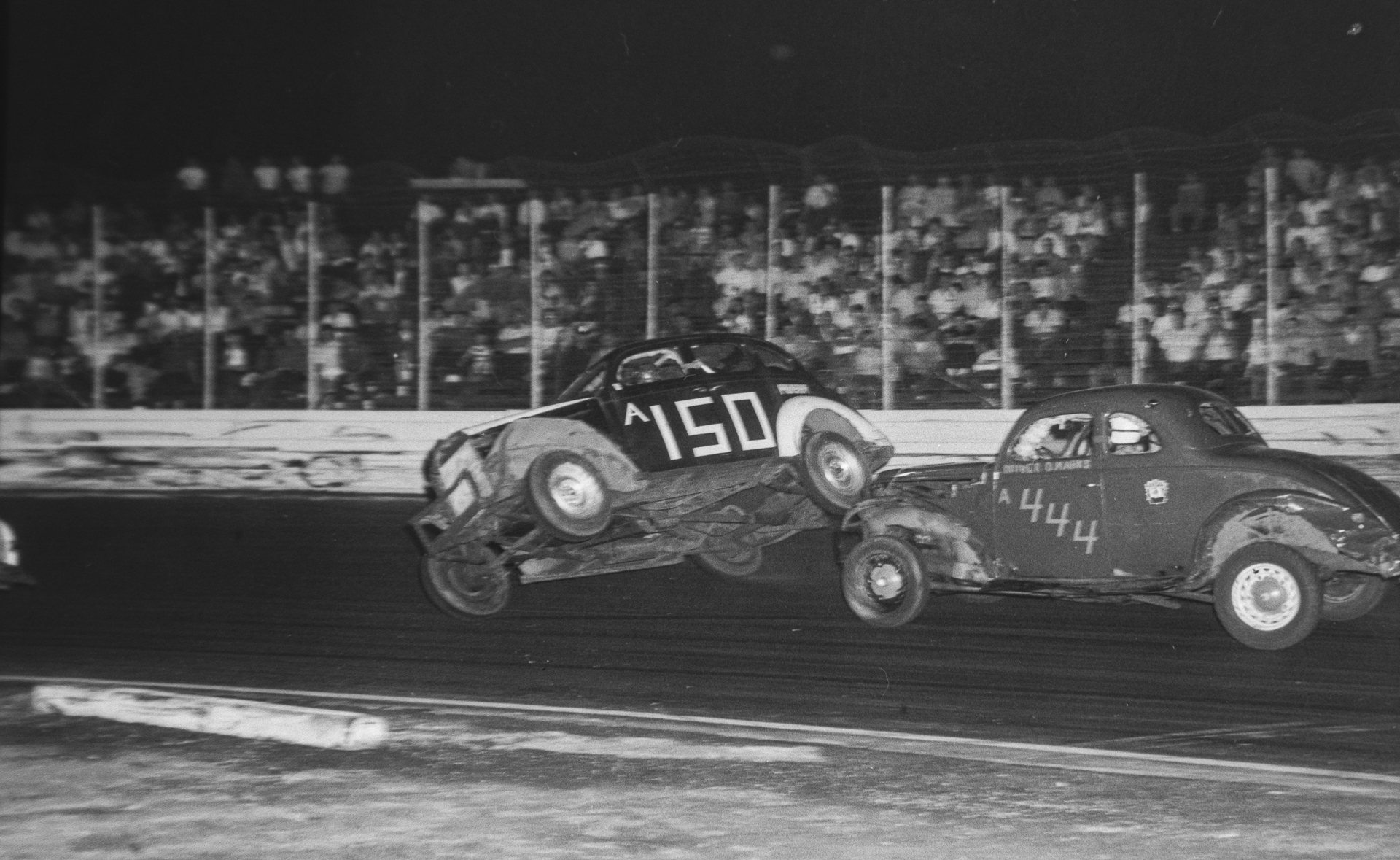
Marty Himes's brother, Reggie Himes, seen here midway through a rollover crash behind the wheel of his 1937 Plymouth during a “Non-Ford” class race.
Photographed by Ed Appoidt in 1963
Image provided by the Himes family
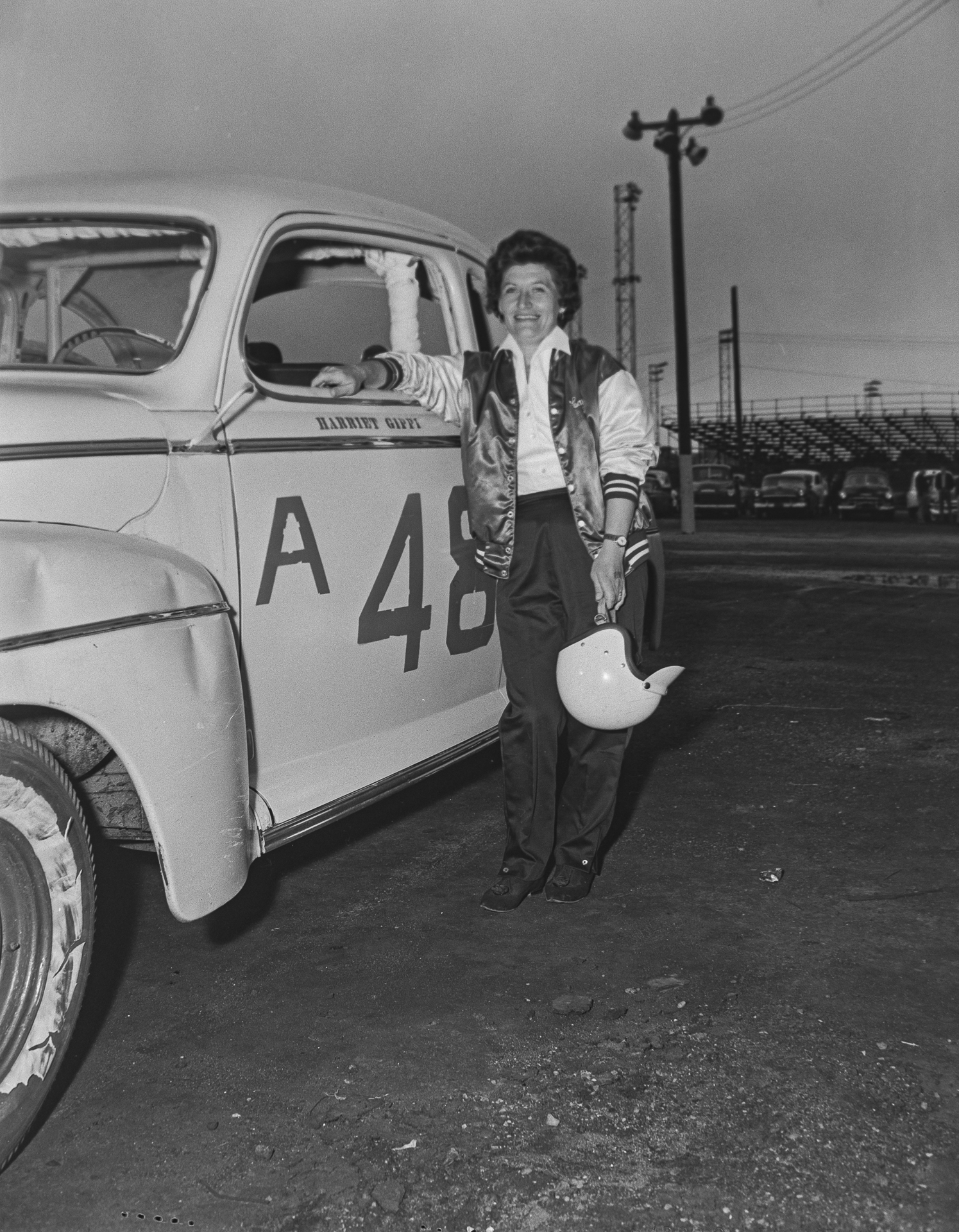
Woman drivers gave the boys a run for their money. Pictured here is Harriet Gippi with her Ford stock car.
Photographed by Ed Appoidt
Image provided by the Himes family
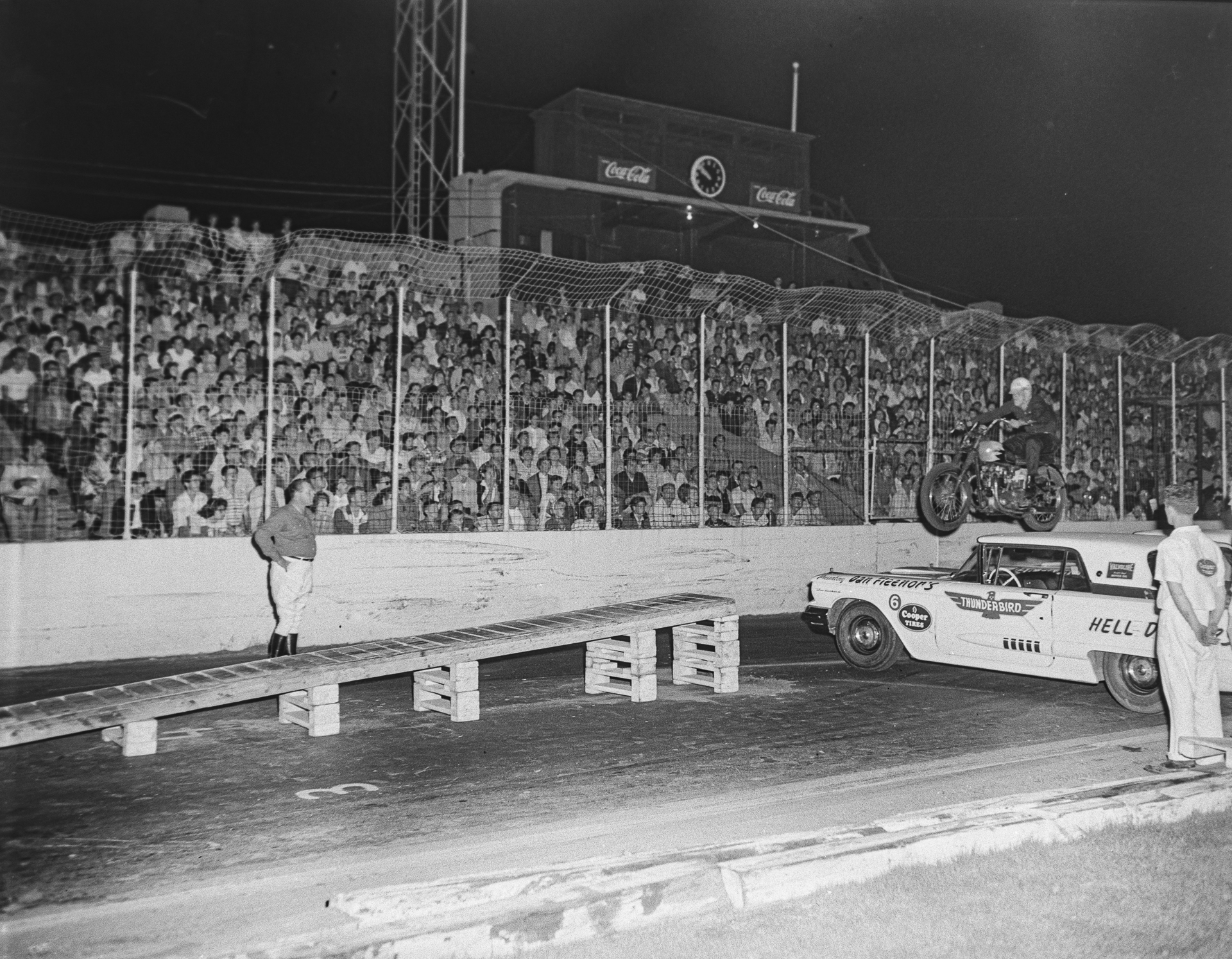
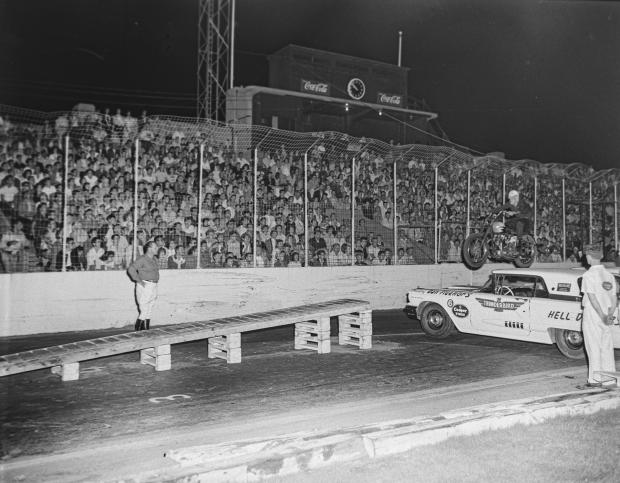
Stunt shows were also a popular attraction at Freeport Stadium. Sometimes they were staged as the halftime show between races, other times as a special event. This photo features a Dan Fleenor stunt show in which a motorcycle is jumping over a brand-new 1958 Ford Thunderbird.
Photographed by Ed Appoidt in 1958
Image provided by the Himes family
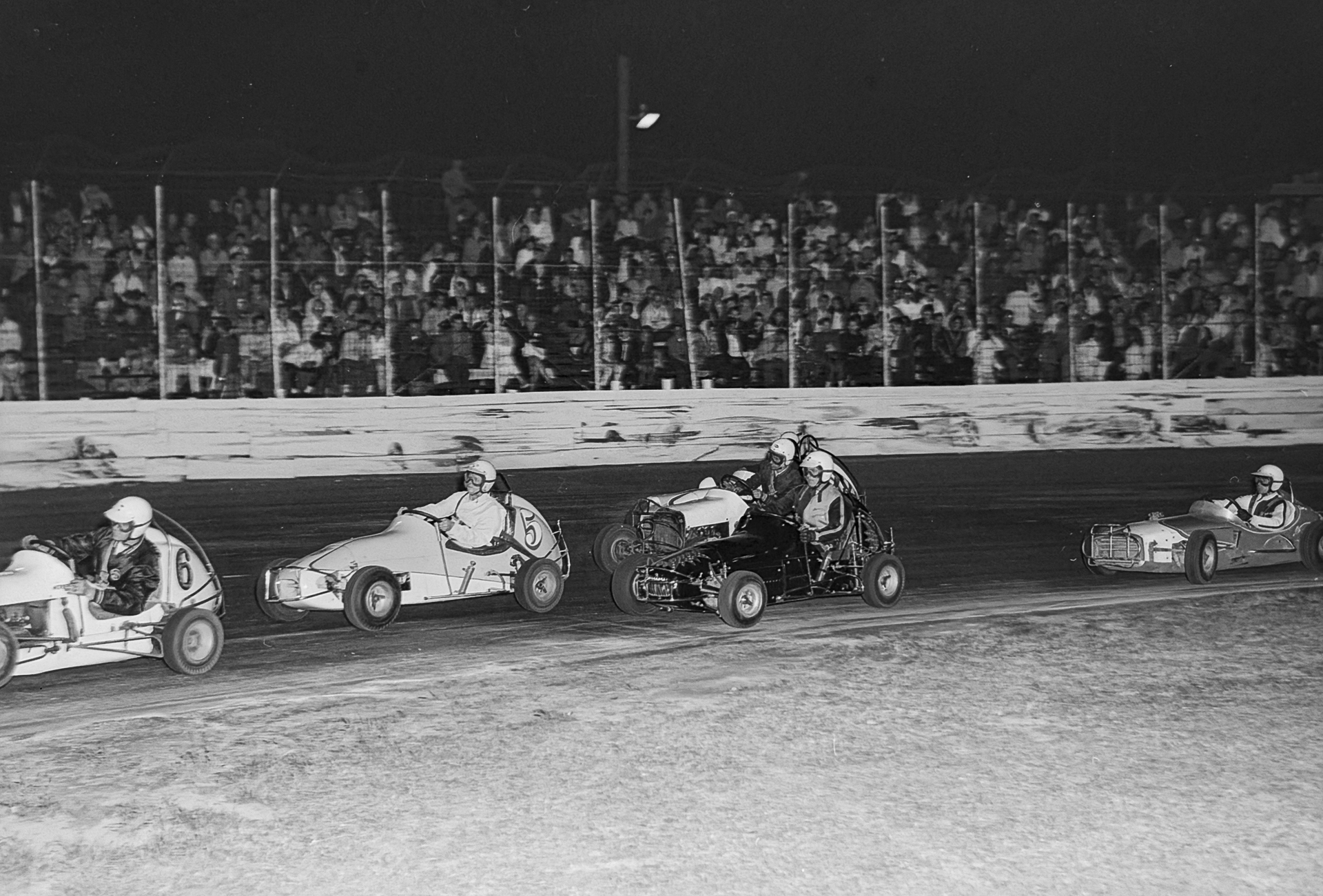
Quarter-Midget racing action at Freeport Stadium.
Photographed by Ed Appoidt
Image provided by the Himes family
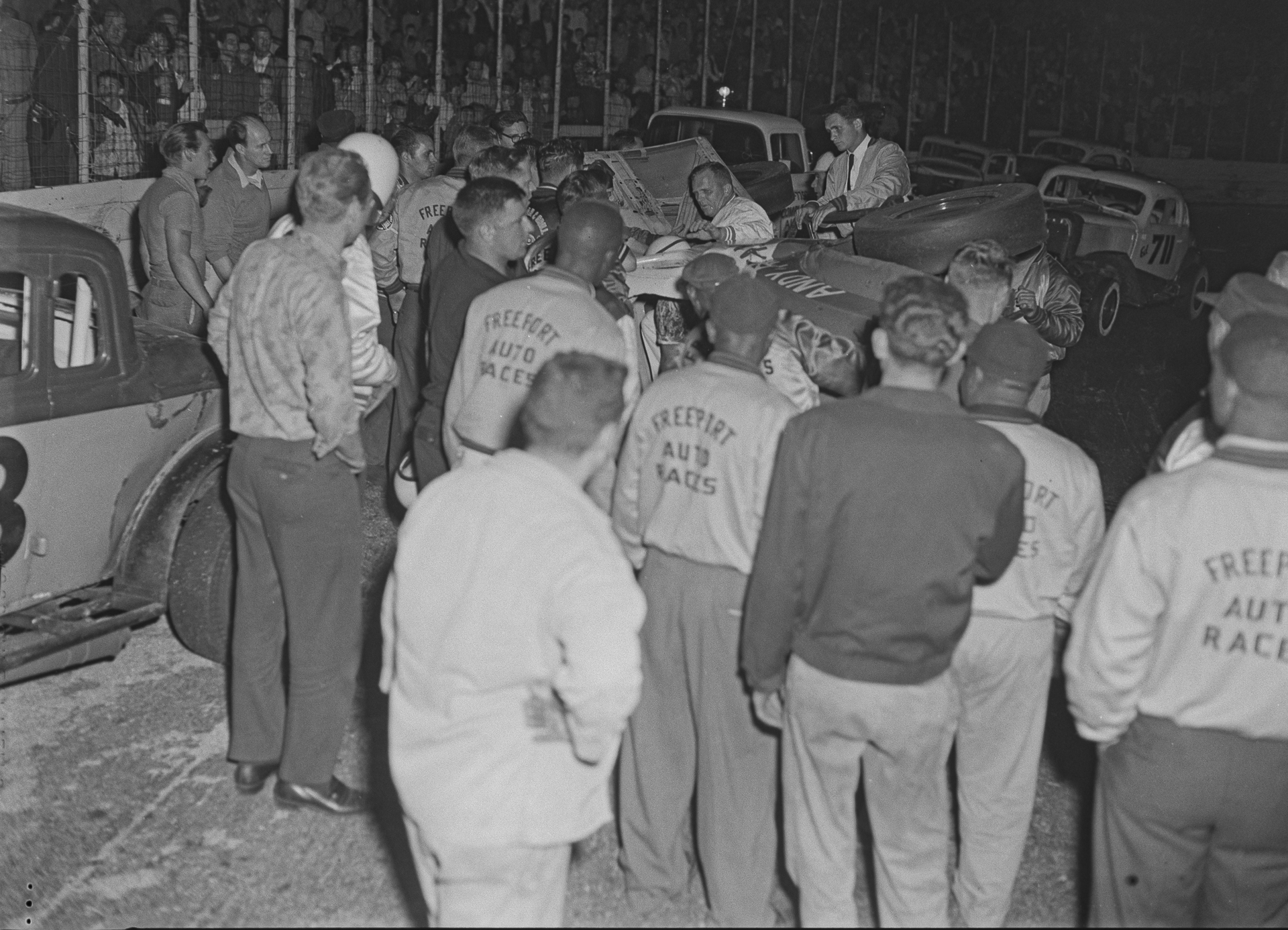
A crowd of Freeport Stadium Racing Marshals huddle around Andy Spies‘s rolled-over Plymouth race car during a Modified division race. Thankfully, he appears unharmed and is climbing out of the passenger-side window of his wrecked race car.
Photographed by Ed Appoidt Image provided by the Himes family
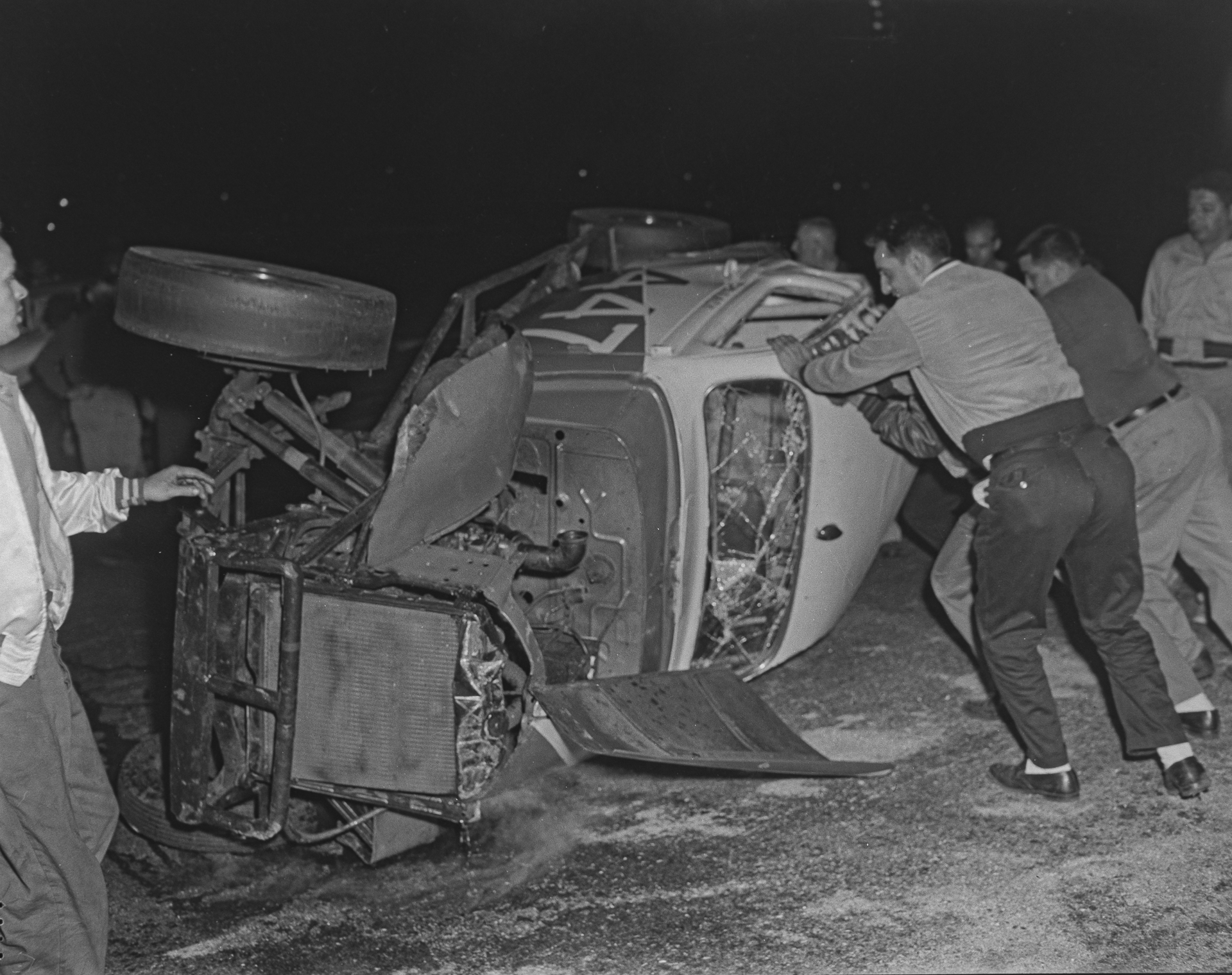
Andy Spies’s Plymouth moments later as it is pushed off the track.
Photographed by Ed Appoidt
Image provided by the Himes family
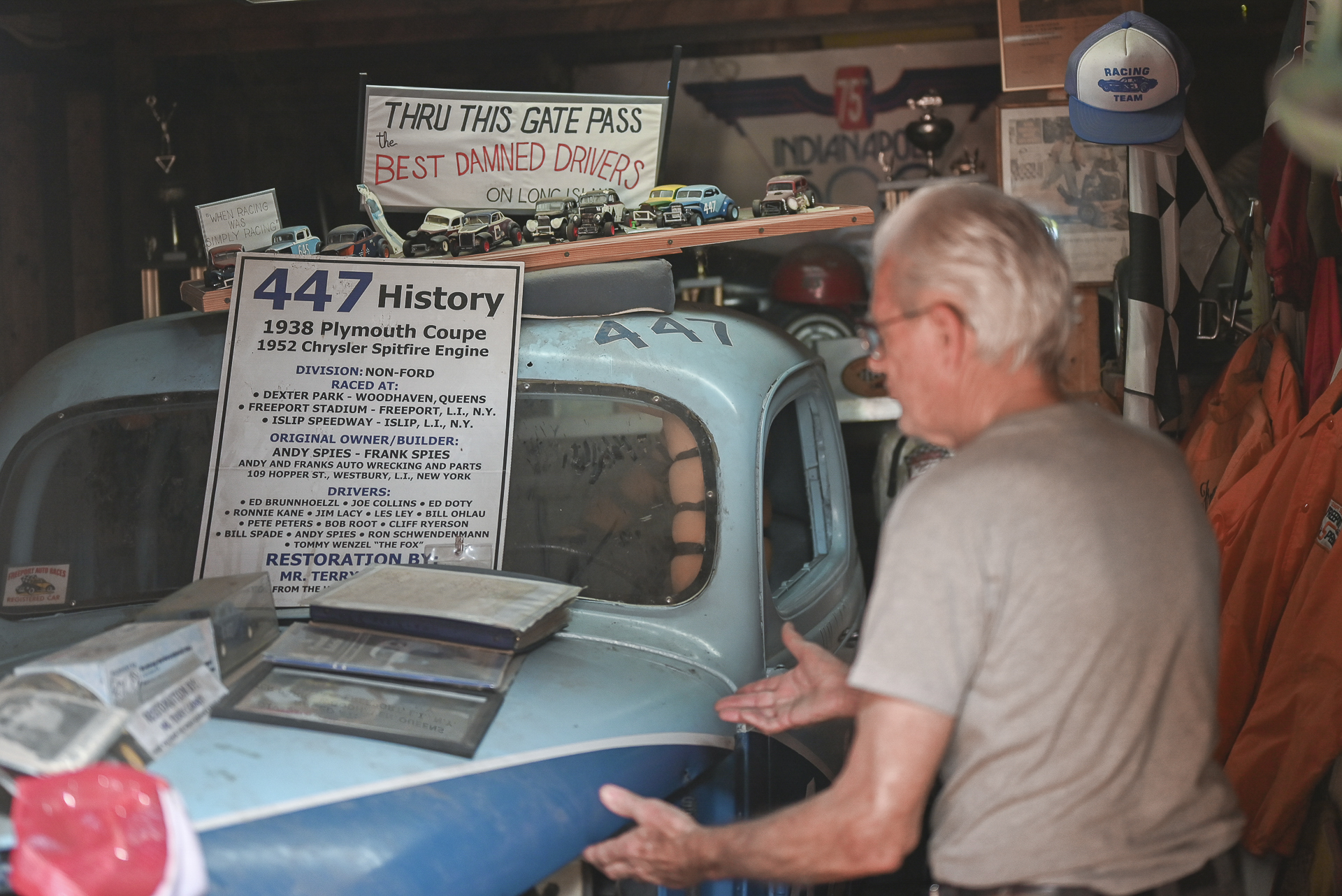
This is the same 1938 Plymouth shown in the two images above. It has had a number of owners and drivers throughout its racing history and was a featured race car on display during Marty Himes's stewardship of the Marty Himes Museum. John Rigney, a close friend of Marty’s, is the current owner and caretaker of the car.
Photographed by the author during a visit to Marty Himes’s Museum in 2023.
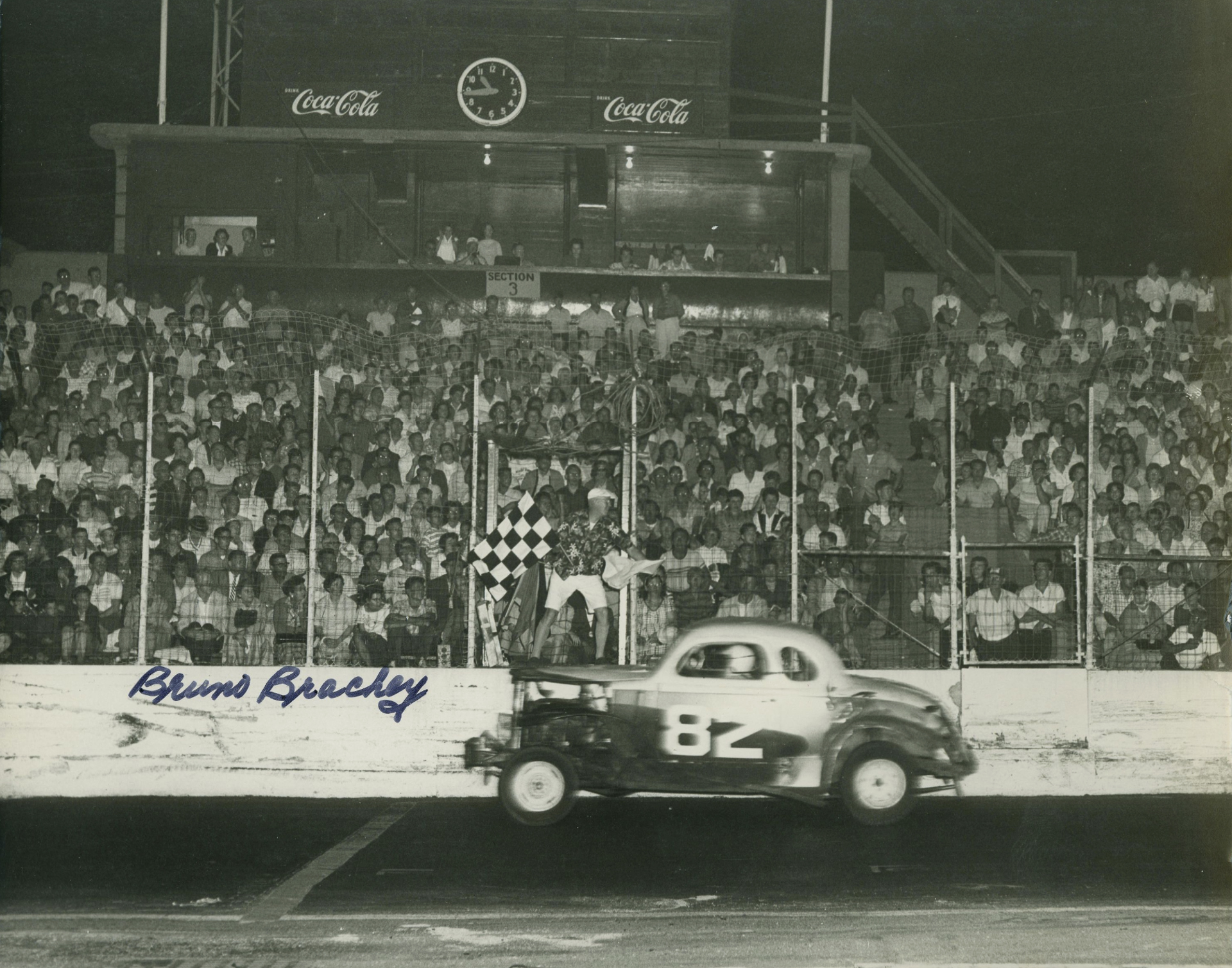
Bruno Brackey, seen here taking the checkered flag after a long night of racing. This image shows a great view of the timing tower booth.
Image provided by the Himes family
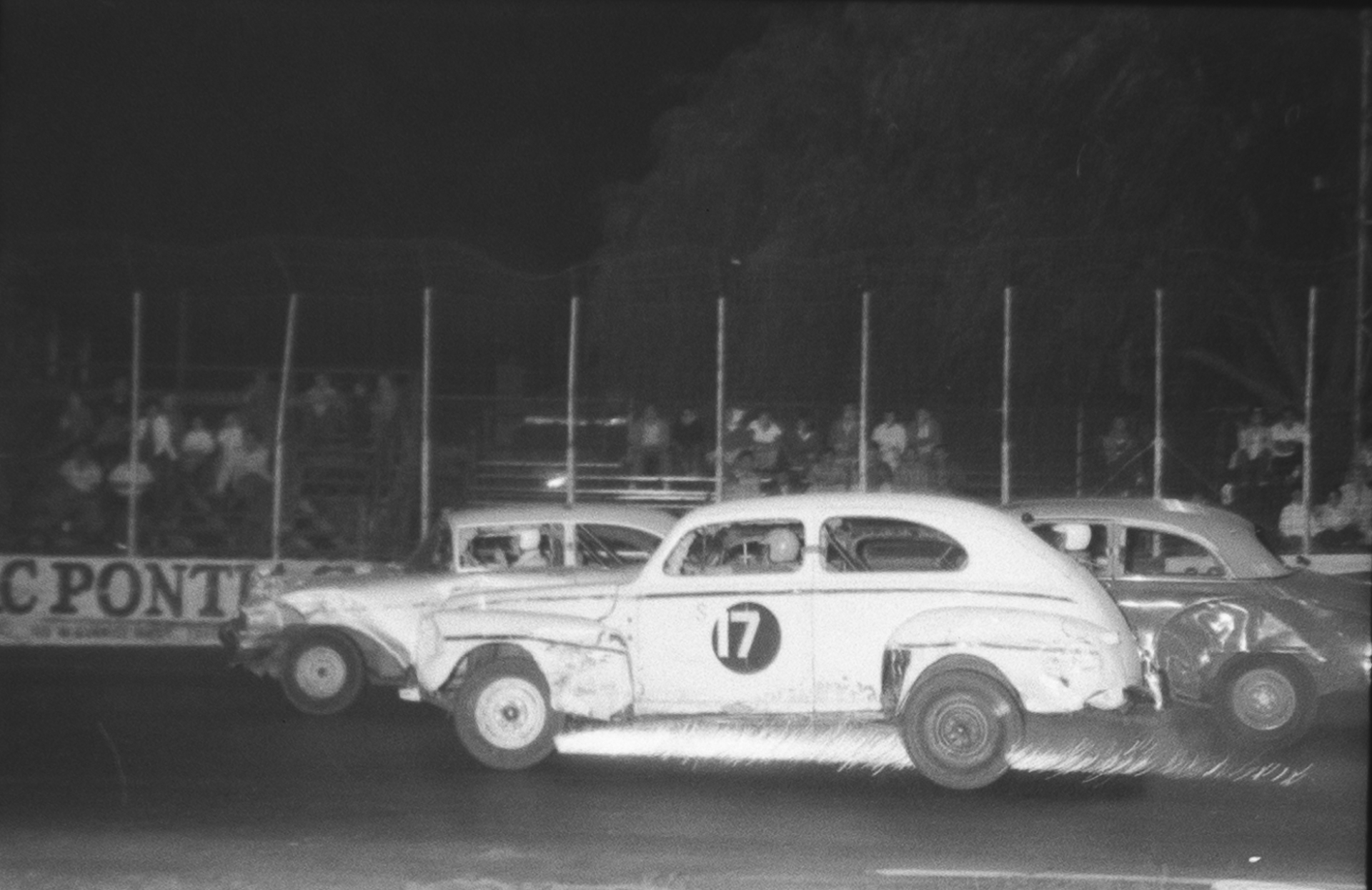
Here's another action shot of the “Crasheroo” demolition derby type racing from Freeport Stadium.
Photographed by Ed Appoidt
Image provided by the Himes family
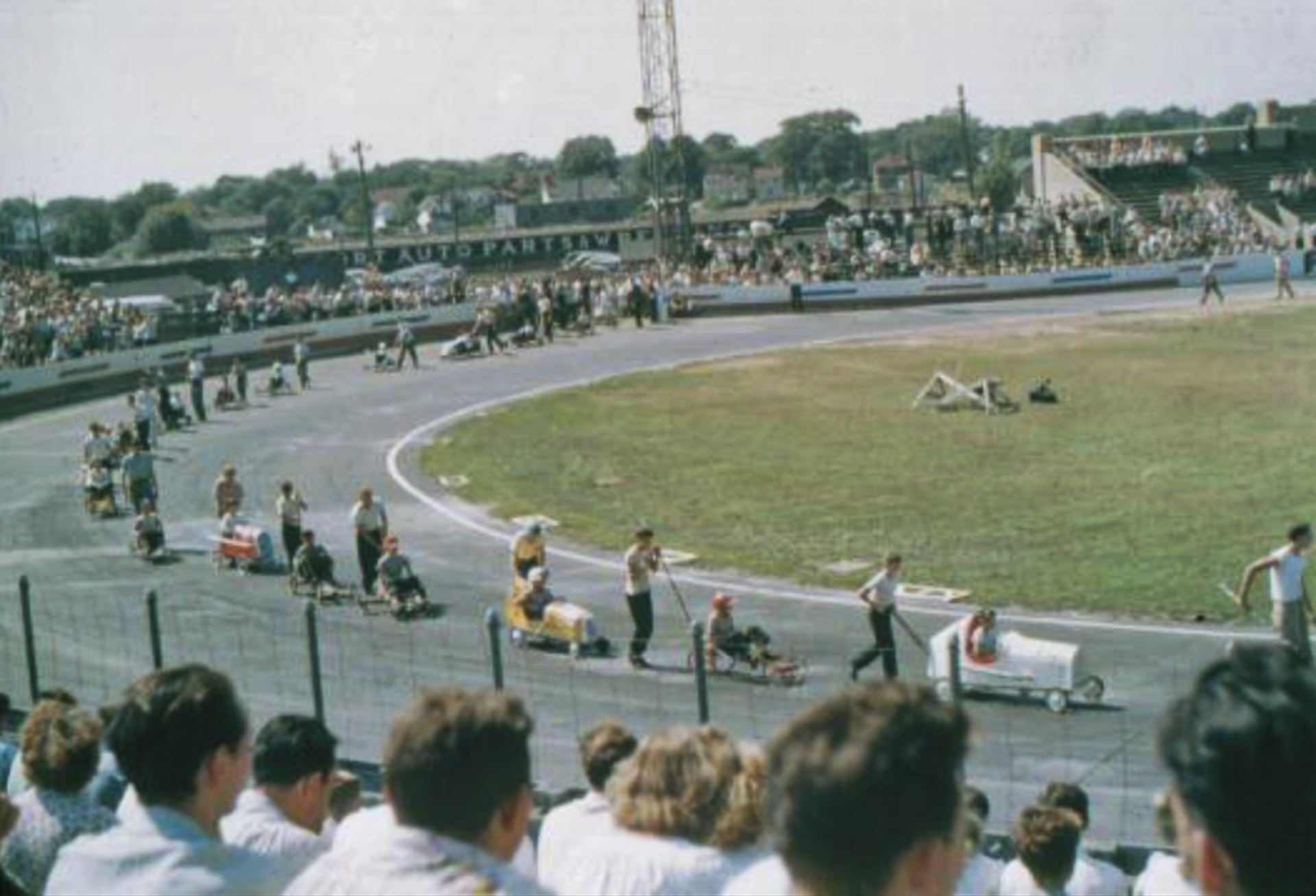
This photograph of a soapbox derby race is a rare treasure. Event photographers typically took a break during intermissions, when soapbox derbies rolled onto the track at many Long Island race tracks. As a result, images like this are scarce in the archives.
Image credit William E. Stock Collection
The later years 1970-1983
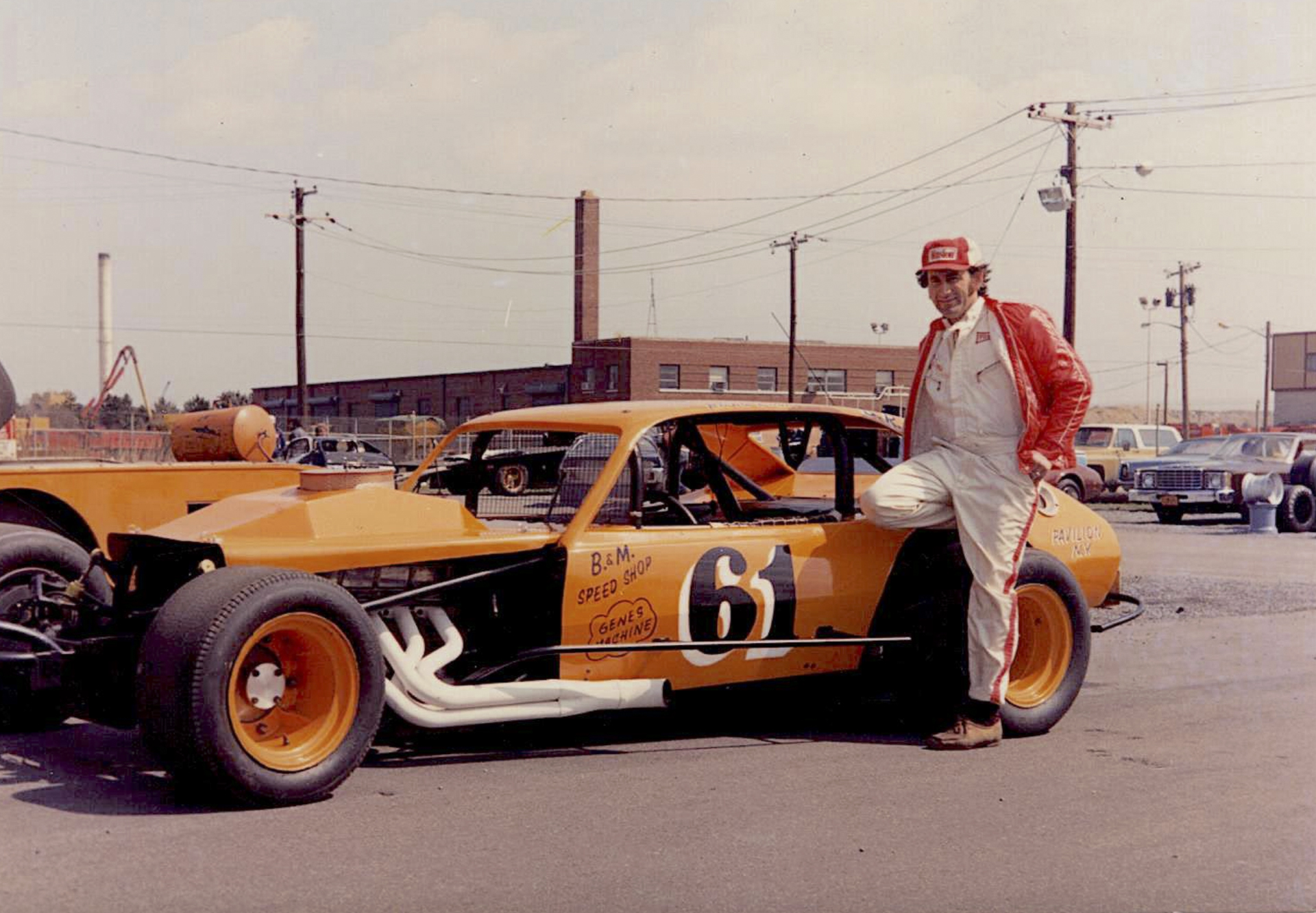
By this point in Freeport’s racing history, the modified race-car classification had become the track's most popular attraction.
Here is Richie Evans with his modified Ford Pinto in the parking lot at Freeport Stadium.
Photographed by Len Calinof
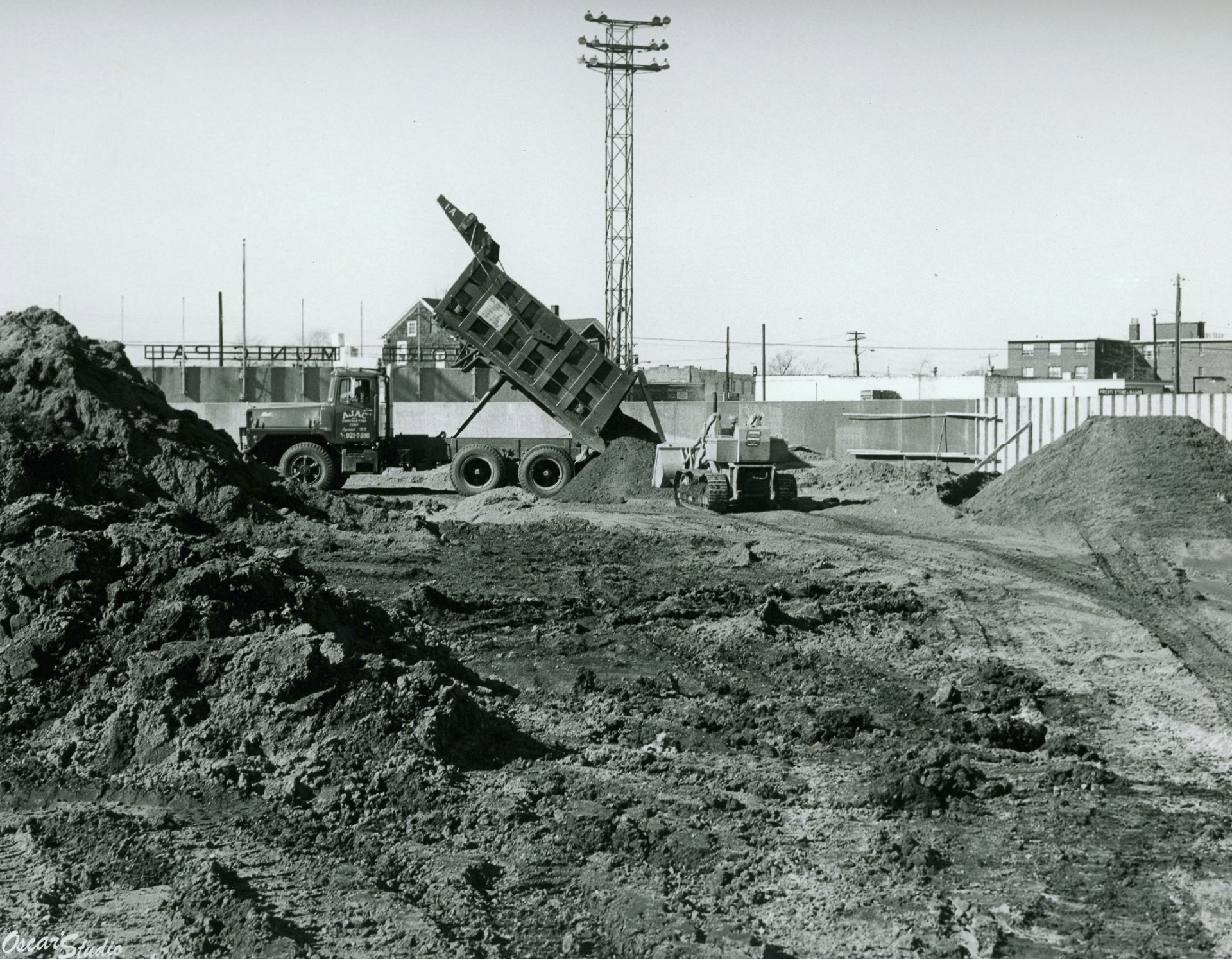
In 1971, the track was lengthened to a quarter mile. The image shown here offers a rare look at the construction of the track's expanded race course.
Image provided by the Himes family
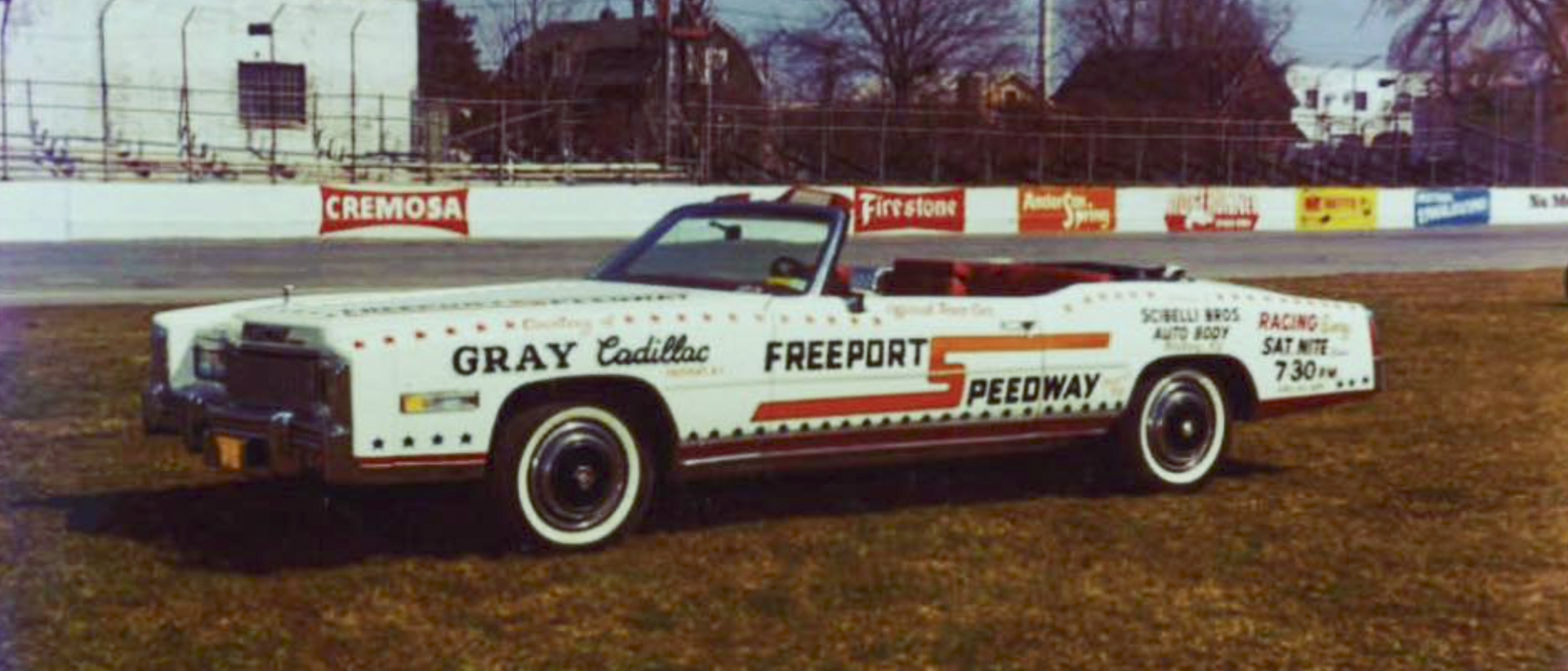
After the renovations were completed, the track was renamed Freeport Speedway. Pictured here is the Cadillac pace car for the newly christened venue. The grand reopening races on the remodeled track took place on April 21, 1971.
Image provided by the Himes family
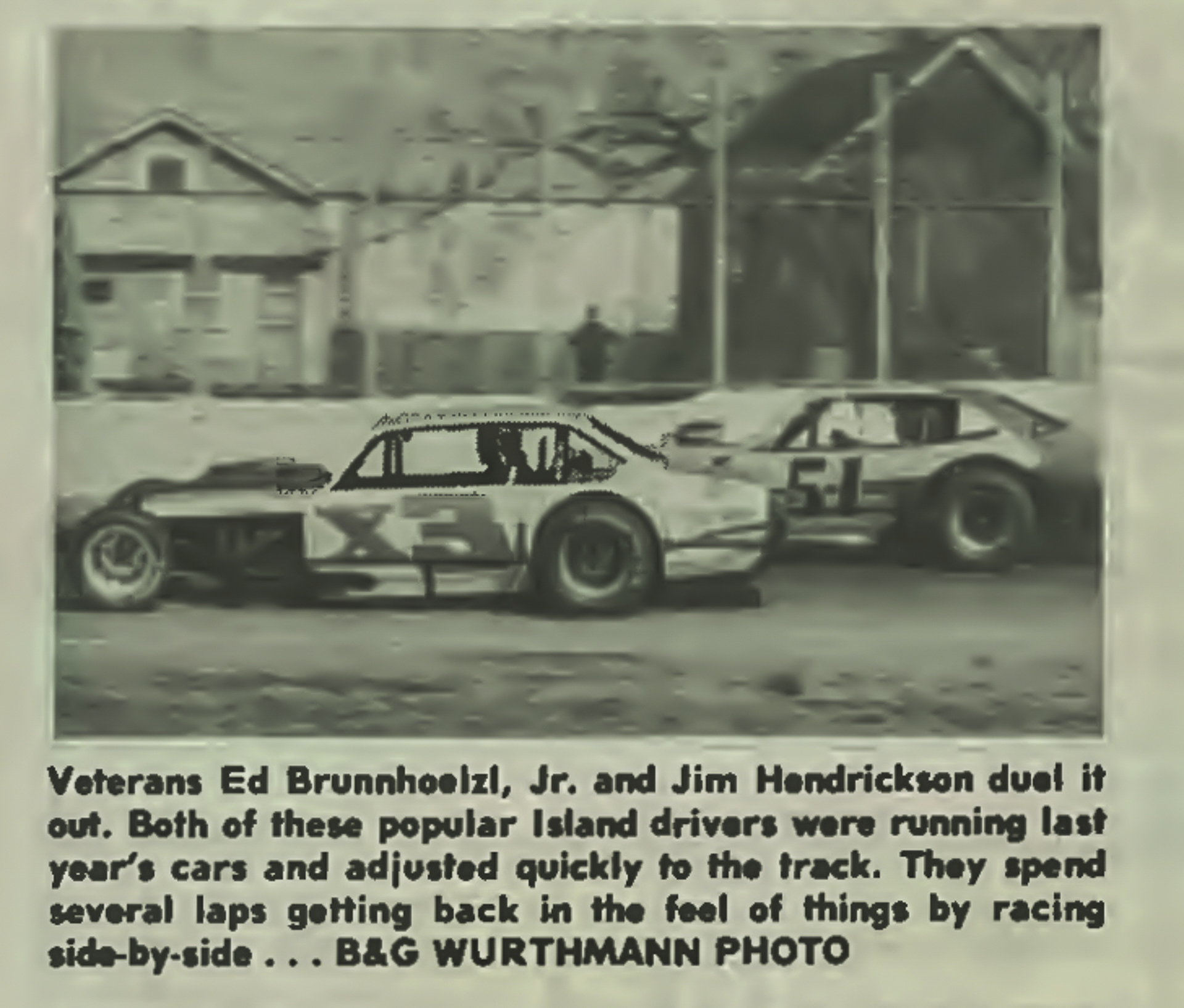
An action shot of a daytime race in the Modified class at Freeport Speedway in 1977. The track continued to hold races three times a week throughout the warm-weather seasons.
Photographed by B&G Wurthmann
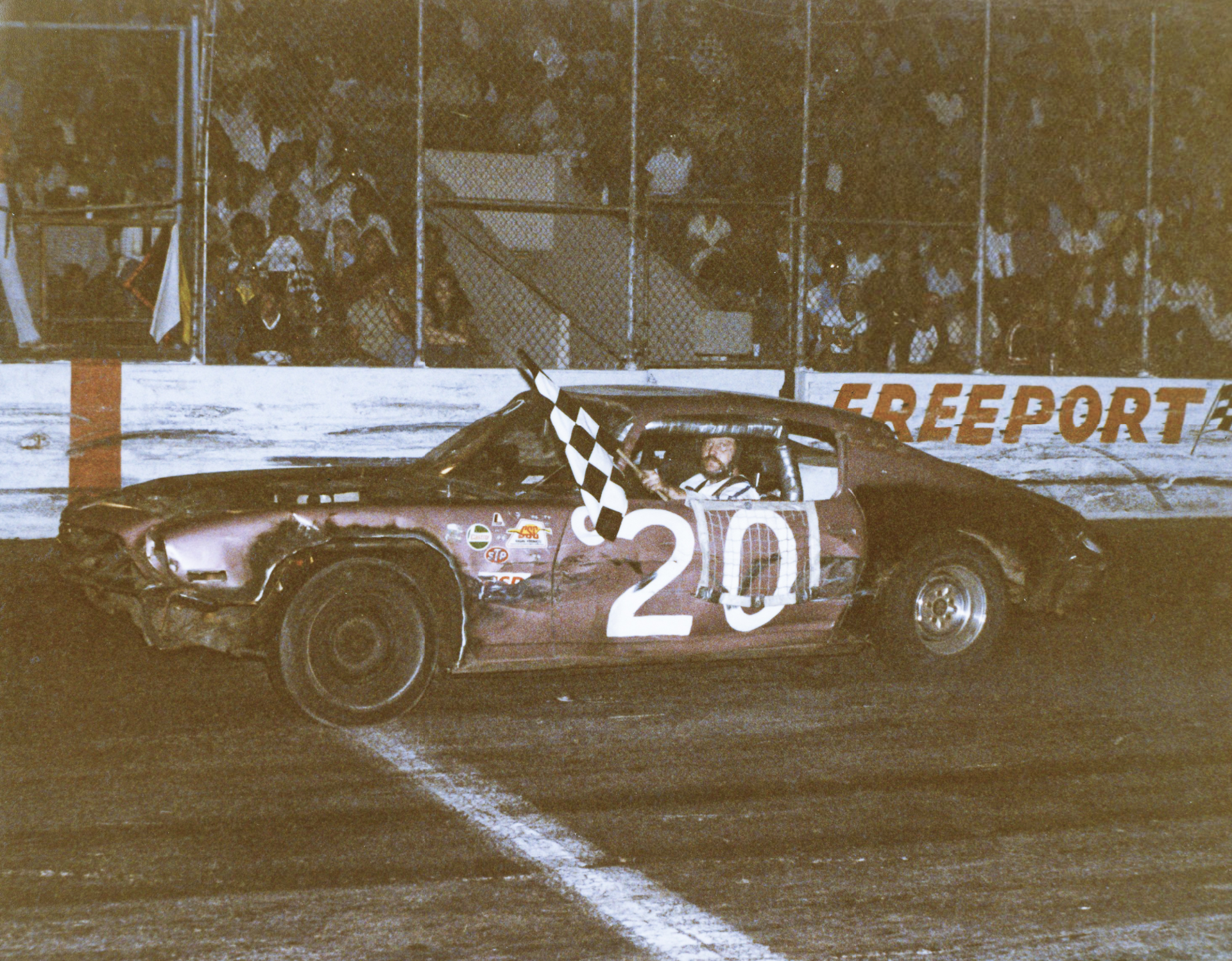
Demolition derby-style races remained a popular attraction at Freeport Speedway. Mike Peck is seen here in his 1970 Camaro. This image was likely taken in the late 1970s or early 1980s.
Image provided by the Himes family
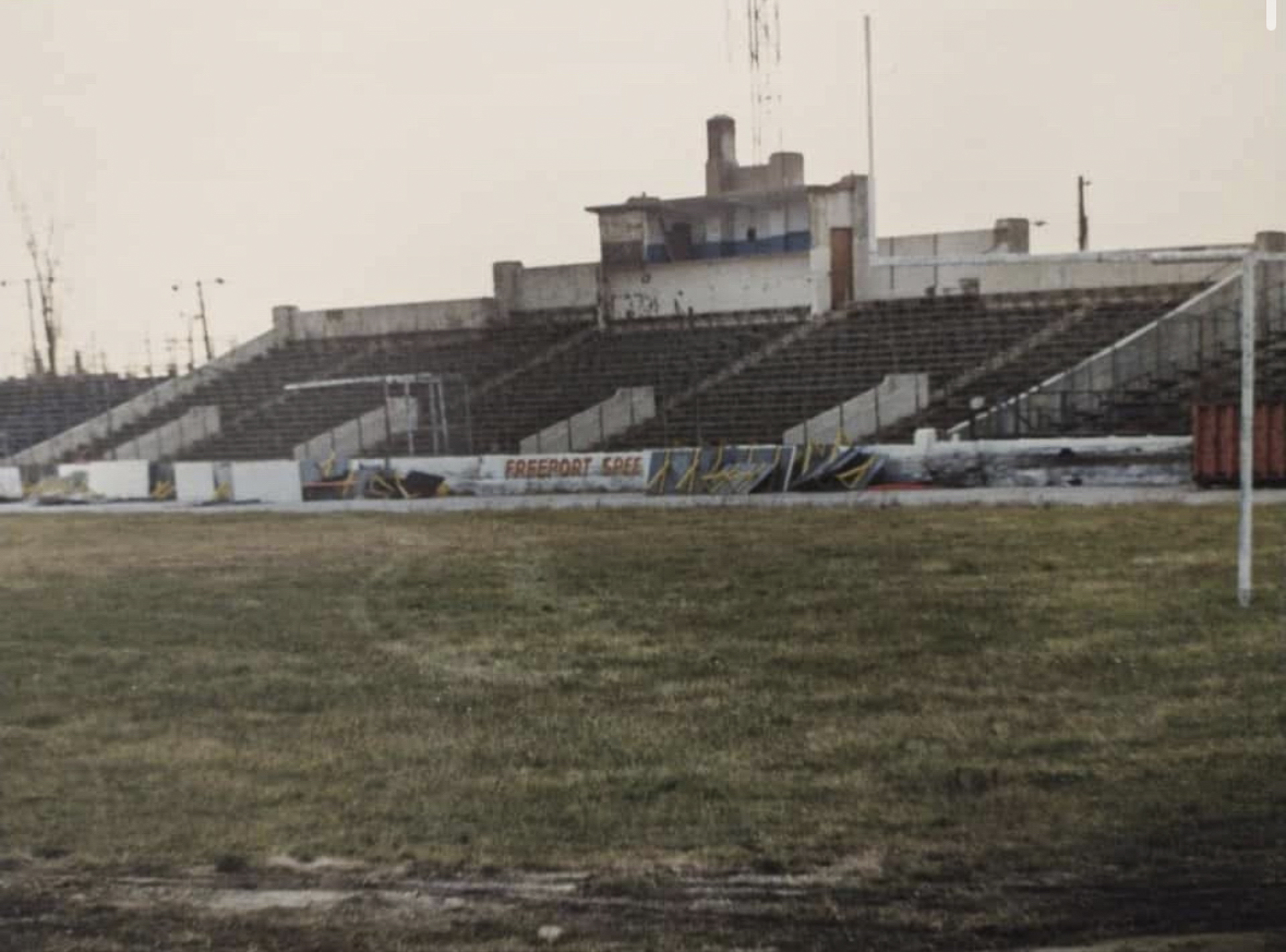
Unfortunately, by 1983, Freeport Speedway had fallen into disrepair forcing it to permanently close its gates to race teams and their fans.
Photographed by Richard Person
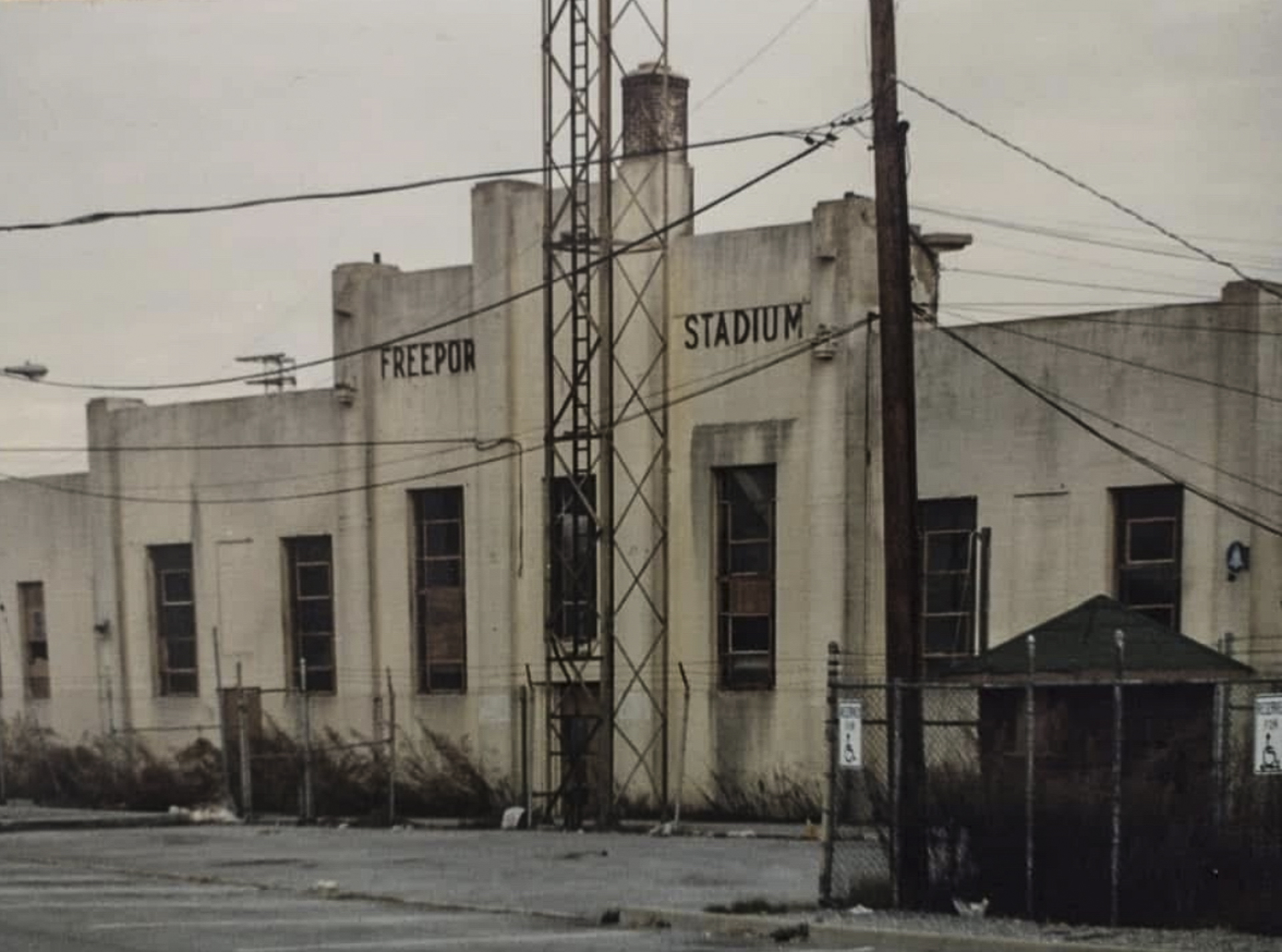
Despite a re-name towards the end of the track’s life, the main entrance still read “Freeport Stadium.” It's a shame that this historic race track was destroyed.
Photographed by Richard Person
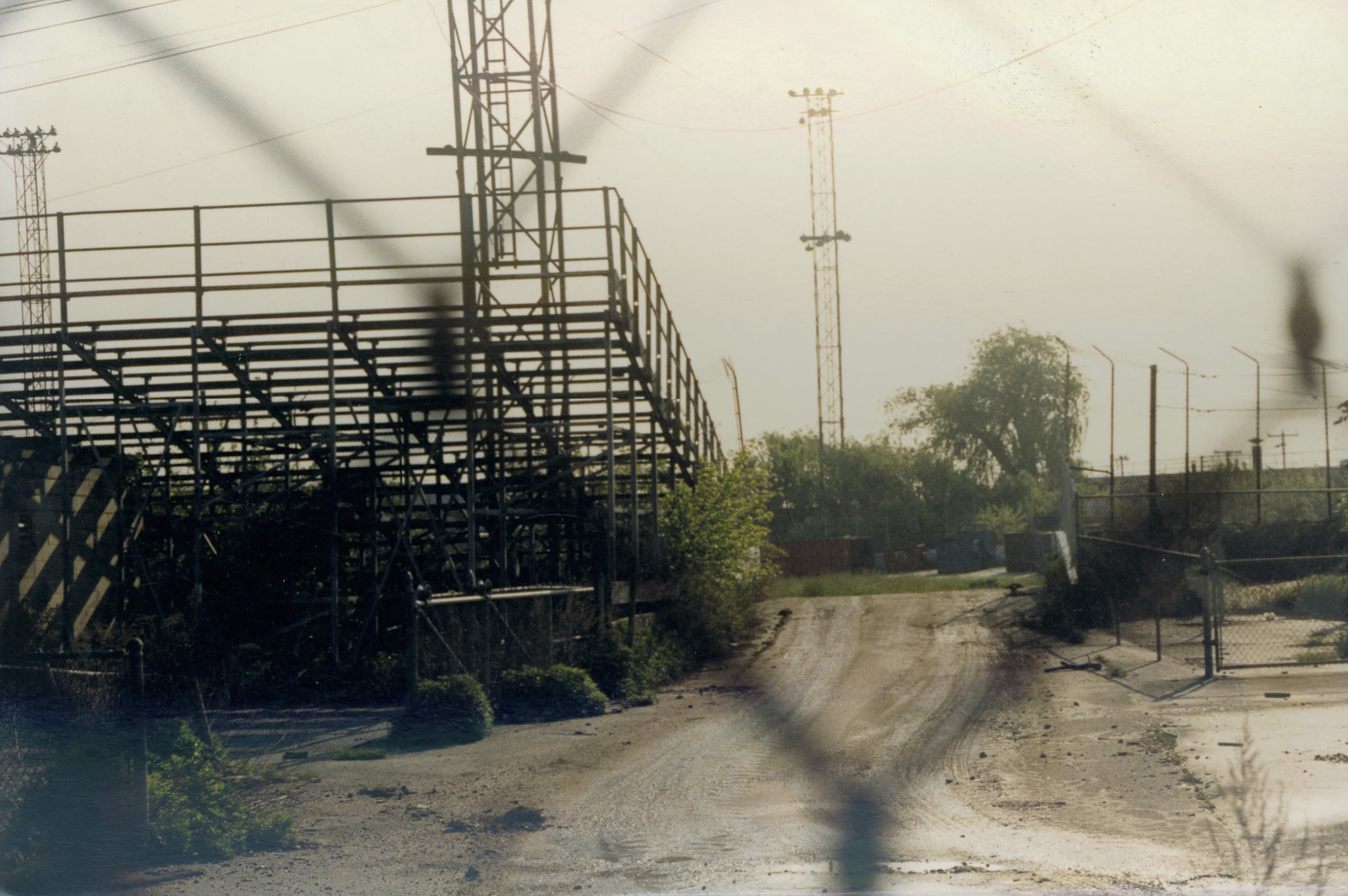
According to the late Marty Himes, this is the final photograph ever taken of Freeport Speedway. He captured the image in 1987, just before bulldozers demolished the track and its buildings.
Image provided by the Himes family
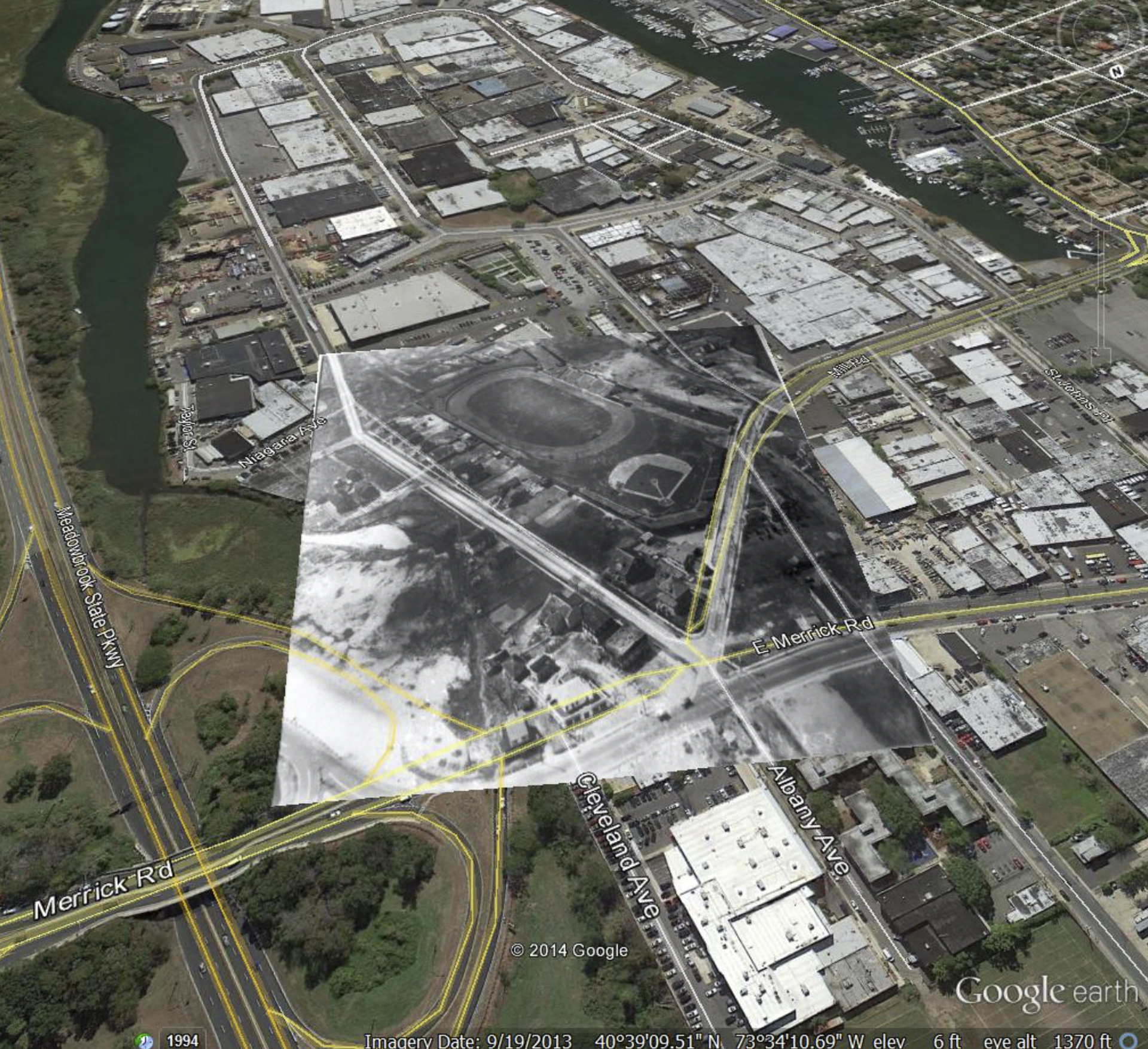
Aerial overlay showing the “ghost” of the Freeport Stadium track on top of a modern aerial photograph of the property today.
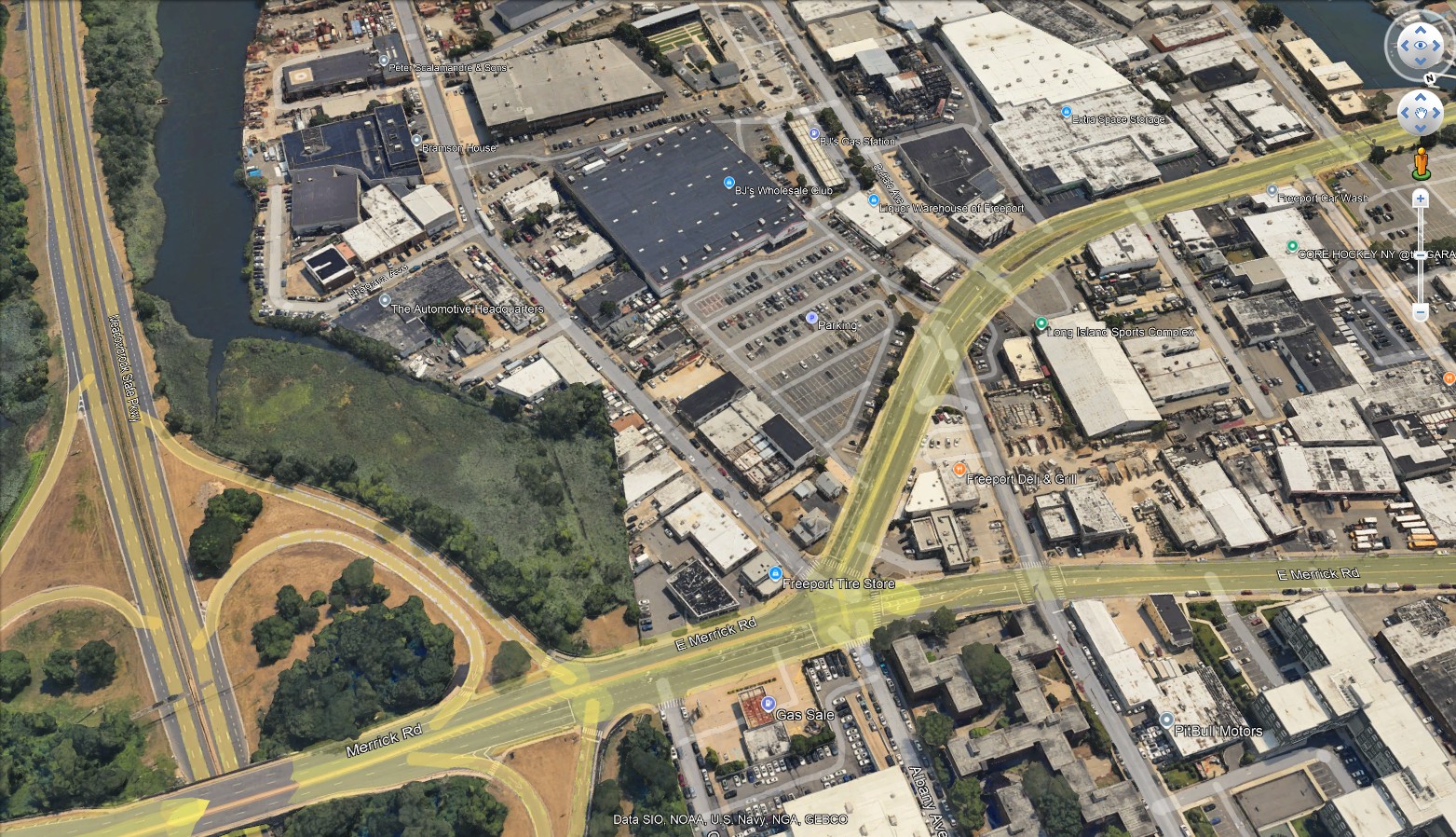
Modern day aerial with the current BJ's retail store on the land that used to be home to Freeport's race track.
Freeport Stadium / Speedway was a well-loved race track. It's a shame it had to close, but the memories and history remain alive and relevant because of our passion to keep Long Island's history alive and relevant.
I would love to hear your memories of Freeport’s race track in the comments below.


Comments
In the late 1960’s I recall attending races at Freeport Speedway. I remember a claiming race group called the Bomber Class. These were unmodified cars mostly Ford, GM and Chrysler products scavenged from junk yards for $25 or less. Everyone ran an oversized right front tire to improve handling. The Dodge and Plymouth boys always seemed to have a handling advantage as they would secretly tighten up the torsion bar suspension! Fond memories.
I once read a story about the famous race driver Dan Gurney where he said his father took him to Freeport and he caught the racing bug there! My dad used to take me there every so often and I caught it too but never became as famous as Dan Gurney ????. My buddy and I did get to meet Marty Himes at his museum and I now have that famous “Stock Car Races” sign hanging in my garage. Great memories of Freeport. I now go to one of the last city speedways in Nashville and it too is struggling to survive and I’m sure that many kids will have great memories of it too!
You’ve got the beginnings of a great book here documenting the racing history of Long Island as a vital part of the automotive and Motorsport scenario as it developed in America. That said, the contrasts and similarities of what occurred on the east coast and the west coast are fascinating.
My mom brought me there most weekends. We’d get a couple of slices of pizza, coke colas and go to track. It was the first race track I ever went to and I was in love with the place. Oddly enough, I never raced there!
I raced at Islip, Bridgehampton, Mitchel Field and many other tracks in our country. It broke my heart to see a Home Depot in the same location
These articles on LI racing history just keep getting better. I love that this is being documented so very well. Looking forward to seeing more of these InstaGram articles!
Al Gloddeck: Even though I wasn’t around when Dan Gurney was racing, he is one of my all-time greatest racing heroes. In fact, every day I walk past this image of him that my good friend Ed Justice took of him at the Indy 500.
Oh, what memories! My friends and I would pile into my father’s van to go to Freeport Stadium several times each summer in the 60s. We would usually sit between curves 1 and 2 where most of the pile ups seemed to happen. Came home covered with soot and sawdust. Walking through the pits at intermission was an experience. Always bought one of those plastic race cars and painted them up with numbers to race at home down a makeshift ramp.
i remember going to the Freeport raceway in the mid1970’s with my brother and his friends.We all piled into one huge car and watched either a race or demolition derby there at night.It was awesome.Great memories! Gene Perry
FANTASTIC FOTOS Gram! Amazing to see motor history that occurred before my time. Based on the height of the motorcycle jump, I don’t believe he made it?
Fantastic article, Gram! I grew up in Valley Stream close to the Freeport Stadium but don’t think I ever went there as my parents were not racing enthusiasts. I believe the closest I got was a slot car track in Freeport after which my uncle took me and my cousins to a White Castle. Guess you can’t forget those burgers.
Al G. - here’s a story I found on ESPN from 2018 about Gurney and the Freeport Stadium. There’s also a NY Times article from Oct. 13, 20214 that also mentions Gurney and Freeport.
Excellent article and photos Gram. My father took me to Freeport Raceway a few times every summer for 4 or 5 years. I loved it. We would sit on the first turn and as others have said we were covered in soot at the end of the night. I still remember the smell of the burning rubber and roar of the engines. I went to elementary school with Ed Brunnhoezl Jr. in Levittown. His father was also a driver.
I remember the Speedway oh so well. When I was a boy our village of East Rockaway had an organization for youth run by the retired members of the Nassau County Police. Mr Lavity was in charge of our local group Called the PBC (Police Boys Club). He ran softball games and drove us to the beach and Freeport Stadium throughout the summer season. The retired county bus was a big old GMC from the thirties or forties painted in deep blue and the roof was Orange like the other police vehicles on the force. The races at Freeport were my favorite. I seemed to remember them on Tuesday Friday and Saturday nights but I may be mistaken. Some of the kids were Elvie Hickam, Steve Rothaug, and Renee Menandez who later became a Nassau Police officer himself. I was the youngest of the group. We were supposed to sit in the bleachers with other village PBC groups at the second turn but we always seemed to sneak away and get to the top rows of the seats on the first turn that overlooked the pits. We liked that because the drivers were always fighting with one and another over accidents and other discrepancies. Most of the wreck occurred on that turn and the pit track entrance was right there.
Bruno Bracky a mailman by trade was a constant winner and he must have been a good fighter because he was not a big guy like many of the stock car drivers from local auto shops. My Dad knew Bruno Brackey when we had lived at my Grandparents house in Far Rockaway. The Brackey’s lived on the same Street and Bruno’s Daughter Caroline was in my first grade class So we always rooted for him in the black and white #71 and a few other cars that he drove. The actual owner of the cars he drove lived in East Rockaway down in Bay Park. My Mom knew the wife of the owner of cars but that info is long lost.